
Skytraders Executes Record-Close Winter Solstice Medevac in Antarctica
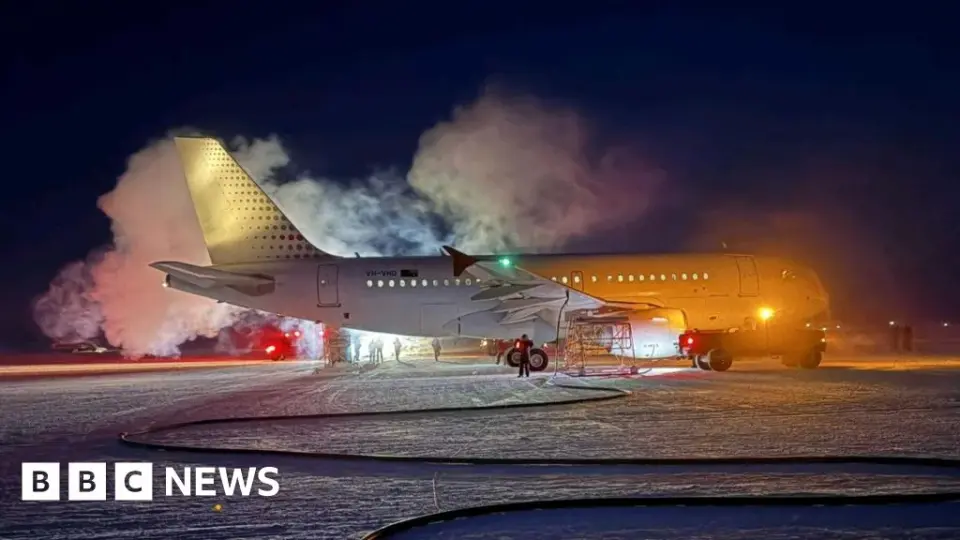
An Australian aviation crew successfully executed a high-risk medical evacuation from McMurdo Station in Antarctica during midwinter, operating in total darkness and temperatures of -43°C. The mission, conducted just days after the winter solstice, involved a rapid refit of an Airbus A319 and a 12-hour weather delay before the patient was transported to Christchurch, New Zealand, where he is now recovering.
Key points
- Skytraders received an urgent request for a medical evacuation from McMurdo Station last Friday, shortly after the June 21 winter solstice.
- The company converted its Airbus A319, designated 'Snowbird 1,' into a specialized medevac configuration within 24 hours of the initial call.
- Takeoff from Hobart, Tasmania, was delayed by 12 hours due to adverse weather conditions before the aircraft departed in the early morning.
- The plane landed at the US research station on Ross Island in total darkness and temperatures of -43°C (-45.4°F).
- The patient was transferred to the aircraft and flown to Christchurch, New Zealand, for treatment; he is reported to be recovering well.
- Skytraders deputy chief executive Duncan Mackay stated this was the closest a civilian airliner had operated to the winter solstice in the company's history.
Background
This incident follows a similar but less extreme medical evacuation conducted by Skytraders in March 2020, where a US Antarctic Program member was evacuated from McMurdo Station in temperatures of -30°C. The current mission highlights the increasing complexity of winter operations in Antarctica, requiring specialized expertise from flight crews, meteorologists, and medical personnel to ensure safety in extreme conditions.
How outlets are covering it
The BBC report emphasizes the 'daring' nature of the mission and the specific logistical challenges, including the 24-hour refit and 12-hour weather delay. It highlights the unprecedented proximity to the winter solstice, a detail underscored by Skytraders' leadership. The secondary source from The Mercury was inaccessible due to a bot detection error, so no additional perspective could be synthesized from that outlet. The BBC notes that no specific details about the patient's condition were released, focusing instead on the operational success and the expertise of the team.
Why it matters
This rescue demonstrates the critical role of specialized aviation services in supporting remote scientific expeditions, particularly during the most inhospitable times of the year. The success of this mission, despite extreme conditions, underscores the importance of rapid response capabilities and advanced aircraft configurations for medical emergencies in Antarctica, where access to conventional healthcare is limited.
What to watch
The patient is currently recovering in Christchurch, New Zealand. Skytraders is likely to review the operational data from this mission to further refine their winter medevac protocols. No further public updates on the patient's condition are expected unless there are significant developments.
- Australian aviation crew carries out daring midwinter Antarctica rescue BBC
- 'Extraordinary' Antarctic medevac performed in extreme -43C conditions abc.net.au
- AAD retrieves US expeditioner from Antarctica in challenging midwinter rescue 7 August 2026 The National Tribune
- Australian crew flies into -43°C and total darkness for world first Antarctic rescue The Mercury
- Australian aviation team pulls off 'extraordinary' midwinter rescue in Antarctica RNZ
Want the full story? Read the original reporting
Read on BBC