
Isar Aerospace achieves Europe's first commercial orbital launch, citing 10 billion euro pipeline
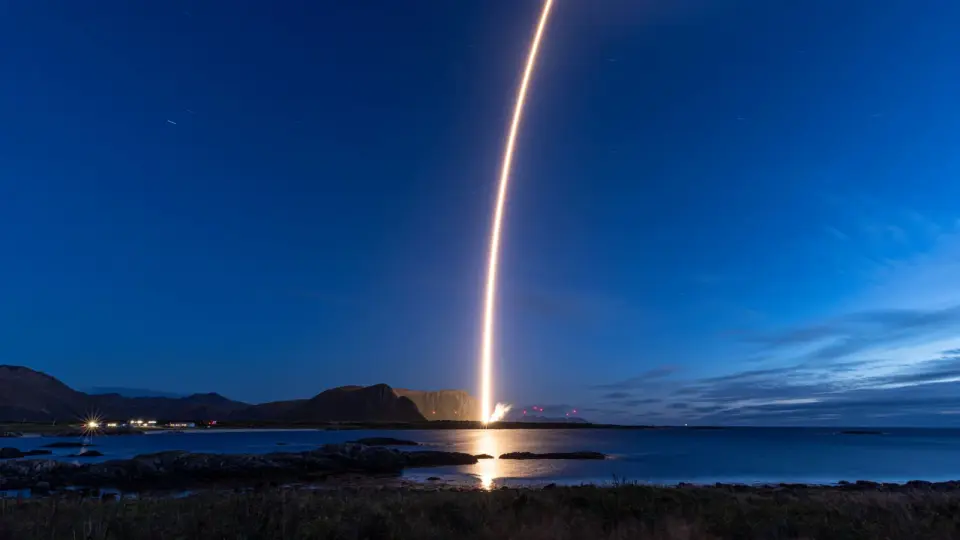
Isar Aerospace successfully launched its Spectrum rocket into orbit from Norway on September 5, 2026, marking the first commercial orbital launch from continental Europe. The Munich-based startup, founded in 2018, deployed payloads on its second test flight after a failed attempt in March 2025. The company reports a commercial pipeline exceeding 10 billion euros and is scaling production to meet demand. Investors include Porsche and the NATO Innovation Fund, while the European Space Agency recently awarded Isar a 230 million euro contract. The launch positions Isar as a key competitor to SpaceX and a driver of European strategic autonomy in space access.
Key points
- Isar Aerospace's Spectrum rocket reached low Earth orbit and deployed payloads on September 5, 2026, from Andøya Spaceport in Norway, achieving a historic first for European commercial spaceflight.
- The launch was the company's second test flight; the first attempt in March 2025 failed due to a vent valve issue and loss of attitude control, but no customer payloads were on board at that time.
- Isar Aerospace, founded in 2018 by three students at the Technical University of Munich, has raised approximately 1 billion euros in private funding and employs nearly 500 people across five international locations.
- The company's Spectrum rocket can lift up to one metric ton of payload into low Earth orbit, with launch prices estimated between 10 million and 15 million euros per mission.
- Isar Aerospace is constructing a new 40,000 square meter production facility near Munich, designed to manufacture up to 40 launch vehicles per year, and is developing a second launch site in Nova Scotia, Canada.
- The European Space Agency awarded Isar Aerospace a 230 million euro contract through the European Launcher Challenge in August 2026, the largest of three awards, requiring an orbital launch by 2027.
Background
Isar Aerospace's success arrives amid intense competition in the global launch market. SpaceX maintains dominance with over 100 Falcon 9 launches in 2026 and a Starlink constellation exceeding 11,000 active spacecraft. Recent developments include China's LandSpace recovering a Zhuque-3 booster and Stoke Space raising 1 billion dollars for a reusable rocket. Europe's legacy providers, Arianespace and Avio, rely on government subsidies and have faced criticism for high costs and limited competitiveness. Isar Aerospace's privately funded model contrasts with Europe's traditional government-funded space industry, aiming to create a commercial alternative to reduce dependence on US launch providers.
How outlets are covering it
CNBC emphasizes Isar Aerospace's commercial pipeline exceeding 10 billion euros and its focus on scaling production to meet 'desperate' demand for launch capacity. Ars Technica highlights the geopolitical significance of the launch for European strategic autonomy, noting that Europe's legacy providers rely on government subsidies while Isar operates on private funding. Ars Technica also details the technical specifications of the Spectrum rocket and its competitive positioning against US rivals like Firefly Aerospace and Rocket Lab. Isar Aerospace's own press release frames the launch as a historic achievement that 'opened space from continental Europe' and provides a 'true alternative' for commercial customers. Space.com's coverage was limited due to technical issues, but the company's press release confirms the successful deployment of payloads and the company's plans to scale production. All sources agree on the historic nature of the launch and its significance for European space independence, but differ in emphasis: CNBC focuses on commercial demand, Ars Technica on geopolitical and technical aspects, and Isar Aerospace on its achievement and future plans.
Why it matters
Isar Aerospace's successful orbital launch marks a turning point for Europe's space industry, demonstrating that a privately funded, commercially focused company can achieve what government-funded programs have struggled to do. The launch reduces Europe's dependence on US launch providers like SpaceX, enhancing strategic autonomy in a period of geopolitical tension. The company's ambitious production targets and large pipeline suggest potential to disrupt the global launch market, which is dominated by SpaceX. Success could attract further investment and talent to Europe's space sector, fostering innovation and competitiveness. However, scaling production and achieving consistent launch cadence remain significant challenges, as noted by Isar's CEO. The launch also signals a shift in Europe's space policy, moving from government-led programs to commercial ventures, which could influence future funding and regulatory decisions.
What to watch
Isar Aerospace will focus on scaling production of its Spectrum rocket, with five additional vehicles already in production. The company aims to achieve a consistent launch cadence, though it acknowledges this will take several years. Isar is developing a second launch site in Nova Scotia, Canada, and may eventually operate from Kourou, French Guiana. The company is also working on a larger launch vehicle and reusable rocket technologies, though details are limited. Isar must deliver on its 10 billion euro pipeline and meet the European Space Agency's 2027 deadline for its European Launcher Challenge contract. Competitors like Rocket Factory Augsburg and PLD Space are targeting their first orbital launches by the end of 2026, intensifying competition in the European market.
- SpaceX rival launches rocket in historic first, says industry is 'desperate' for more CNBC
- History for European spaceflight: Isar Aerospace reaches orbit and deploys payloads on second flight Isar Aerospace
- German company becomes first in Europe to launch fully commercial orbital rocket Ars Technica
- Private German rocket makes history, reaches orbit from European soil Space
- Hackaday Links: September 6, 2026 Hackaday
Want the full story? Read the original reporting
Read on CNBC