
Nepal demands $20m climate compensation after glacier collapse kills over 1,300
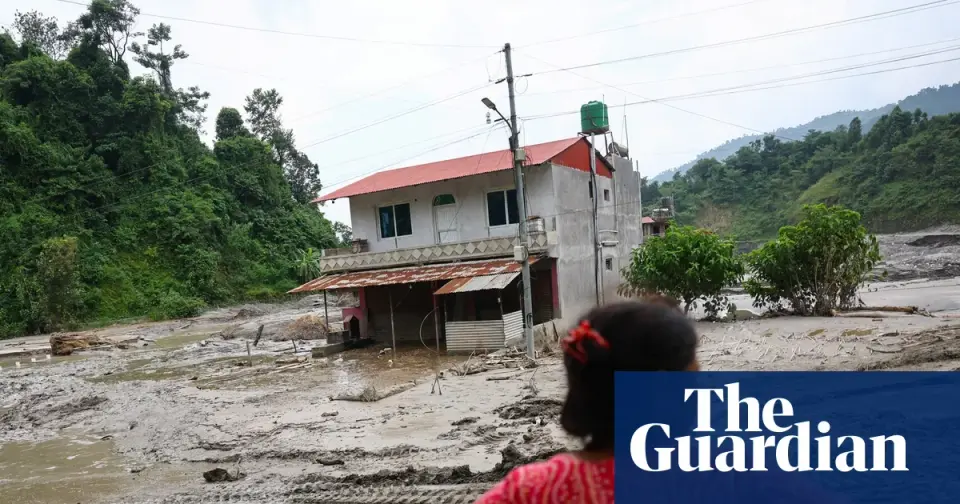
Nepal is requesting $20 million from the UN’s Loss and Damage Fund to address the catastrophic August 2026 floods triggered by a glacier collapse in the Himalayas. The disaster, which scientists link to accelerated climate warming, has confirmed over 1,300 deaths and left more than 5,500 people missing. Foreign Minister Shisir Khanal argues that major polluting nations must accept shared responsibility, noting that Nepal contributes less than 0.1% of global emissions. While total damage estimates exceed $5 billion, the requested sum is a symbolic demand for a robust compensation mechanism. The UN fund faces a significant financing gap, with only $400 million received against $2.8 billion in requests from 119 countries.
Key points
- Nepal’s finance and environment ministries jointly requested $20 million from the UN Loss and Damage Fund, established in 2022 under the Paris Agreement.
- The August 26 flood was triggered by a partial glacier collapse, sending debris and water at speeds of up to 180 km/h through Nepal and Chinese-controlled Tibet.
- Over 1,300 people are confirmed dead, and more than 5,500 remain missing after 12 days of rescue operations.
- Nepal’s Himalayan glaciers have lost nearly one-third of their ice in 30 years, warming 50% faster than the global average.
- The UN Loss and Damage Fund has received $2.8 billion in requests but only $400 million in contributions, with the US providing just $17 million after withdrawing from the Paris Agreement.
- Nepal’s President Ramchandra Paudel and Foreign Minister Shisir Khanal have called for climate justice, framing the disaster as a recurring warning rather than a one-off event.
Background
Previous coverage in September 2026 highlighted the immediate aftermath of the floods, including UN warnings about millions at risk from future glacier melt and estimates of $5 billion in total damage. Reports also noted China’s censorship of unofficial casualty figures and the disparity in missing-persons counts between Nepal and China. The current demand for compensation follows these initial appeals for urgent aid and reflects a shift toward seeking long-term financial mechanisms for climate-related loss.
How outlets are covering it
The Guardian emphasizes the diplomatic push for compensation, highlighting Khanal’s call for major polluters to 'wake up' and his initial focus on India and China before broadening the appeal to all nations. Al Jazeera focuses on the concept of 'climate justice,' citing activists who argue that global attention only intensifies after mass casualties, and notes the legal precedent set by the International Court of Justice’s 2025 advisory opinion on climate harm. Grist.org, while primarily addressing the difficulty of predicting such events, underscores the scientific uncertainty surrounding glacier collapse, which Khanal acknowledged was unforeseeable. The sources agree on the scale of the disaster and the inadequacy of current funding mechanisms, but differ in emphasis: The Guardian focuses on political responsibility, Al Jazeera on legal and moral frameworks, and Grist on the scientific unpredictability of the event.
Why it matters
Nepal’s demand sets a potential precedent for climate compensation from vulnerable nations to major emitters. The significant gap between requested and received funds for the UN Loss and Damage Fund highlights the ongoing challenge of financing climate adaptation in the Global South. As Himalayan glaciers continue to melt at accelerated rates, similar disasters are likely to recur, making the establishment of robust financial mechanisms critical for future resilience.
What to watch
Nepal’s Prime Minister Balendra Shah is scheduled to address the UN General Assembly in September, where climate justice is expected to be a key topic. The outcome of the $20 million request will depend on the ability of the international community to close the financing gap in the Loss and Damage Fund. Continued monitoring of glacier stability and improved data sharing between Nepal and China will be crucial for future disaster preparedness.
- Nepal says big polluters must ‘wake up’ as it calls for climate compensation over flood disaster The Guardian
- Nepal's flood disaster and the impact of climate change loom large in the icy shadow of Mont Blanc AP News
- Why Nepal is demanding climate justice and compensation after deadly floods Al Jazeera
- Why it’s so hard to predict a tragedy like Nepal’s glacier collapse grist.org
- Q&A: What can – and cannot – be said about global warming’s role in the 2026 Himalayan floods Carbon Brief
Want the full story? Read the original reporting
Read on The Guardian