
Record-Breaking El Niño Shatters Temperature Benchmarks, Forecasting 451,000 Heat Deaths by February
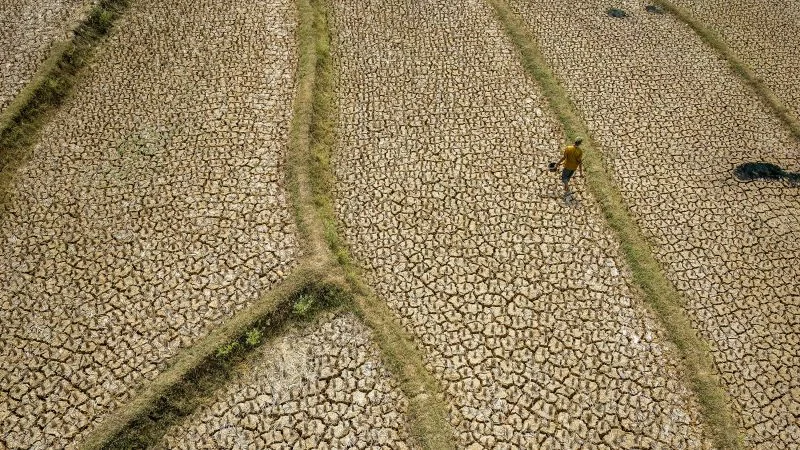
A 'super El Niño' has shattered historical temperature records in the Pacific Ocean, with forecasts predicting a peak of 4.0C by December. The Climate Impact Lab projects this event could cause 451,000 excess heat-related deaths globally by February 2027, disproportionately affecting nations in the Global South. While the phenomenon is a natural cycle, scientists warn that underlying fossil-fuel-driven warming is amplifying its impacts, leading to severe droughts, wildfires, and food insecurity worldwide.
Key points
- The current El Niño reached 3.05C in the Pacific on September 19, surpassing the 2015 record of 3.02C months before its expected peak.
- The Climate Impact Lab estimates 451,000 excess heat-related deaths between June 2026 and February 2027, with Nigeria, Indonesia, and Sudan facing the highest tolls.
- Forecasters predict the event could peak at 4.0C in November or December, a level described by experts as unprecedented in the last millennium.
- The phenomenon is already causing 15% less monsoon rain in India, suppressing Atlantic hurricanes, and triggering record wildfires in Indonesia.
- Climate scientists emphasize that while El Niño is natural, its impacts are being supercharged by human-caused global warming, creating a 'double whammy' for extreme weather.
Background
Our archive from August 2026 noted that this El Niño was already on track to be the strongest on record, prompting economic risk assessments and emergency declarations in regions like California. Earlier reports highlighted the potential for a stormier U.S. winter and global shifts in water resources, setting the stage for the current record-breaking temperature milestones.
How outlets are covering it
CNN and The Guardian emphasize the unprecedented nature of the event, with The Guardian describing the temperature rise as 'jaw-dropping' and potentially the largest in a millennium. Al Jazeera focuses on the human toll, detailing the 451,000 death projection and the disproportionate impact on the Global South due to weaker institutional responses. BBC provides a technical breakdown of the measurement indices, noting that while daily sea surface temperatures have broken records, some longer-term relative indices have not yet peaked. Al Jazeera also highlights skepticism from some scientists regarding the exact regional distribution of the death toll, while others view the figure as a conservative estimate that excludes deaths from floods and fires.
Why it matters
This event represents a critical inflection point in climate science, demonstrating how natural cycles interact with anthropogenic warming to produce extreme outcomes. The projected 451,000 deaths and potential for 2027 to become the hottest year on record underscore the urgent need for adaptive infrastructure and international climate action to mitigate the cascading effects on food security, health, and global economies.
What to watch
Meteorologists expect the El Niño to peak between November and December 2026, potentially reaching 4.0C. In the coming months, the world will monitor for record-breaking global temperatures in 2027, continued droughts in the Horn of Africa and Central America, and increased wildfire risks in Australia and Indonesia. The UN World Meteorological Organization has launched a major mobilization to support national weather services in delivering life-saving forecasts during this period.
- Super-sized El Niño could cause more than 450,000 heat deaths by February, study suggests CNN
- Scientists warn super El Nino could cause 450,000 deaths: Should we worry? Al Jazeera
- ‘Jaw-dropping’ El Niño bursts through temperature record months before peak The Guardian
- Developing El Niño becomes strongest on record weeks before expected peak BBC
- El Niño could cause 451,000 more heat-related deaths compared to normal year, group says. Map shows areas at risk. cbsnews.com
Want the full story? Read the original reporting
Read on CNN