
Record heat drives global ozone crisis, exposing 34% of population to extreme pollution
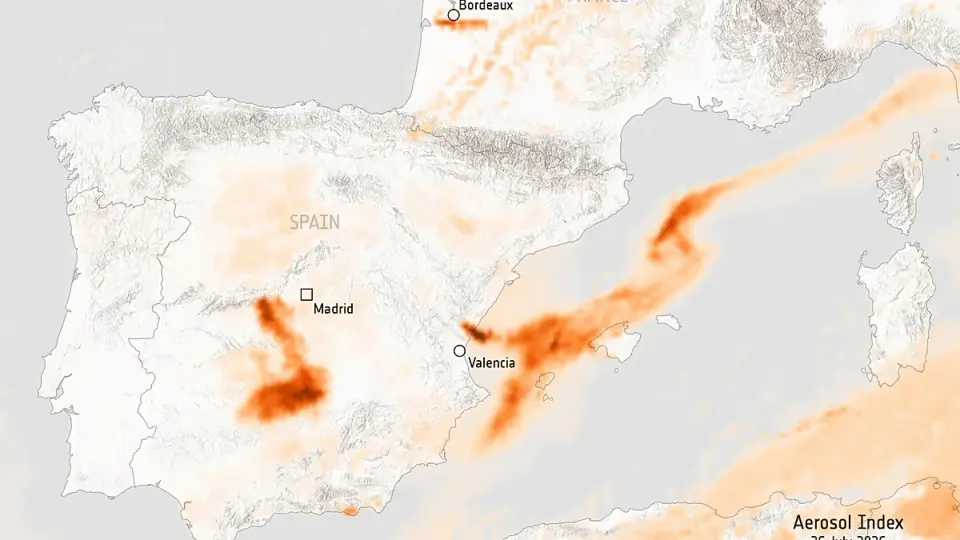
The inaugural Copernicus Atmosphere Monitoring Service (CAMS) report reveals that 34% of the global population faced 'extremely poor' ozone levels in 2026, driven by record heatwaves and wildfires. While Europe saw 50% of its population exposed to unsafe levels, with Milan among the worst-affected cities, Asia suffered the highest exposure rates. Although EU regulations have successfully reduced other pollutants, ozone remains a stubborn issue due to its link with rising temperatures.
Key points
- CAMS reports that 34% of the world’s population experienced 'extremely poor' ozone air quality between January and September 2026, with another 17% facing 'very poor' conditions.
- Ground-level ozone, a greenhouse gas contributing 0.23°C to current warming, forms when nitrogen oxides and volatile compounds react under high heat and sunlight.
- Europe’s 2026 heatwaves led to 50% of its population being exposed to poor or worse ozone levels, with Milan, Rio, and Delhi cited as some of the most affected cities globally.
- While EU efforts have cut nitrogen oxide emissions by 39% in industry and 40% in transport since 2015, ozone levels show no clear downward trend due to increasing heatwaves.
- Only 5% of the global population experienced 'good' ozone levels in 2026, with Asia having the highest exposure rate at 53% for 'extremely poor' air quality.
Background
This report follows a year of extreme weather events, including record-breaking heatwaves in Europe and North America. Previous coverage noted how energy costs and fossil fuel reliance continue to drive emissions, though this specific issue focuses on the chemical reaction of pollutants in the atmosphere rather than direct fuel consumption. The 2024 EU Air Quality Directive has been effective in reducing other pollutants, but ozone remains a persistent challenge due to its dependence on temperature.
How outlets are covering it
Euronews emphasizes the health risks to asthmatics and highlights Milan as a critical hotspot, noting that ozone penetrates deep into the respiratory system. France 24 focuses on the global scale, detailing that 34% of the world faced 'extremely poor' air and highlighting Asia’s severe exposure due to industrialization and agricultural burning. CAMS provides the technical framework, stressing that transboundary pollution, such as smoke from North American wildfires reaching Europe, complicates local mitigation efforts. All sources agree that while precursor emissions are falling, the link between climate change and ozone formation prevents a clear improvement in air quality.
Why it matters
Ground-level ozone is a 'super pollutant' that harms lungs, ecosystems, and crop yields. As climate change increases heatwaves, ozone levels may rise even if emission sources decrease, creating a feedback loop that exacerbates public health risks. The data underscores the need for better monitoring and international cooperation, as pollution easily crosses borders, affecting communities far from the source of emissions.
What to watch
Experts recommend improved forecasting and public awareness campaigns to manage ozone exposure. Governments are urged to implement specific air quality plans, as only Croatia, France, and Spain currently have dedicated ozone strategies. Individuals are advised to reduce emissions by cycling, using eco-friendly products, and adjusting driving habits to lower nitrogen oxide output.
- Half of Europeans exposed to little-known ‘super pollutant’ Euronews.com
- Nearly 40% of global population exposed to dangerous ozone pollution in 2026: Report ABC News - Breaking News, Latest News and Videos
- Heatwaves, wildfires expose a third of world to extreme ozone pollution France 24
- Almost 40 per cent of the world’s population is exposed to dangerous levels of ozone Science Media Centre España
- Atmosphere Watch: new analysis tracks global air quality and transboundary pollution in 2026 Copernicus Atmosphere Monitoring Service (CAMS)
Want the full story? Read the original reporting
Read on Euronews.com