
Systemiq Report Warns Himalayan Glaciers Are Melting 65% Faster, Threatening South Asia
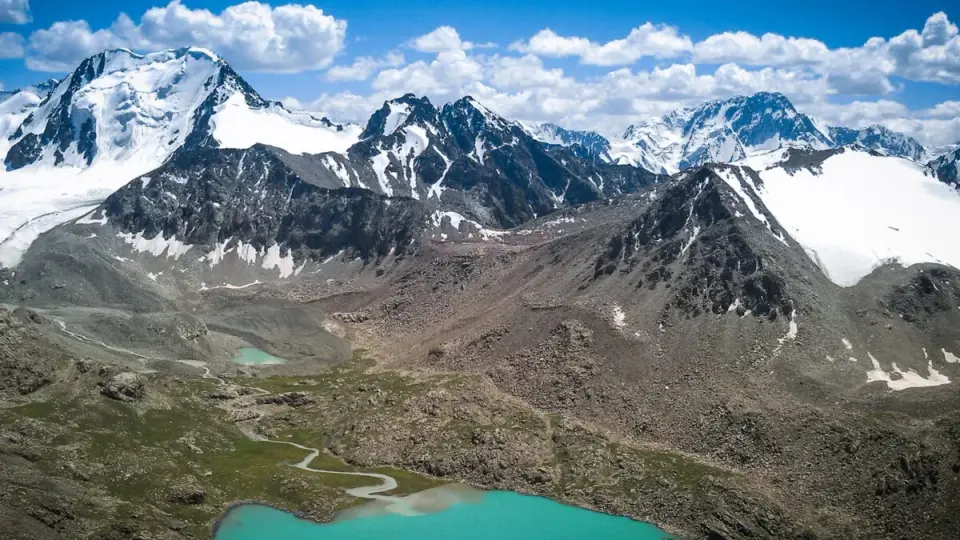
A new report by consultancy Systemiq, produced with Indian government partners, finds that Himalayan glaciers are melting 65% faster than a decade ago. The study warns of a 'peak water' tipping point by mid-century, where catastrophic floods precede severe water scarcity for 2 billion people. This follows the August 2026 disaster in Nepal, which killed over 1,300 people and left thousands missing after a glacier collapse near Langtang Lirung triggered massive flash floods.
Key points
- Systemiq’s report, supported by India’s GB Pant National Institute of Himalayan Environment and ICIMOD, projects that the Hindu Kush Himalaya could lose up to 80% of its glacier volume by 2100.
- The report identifies a 'peak water' phase by mid-century, characterized by extreme flooding before the eventual drying of rivers that sustain agriculture and hydropower for hundreds of millions.
- Only 21 of the estimated 40,000 glaciers in the region are currently monitored in detail, leaving vast areas of unstable glacial lakes without early warning systems.
- Himalayan water supports approximately 20% of India’s GDP, yet the mountain states capture only about 5% of that economic value, creating a disparity in risk and benefit.
- The August 2026 flood in Nepal, triggered by a 142 million cubic meter ice and rock collapse, resulted in at least 1,386 confirmed deaths and over 5,130 missing persons.
Background
This report arrives shortly after the catastrophic August 26, 2026, glacier collapse near Langtang Lirung, which our archive confirms triggered a surge rising 7-9 meters in 30 minutes. Previous coverage noted that Nepal is seeking $20 million in climate damages from the UN, highlighting the growing tension between local impacts and global responsibility. While earlier reports focused on the immediate disaster, this new analysis provides a long-term structural assessment of the region’s hydrological future.
How outlets are covering it
Gizmodo and BBC both highlight the Systemiq report’s warning of a 'peak water' tipping point and the critical gap in monitoring, noting that only 21 of 40,000 glaciers are tracked. BBC emphasizes the economic risk to India, noting that Himalayan water underpins 20% of GDP, while Gizmodo focuses on the potential for 'apocalyptic' flash floods. Down To Earth offers a more critical perspective, arguing that the disaster is not just a natural event but a result of 'reckless development' and a failure to adapt to climate change, specifically citing hydroelectric projects and tunneling. In contrast, India Today provides historical background from a 2006 archive, showing that glacier retreat has been documented for decades, with smaller glaciers losing 38% of their area since 1962, suggesting that the current crisis is an acceleration of a long-term trend rather than a sudden new phenomenon.
Why it matters
The findings indicate that the Himalayas, often called the 'Third Pole,' are approaching a critical threshold that threatens the water security of 2 billion people. The combination of rapid melting, unstable glacial lakes, and insufficient monitoring creates a high risk for future mass-casualty events. Furthermore, the economic dependency of major economies like India on Himalayan water means that climate-driven disruptions could have global supply chain and geopolitical consequences, making international cooperation and black carbon reduction urgent priorities.
What to watch
Systemiq proposes 10 priority transitions, including reducing black carbon emissions from brick kilns, expanding glacier monitoring, and improving disaster early-warning systems. Governments are expected to agree on pre-planned actions for hazard response, and there is a push to shift tourism models from maximizing visitor numbers to retaining value locally. Cross-border cooperation between India, China, and other nations is deemed essential for shared risk information and joint resilience investments.
- The Himalayas Are Melting Faster Than Ever. Scientists Worry Nepal’s Floods Are Just the Beginning Gizmodo
- Nepal floods: The Himalayas are melting faster - and India's economy is 'at risk' BBC
- Himalaya approaching tipping point, report says The Hindu
- Himalayan blunders and beyond Down To Earth
- From the India Today archives (2006) | Himalayan glaciers: The big meltdown India Today
Want the full story? Read the original reporting
Read on Gizmodo