
Bolivia declares emergency as El Niño drought hits 78,000 families
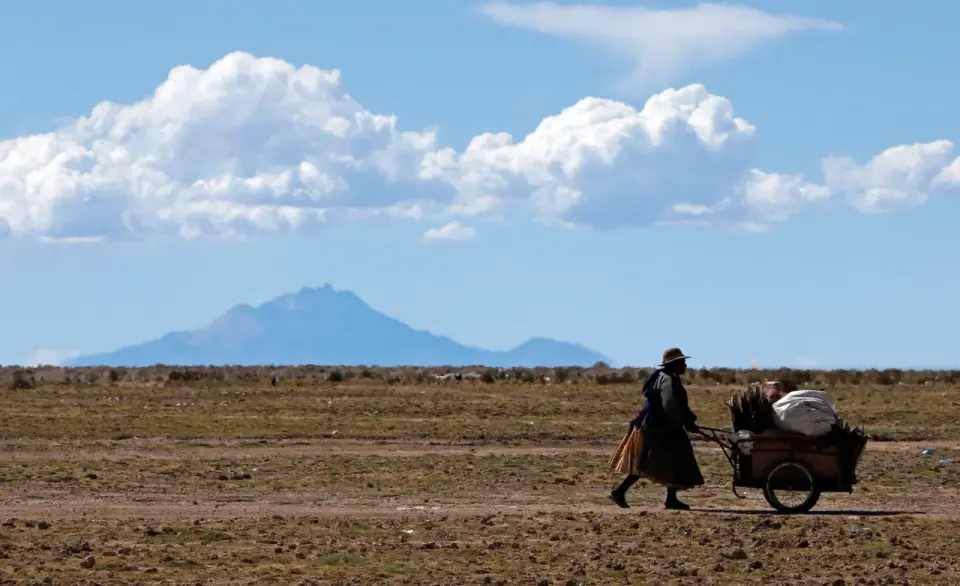
Bolivia has declared a nationwide state of emergency to mobilize resources against the severe impacts of the El Niño weather pattern. President Rodrigo Paz signed the decree on November 1, 2026, to address simultaneous drought and flooding risks. The current drought has already affected 78,000 families across six departments and resulted in the loss of over 75,000 cattle. Authorities warn that the El Niño, which may be the strongest in recorded history, will peak in late 2026 and could cause widespread global harm.
Key points
- President Rodrigo Paz signed a decree on November 1, 2026, establishing a nationwide state of emergency to accelerate the deployment of rescue teams and financial resources.
- Current drought conditions have impacted 78,000 families in six of Bolivia’s nine departments, leading to the loss of more than 75,000 cattle, according to a government report.
- The El Niño phenomenon is expected to peak at the end of 2026, with the World Meteorological Organization reporting a nearly 100 percent likelihood it will persist through February 2027.
- Bolivia faces dual threats from drought and flooding, following incidents in December 2025 where floods in the Santa Cruz region killed dozens of people.
- Scientists warn the current cycle could be the strongest in recorded history, potentially causing over 450,000 deaths globally, with the poorest nations facing disproportionate impacts.
Background
This declaration follows a series of emergency measures in other regions due to the same weather pattern. In September 2026, California declared a state of emergency to prepare for a 'super El Niño' that was already breaking temperature records and threatening coastal flooding. Similarly, Newport Beach declared a local emergency in October 2026 after record coastal flooding driven by a Kelvin wave associated with the El Niño. These earlier events highlight the global scale of the current climate disruption.
How outlets are covering it
All four sources agree on the core facts: the state of emergency declaration, the specific casualty and livestock numbers, and the dual threat of drought and floods. Al Jazeera and The Business Standard emphasize the need for institutional cooperation and the potential for the El Niño to be the strongest in history. Inquirer.net and UA.NEWS highlight the broader regional impact, noting that neighboring Peru suffered wildfires that killed at least 12 people, while Chile recorded its rainiest October on record. The Business Standard specifically notes that the decree aims to accelerate financial resource deployment, whereas Al Jazeera focuses on the deployment of rescue teams. There is no disagreement on the facts, but the emphasis varies between immediate local response and broader global consequences.
Why it matters
Bolivia’s emergency declaration signals that the El Niño is transitioning from a forecasted risk to an active, severe crisis affecting food security and infrastructure. The loss of 75,000 cattle and the impact on 78,000 families indicate immediate economic and social strain. As the phenomenon peaks in late 2026, the declaration serves as a precursor to potential widespread humanitarian challenges across Latin America and other vulnerable regions, underscoring the urgent need for coordinated international and domestic response mechanisms.
What to watch
Authorities will deploy additional rescue teams to the hardest-hit areas as the El Niño intensifies. The government will coordinate with all institutions to manage the expected severe impacts of drought and floods. The weather pattern is projected to peak at the end of 2026, with secondary effects continuing into 2027. Global monitoring will continue to track the potential for over 450,000 deaths worldwide, with a focus on the most vulnerable nations.
- Bolivia declares state of emergency over El Nino weather pattern Al Jazeera
- Bolivia declares emergency as El Nino intensifies, threatens severe weather DW.com
- Bolivia declares state of emergency over El Niño Inquirer.net
- Bolivia declares nationwide state of emergency over drought and flood risks The Business Standard
- Bolivia declares state of emergency over El Niño — Channel NewsAsia UA.NEWS
Want the full story? Read the original reporting
Read on Al Jazeera