
Study reveals Russian employers penalize veterans who volunteered for Ukraine war
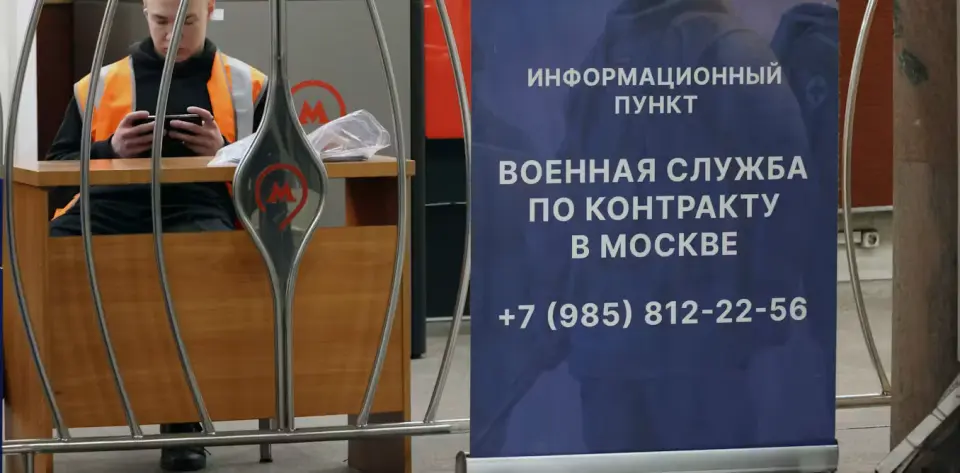
A new study shows that Russian employers are significantly less likely to hire men who voluntarily served in the war against Ukraine compared to those who completed mandatory conscription. Despite state propaganda labeling these soldiers as heroes, job applicants listing voluntary war service received roughly one-third fewer callbacks than those listing standard military service. This discrepancy suggests a gap between official rhetoric and civilian reality, potentially hindering the reintegration of returning veterans into the workforce.
Key points
- Researcher Sergey Alekseev conducted an experiment in 2025 using 60 pairs of identical fictitious resumes on major Russian job platforms HeadHunter and SuperJob.
- The only difference between the pairs was whether the candidate listed voluntary contract service in the 'special military operation' or routine compulsory conscription.
- Applicants listing voluntary war service received positive responses in 36.7% of cases, compared to 55% for those listing conscription, an 18.3 percentage point gap.
- The study found that the hiring penalty was most pronounced in the retail sector and in Moscow, though it affected various job types including IT, logistics, and manufacturing.
- Russian officials, including Vladimir Putin, have recently emphasized the need to prepare for the employment of returning soldiers, yet the study indicates that civilian employers may view voluntary service as a liability rather than an asset.
Background
This issue arises against the backdrop of Russia's heavy reliance on contract soldiers to replenish its forces since 2022, with officials reporting hundreds of thousands of new recruits annually. Previous concerns about the treatment of veterans, such as the 'black widows' scandal involving death benefit fraud, highlight the broader societal tensions surrounding the war's human cost. While the state has created foundations like 'Defenders of the Fatherland' to support veterans, the new findings suggest that market forces may counteract these official efforts.
How outlets are covering it
The Conversation and PRIO highlight the stark contrast between the Kremlin's 'hero' narrative and the actual behavior of private employers, noting that voluntary service may be associated with trauma or reputational risk. UA.NEWS adds that the hiring penalty is particularly severe in Moscow and retail, suggesting that urban employers may be more sensitive to the stigma of voluntary enlistment. RBC-Ukraine focuses on the political dimension, citing Putin's recent directives to prepare for veteran reintegration, which the study implies may be ineffective if private companies continue to discriminate against these candidates. While all sources agree on the statistical disparity, they differ in emphasis: academic sources focus on the methodological proof of discrimination, while Russian media outlets focus on the potential policy failure and the state's attempt to mandate hiring quotas to counteract this market bias.
Why it matters
The findings indicate that the social contract offered to Russian volunteers—high pay and public honor—may not extend to post-war civilian life. If employers continue to penalize voluntary service, it could deter future recruitment and create a large class of marginalized veterans, complicating Russia's long-term social stability and economic reintegration efforts.
What to watch
The Russian State Duma is considering a bill to mandate hiring quotas of 2% to 4% for war veterans, and over 30 regions have already introduced similar rules. However, the effectiveness of these measures remains to be seen, as they may conflict with private employer preferences. Future research will need to determine if this hiring penalty persists across different industries and whether the state's support programs can overcome the market-based discrimination identified in the study.
- Russia’s volunteer soldiers may face tougher job prospects after returning from Ukraine: study The Conversation
- Russian employers are reluctant to hire contract workers after the war UA.NEWS
- Russian employers less likely to hire veterans who volunteered for Ukraine war, study finds Peace Research Institute Oslo (PRIO)
- Putin urges Russia to prepare for soldiers coming home from war RBC-Ukraine
- Putin hinted that the war against Ukraine would end soon UA.NEWS
Want the full story? Read the original reporting
Read on The Conversation