
IDF Detonates 2km of Hezbollah Tunnels in Southern Lebanon, Triggering 4.1 Magnitude Tremor
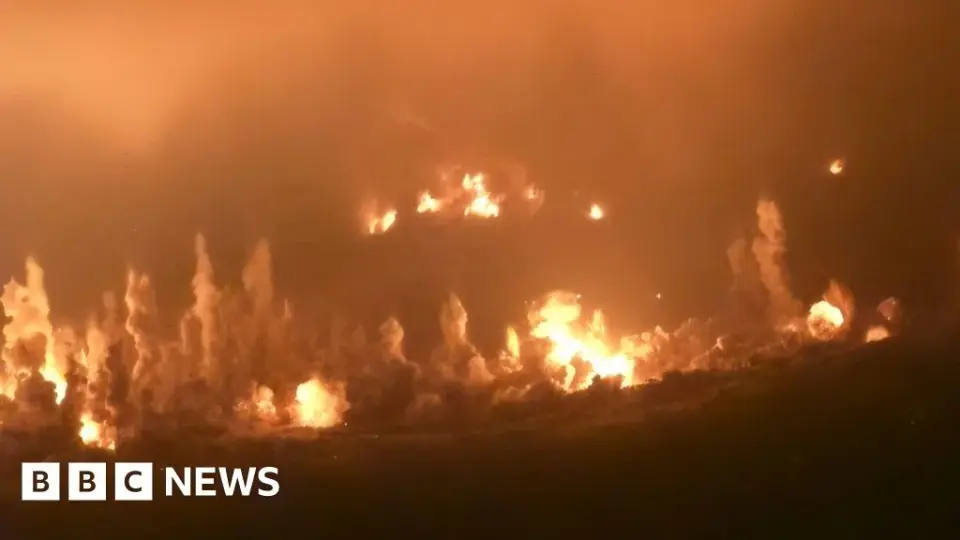
The Israel Defense Forces (IDF) announced the destruction of a major underground Hezbollah complex beneath the Ali al-Taher Ridge in southern Lebanon. Using over 1,000 tonnes of explosives, the IDF collapsed more than 2 kilometers of tunnels, an action that generated a seismic event equivalent to a magnitude 4.1 earthquake. The operation, codenamed 'Chisel of Flames,' targeted infrastructure built over two decades, including a command center for Hezbollah's Badr unit. Residents in nearby Nabatieh reported feeling the tremor as houses shook, while the IDF stated that all personnel inside the tunnels were either killed or fled. This action concludes a months-long campaign to secure the ridge and establish a security zone, though Israeli forces remain in the area despite a broader ceasefire framework.
Key points
- The IDF used approximately 1,100 tonnes of explosives to destroy two main tunnels spanning over 2 kilometers beneath the Ali al-Taher Ridge.
- The detonation caused a seismic event measured at magnitude 4.1 by the US Geological Survey, with tremors felt in cities up to 40 kilometers away, including Saida and Nabatieh.
- The destroyed complex included a command center for Hezbollah's Badr unit and stockpiles of rockets, missiles, drones, and anti-tank weapons.
- The operation, which involved the 36th Division and Yahalom special engineering unit, is described by the IDF as the destruction of the last major line of defense in southern Lebanon.
- Israeli forces continue to occupy the area, stating they will not withdraw from the 'Yellow Line' to prevent Hezbollah from returning, despite a ceasefire agreement that calls for gradual withdrawal.
Background
This development follows a resumption of conflict in March 2026, when Hezbollah launched rockets at Israel in retaliation for a strike killing Iran's supreme leader. Since then, Israel has occupied roughly 5% of Lebanese territory. A ceasefire framework agreed in June between Lebanon and Israel, alongside a separate US-Iran deal, stipulated that Hezbollah would disarm and Israeli forces would withdraw gradually. However, fighting has continued, with at least 4,362 people killed in Lebanon since March, including 395 women and 259 children, according to the Lebanese health ministry. Previous coverage noted extensive destruction of homes and infrastructure in the south, with nearly 18,000 homes damaged or destroyed since the conflict began.
How outlets are covering it
The BBC reports that the blast triggered a magnitude 4.1 earthquake and that residents in Nabatieh experienced significant shaking, with some fleeing to Beirut. The Jerusalem Post provides more granular details on the military operation, noting that the IDF codenamed the mission 'Chisel of Flames' and that it involved the 36th Division, Commando Brigade, and Yahalom Unit. The Jerusalem Post emphasizes that the destroyed infrastructure was built over 20 years and served as a 'nerve center' for the Badr Unit. While the BBC notes no immediate response from Hezbollah or the Lebanese government, the Jerusalem Post reports that Hezbollah had called on Iran for assistance, receiving a 'cold response' from Tehran. The Jerusalem Post also clarifies that no Iranian nationals were found at the site, contrary to some reports, and that the IDF does not intend to leave the area, contradicting the gradual withdrawal expected under the ceasefire framework. Both sources agree on the scale of the explosives used and the seismic impact, but the Jerusalem Post offers more detail on the tactical deception used to surprise Hezbollah forces.
Why it matters
The destruction of this major underground complex represents a significant tactical shift in the conflict, potentially altering the balance of power in southern Lebanon. It tests the durability of the ceasefire framework, as Israeli forces remain in the area despite agreements for withdrawal. The seismic impact and widespread destruction highlight the ongoing humanitarian crisis, with thousands of civilians affected by the conflict. The operation also signals a continued Israeli strategy of dismantling Hezbollah's infrastructure, which may influence future negotiations and the stability of the region.
What to watch
The IDF has stated it will continue to enforce the 'Yellow Line' and prevent Hezbollah from returning to the area. The broader ceasefire framework remains in tension, with Israeli strikes and demolitions continuing despite the agreement. Hezbollah has rejected direct negotiations, and the Lebanese army is increasing deployments in areas outside Israeli control to strengthen stability. The situation remains volatile, with the potential for further escalation if Hezbollah or Iran respond to the loss of this key infrastructure.
- Israel says it has destroyed major underground Hezbollah base BBC
- Israel blows up Hizbollah tunnel system in southern Lebanon Financial Times
- Israel says it destroyed Hezbollah underground complex at Lebanon's Ali al-Taher Reuters
- IDF releases footage of Hezbollah infrastructure below Ali al-Taher ridge after destroying tunnels The Jerusalem Post
- Live updates • After destroying Hezbollah stronghold, IDF says it won't withdraw from Lebanon Haaretz
Want the full story? Read the original reporting
Read on BBC