
Iranian Truckers Strike Nationwide Amid Deepening Energy and Economic Crisis
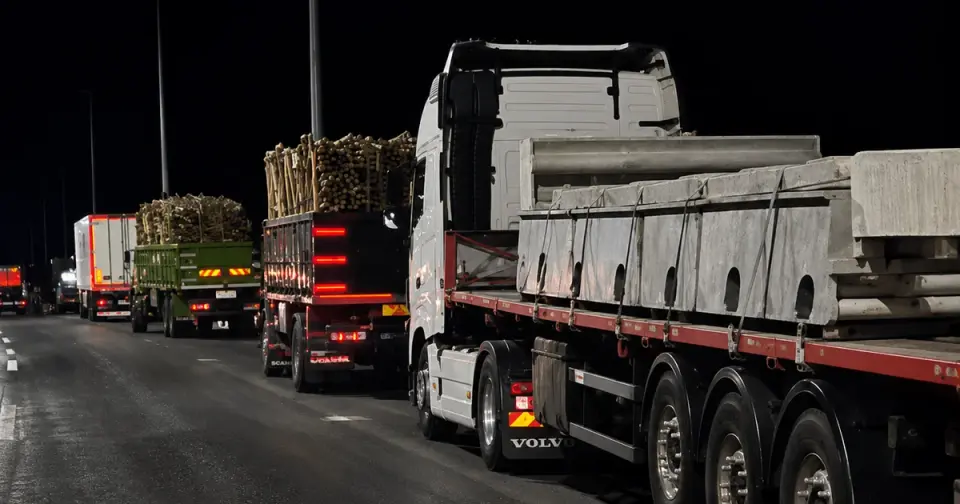
Iranian truck drivers have launched a nationwide strike in response to soaring operational costs and stagnant freight rates. The action, coordinated by the Union of Truck Drivers, coincides with the start of daily power cuts and a broader economic crisis exacerbated by US sanctions and fuel shortages. While the government frames recent energy austerity measures as symbolic leadership, critics and workers argue these gestures highlight the severity of the hardship facing ordinary citizens.
Key points
- The Union of Truck Drivers and Trucking Associations Across Iran called for a nationwide work stoppage starting November 22, citing rising costs for engine oil, tires, and insurance.
- Drivers report that maintenance costs, such as 40 liters of engine oil and five filters, now cost 620 million rials, equivalent to nearly four months of the 2026 minimum wage.
- Iran’s national electricity company announced daily power cuts beginning November 22 due to fuel shortages at power stations, with critical facilities exempted.
- President Masoud Pezeshkian appeared on state television working in a dimly lit, unheated office to urge citizens to conserve energy, a move described by officials as symbolic but criticized as out of touch.
- Political analyst Iman Aghayari warned that the trucker strike could encourage other professional groups to join protests, prompting authorities to use threats and repression to prevent the spread of unrest.
Background
This strike occurs against a backdrop of severe economic pressure on Iran, including a US naval blockade and stalled peace negotiations. Recent archive coverage notes that Iran has faced renewed electricity outages and long queues at petrol stations. The current crisis follows a period of military tension, where Iran resumed drone strikes on US targets in the Gulf in November 2026, even as the US shifted to economic pressure strategies. The government’s recent energy austerity stunts, including the president’s darkened office broadcast, have sparked public backlash over the contrast between Iran’s vast energy reserves and the daily hardships caused by sanctions.
How outlets are covering it
Iran International and The Washington Post both highlight the stark contrast between the government’s symbolic energy conservation gestures and the reality of economic hardship. While the Foreign Ministry framed President Pezeshkian’s dark office as a message to promote responsible consumption, Iran International notes that drivers and citizens view such actions as evidence of 'incompetent officials' who ignore the people's suffering. Haaretz focuses on the immediate impact of fuel shortages, noting that daily power cuts have begun, with critical facilities exempted. The Washington Post emphasizes the external pressure from US sanctions and a naval blockade as the root cause of the energy crisis, whereas Iran International attributes the crisis to internal mismanagement and stagnant freight rates. All sources agree that the economic situation is worsening, but they differ on whether the primary driver is external coercion or internal policy failure.
Why it matters
The trucker strike threatens to disrupt supply chains, emptying produce markets and halting factories, which could further destabilize the Iranian economy. If the strike spreads to other sectors, it could trigger broader social unrest. The government’s response, which includes threats and repression, indicates a high level of concern over the potential for widespread protests. The crisis also underscores the effectiveness of US economic pressure in weakening Iran’s infrastructure and public services, potentially influencing future diplomatic and military strategies in the region.
What to watch
Authorities are monitoring the strike closely, seeking to prevent other professional groups from joining through a combination of inducements and repression. The continuation of power cuts and fuel shortages may force the government to adjust its energy policies or seek diplomatic resolutions to ease sanctions. The outcome of the strike will depend on the level of public support and the government’s ability to manage the economic fallout without triggering broader unrest.
- Truck drivers strike across Iran over economic hardship Iran International
- Iranian president turns out office lights to urge citizens to save energy The Washington Post
- Iran To Ration Electricity Amid Warnings Power Grid Battered by US, Israeli Strikes Radio Free Europe/Radio Liberty
- Iran Announces Daily Power Cuts Amid Fuel Shortages Ahead of Winter Haaretz
- Truckers strike, blackouts spread as blockade pushes Iran to the brink Israel Hayom
Want the full story? Read the original reporting
Read on Iran International