
Restoration work uncovers 420 meters of pre-Justinian tunnels beneath Istanbul’s Hagia Sophia
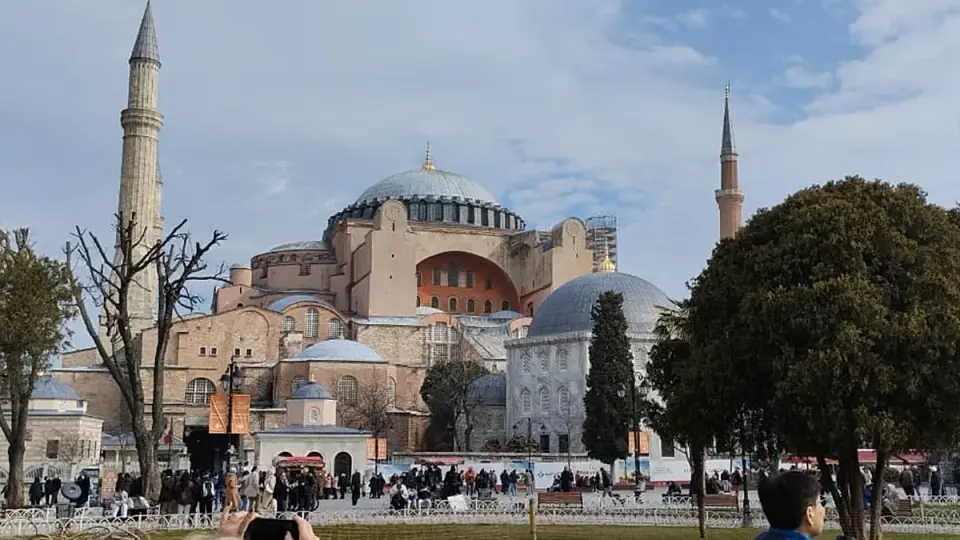
Turkish authorities have cleared 420 meters of underground tunnels beneath Hagia Sophia, removing nearly 3,000 tonnes of debris to reveal six chambers and nine passages. The excavation, described as the largest restoration in the Turkish Republic, has uncovered architectural layers potentially predating the 6th-century basilica. Officials are evaluating whether to open sections to the public and utilize the network for improved ventilation, though no timeline has been set.
Key points
- Culture and Tourism Minister Mehmet Nuri Ersoy confirmed the removal of nearly 3,000 tonnes of backfill from the Vizier’s Garden and western garden areas.
- Excavations in the Vizier’s Garden revealed a hypogeum (underground burial structure) with architectural layers located 1.5 meters below the known floor level, potentially dating to a period before the current building’s construction between 532 and 537 AD.
- In the western garden, six underground spaces and nine tunnels were identified; seven tunnels have been cleared, while documentation continues in the remaining two.
- The longest tunnel, measuring 180 meters, runs parallel to the facade and may connect to the historic Roman Road of Constantinople, though its original function remains unconfirmed.
- Structural repairs include reinforcing masonry with stainless steel and repairing an 18-meter section of damaged vaults within a 56-meter underground space.
- Technical assessments indicate the current underground outlet meets only 3.6% of the monument’s ventilation needs, prompting studies to integrate the tunnels into a modern fresh-air system.
Background
This discovery follows earlier reports in November 2026 regarding the clearing of 3,000 tons of debris to reveal Roman-era tunnels beneath the site. The current excavation is part of a broader restoration program that began in February 2025, aiming to preserve the monument’s structural integrity while uncovering historical layers from its 1,500-year history.
How outlets are covering it
While all sources agree on the scale of the cleanup and the involvement of Minister Ersoy, they differ in emphasis. Euronews and Türkiye Today highlight the potential for public access and the historical significance of the hypogeum. Hürriyet Daily News provides specific dimensions of the burial chamber, noting it is roughly 8 meters by 8 meters with two extending channels. All outlets confirm that the dating of the pre-Justinian remains is still under scientific investigation and that no timetable for public opening has been established.
Why it matters
The findings offer new insights into the water management and infrastructure of Byzantine Constantinople, potentially revealing architectural phases older than the current basilica. The project represents a significant step in preserving the monument’s underground heritage and may lead to a new exhibition space for visitors, enhancing the understanding of the site’s complex history.
What to watch
Scientists will continue to date the newly uncovered architectural layers and determine the original function of the 180-meter tunnel. Authorities will finalize a plan for potential public access, prioritizing monument preservation and visitor safety. Further studies will assess whether the tunnels can be integrated into a modern ventilation system without altering their historical character.
- Ancient tunnels emerge beneath Istanbul's iconic Hagia Sophia Euronews.com
- Hagia Sophia's secret tunnels revealed in major restoration Türkiye Today
- Massive cleanup uncovers ancient layers beneath Hagia Sophia Hürriyet Daily News
- Hagia Sophia’s Underground Tunnels Reveal Hidden History tovima.com
- Hidden World Beneath Hagia Sophia Revealed in First-Ever Footage GreekReporter.com
Want the full story? Read the original reporting
Read on Euronews.com