
Bayeux Tapestry’s UK Return Highlights Medieval Masculinity and Hidden Female Labor
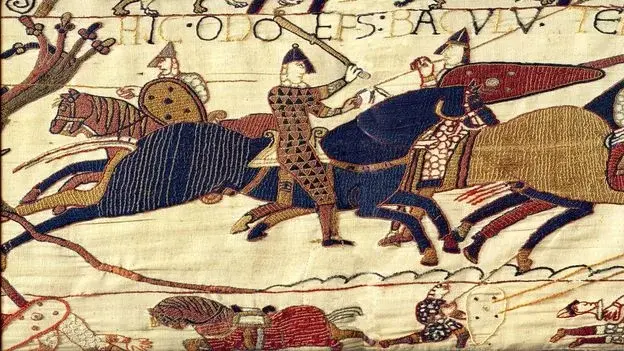
The 11th-century Bayeux Tapestry is returning to the UK for the first time in nearly a millennium, set to exhibit at the British Museum from September 10, 2026, to July 11, 2027. While the 70-meter artwork famously depicts the Norman conquest and the death of King Harold, recent analysis emphasizes its hypermasculine imagery, including prominent depictions of male and equine genitalia as symbols of power. Scholars also highlight the likely female creators of the piece, suggesting that the tapestry’s borders may contain subversive critiques of the male-dominated narrative. The exhibition is part of a broader national program, including a new textile trail in Scotland, celebrating the artifact’s return after a secret transport from France.
Key points
- The Bayeux Tapestry, a 70-meter flax linen embroidery, is on loan from France and will be displayed at the British Museum in London from September 10, 2026, to July 11, 2027.
- The artwork depicts the Norman conquest of England, focusing on the conflict between William of Normandy and Harold Godwinson, with a strong emphasis on male virility and machismo.
- Oxford professor George Garnett counted 93 penises in the tapestry, mostly belonging to horses, which scholars interpret as shorthand for political power and dominance.
- The tapestry was likely created by women, possibly nuns or a professional workshop, who may have used the decorative borders to insert coded critiques or humorous commentary on the central narrative.
- A new 'Borders Tapestry Trail' has been launched in Scotland, connecting historic sites to celebrate the tapestry's return and the region's textile heritage.
Background
The Bayeux Tapestry, created in the 1070s, has been a subject of historical debate regarding its origins and intent. Previous coverage noted its return to the UK involved a secret police escort via the Channel Tunnel in July 2026, marking a significant cultural event. The artifact, likely commissioned by Bishop Odo of Bayeux, has long been studied for its depiction of the 1066 Battle of Hastings, but recent scholarship is shifting focus to the gender dynamics and the labor of its female creators.
How outlets are covering it
BBC and The Conversation both emphasize the tapestry's hypermasculine nature, with BBC citing Dr. Christopher Monk’s description of 'chest-thumping machismo' and The Conversation highlighting the three main female figures. However, they differ in focus: BBC stresses the 'manosphere' analogy and the Victorian-era sanitization of the original imagery, while The Conversation provides a detailed academic breakdown of the identities of the women depicted, such as Queen Edith and the mystery figure Aelfgyva. Midlothian View offers a contrasting perspective, focusing on the logistical and tourism aspects of the return, highlighting the new 'Borders Tapestry Trail' in Scotland rather than the artistic or gendered analysis of the artwork itself.
Why it matters
The exhibition provides a rare opportunity to view the original artifact in the UK, offering insights into medieval political propaganda and gender roles. The renewed focus on the female creators and the subversive elements in the borders challenges traditional narratives of the Norman conquest, suggesting that the tapestry may have been a site of resistance or critique by the women who made it. This reframing is significant for understanding medieval society and the role of women in historical record-keeping.
What to watch
The tapestry will be on display at the British Museum until July 11, 2027. The 'Borders Tapestry Trail' in Scotland is expected to attract tourists and cultural enthusiasts, with tour operators creating bespoke experiences. Further academic discussions may continue regarding the identity of Aelfgyva and the extent of female creative liberty in the tapestry's borders.
Want the full story? Read the original reporting
Read on BBC