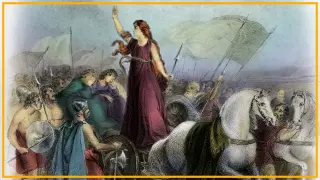
Experts debate how often Viking women fought, noting that while texts mention 'shield maidens' and some graves contain weapons, evidence suggests female warriors were a small minority, likely from high-ranking families, and not frequent participants in large-scale battles.
Bournemouth University archaeologist Miles Russell argues that Verica, the Atrebates ruler who allegedly persuaded Emperor Claudius to invade Britain in AD 43, was a woman rather than a man. Russell cites linguistic patterns, coin imagery, and Roman historical critiques of Claudius as evidence. While some scholars support the theory, others dispute the numismatic and textual interpretations, noting that the evidence remains ambiguous.
A large-scale Canadian study published in JAMA Network Open finds that hospital patients treated by female physicians have significantly lower 30-day mortality and readmission rates compared to those treated by male physicians. The research, led by Dr. Angela Jerath of the University of Toronto and the Institute for Clinical Evaluative Sciences (ICES), analyzed nearly one million adult patients in Ontario between 2008 and 2022. The findings suggest that female physicians may engage in more patient-centered communication and adhere more closely to clinical guidelines, leading to better short- and long-term health outcomes. The study emphasizes that these differences in care practices, rather than physician gender itself, should be the focus for improving healthcare systems. It also highlights ongoing disparities in physician pay and work hours, urging further research into how specific behaviors can be standardized across all medical professionals to enhance patient safety and recovery.
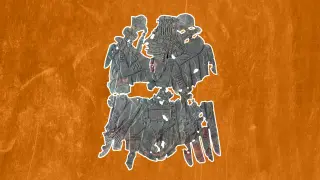
A 13th-century copper plate found in a Georgia burial, long interpreted as a male warrior, may actually depict a female or gender-variant individual, according to a 2017 study by archaeologist Billie Follensbee and art historian Katie Buford. The artifact, known as the 'Birdman' plate, was unearthed in the 1880s at the Etowah Indian Mounds site but is believed to have been crafted at Cahokia in Illinois and traded south. While previous interpretations, such as a 2004 study by Adam King, viewed the figure as a male chieftain's emblem, Follensbee and Buford noted the figure's slender build and prominent breasts. They proposed the image represents a 'manly-hearted woman' or a 'two-spirit' individual, a gender-variant role in Indigenous North American societies. The plate, roughly 11 inches tall, shows a figure in a bird costume holding a mace and a severed head, and is part of the Southeastern Ceremonial Complex tradition.
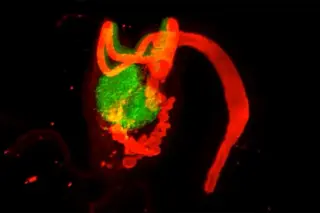
A 2024 study by researchers at the University of Michigan has revived interest in the rete ovarii, a small horseshoe-shaped structure in the female reproductive system that was removed from medical textbooks over a century ago because it was deemed functionless. The research, published in eLife, demonstrates that this 'mysterious orphan structure' is not vestigial but actively secretes fluids and interacts with the nervous, circulatory, and immune systems. Findings indicate the rete ovarii contains receptors for estrogen and progesterone and releases proteins involved in egg maturation and follicle maintenance. This rediscovery has sparked social media backlash against historical medical neglect of female anatomy, with critics noting that the male equivalent, the rete testis, remains in standard textbooks.
A study of 130 newborns at Cambridge’s Rosie Hospital found that girls spent a proportionally larger share of their gaze time watching human faces compared to boys, who looked more at moving objects. This suggests innate biological differences in social attention may exist from birth, potentially influencing later developmental trends like language acquisition and neurodevelopmental conditions.
The Städel Museum in Frankfurt is hosting 'Mary Magdalene: Sin. Pray. Love,' an exhibition exploring how visual art has conflated three distinct biblical figures into one controversial saint. Curator Bastian Eclercy argues that Magdalene’s identity is a composite of a nameless sinner, Mary of Bethany, and the biblical apostle. The show features ten key works, ranging from Albrecht Dürer’s woodcuts to Marlene Dumas’s 1996 portrait of Naomi Campbell, illustrating how perceptions of women have evolved from penitent sinners to autonomous agents. Experts note that these depictions often reflect societal anxieties about female sexuality and agency more than historical fact.
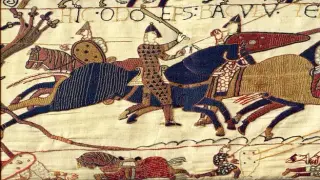
The 11th-century Bayeux Tapestry is returning to the UK for the first time in nearly a millennium, set to exhibit at the British Museum from September 10, 2026, to July 11, 2027. While the 70-meter artwork famously depicts the Norman conquest and the death of King Harold, recent analysis emphasizes its hypermasculine imagery, including prominent depictions of male and equine genitalia as symbols of power. Scholars also highlight the likely female creators of the piece, suggesting that the tapestry’s borders may contain subversive critiques of the male-dominated narrative. The exhibition is part of a broader national program, including a new textile trail in Scotland, celebrating the artifact’s return after a secret transport from France.
Recent ancient DNA studies are overturning the long-held archaeological assumption that prehistoric women held little power. Genetic evidence now confirms that women in Neolithic and Iron Age societies often held high status, controlled land rights, and led communities, challenging 19th-century biases that minimized their roles.
New genetic testing confirms a 4,000-year-old skeleton found near Stonehenge was female, overturning 200 years of assumptions that it was a male. The individual, identified as a metalworker and shaman, challenges previous views on gender roles in early Bronze Age Britain.
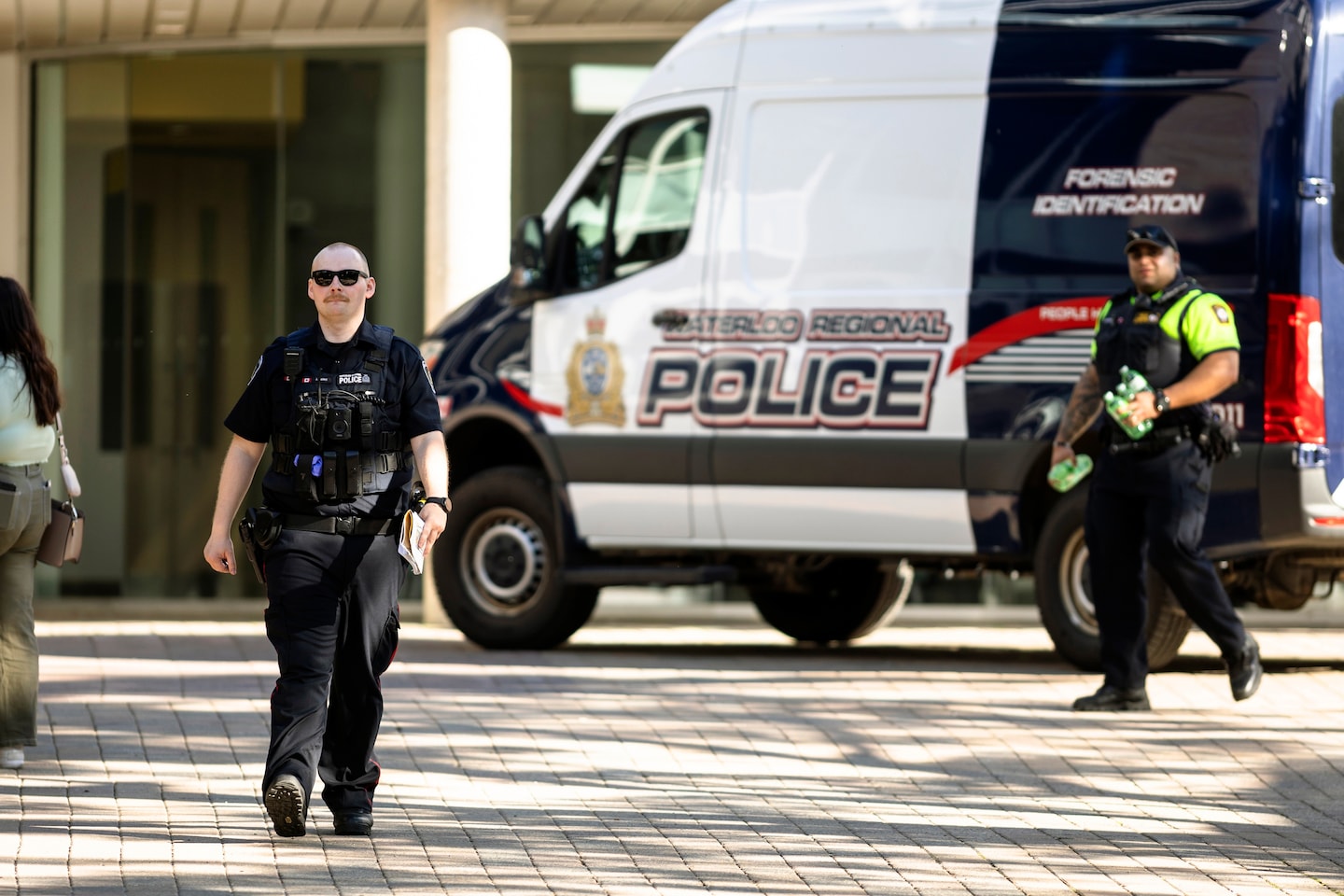
A 24-year-old man has been charged in connection with a stabbing at Waterloo University in Canada, which police have described as a "hate-motivated incident" targeting the LGBTQ+ community. The attack occurred during a gender studies lecture, with a professor and two students sustaining serious but non-life-threatening injuries. The suspect, an international student, has been charged with aggravated assault, assault with a weapon, possession of a weapon for a dangerous purpose, and mischief. The incident has been condemned by university officials and Canadian Prime Minister Justin Trudeau.
A stabbing attack during a gender studies class at the University of Waterloo in Canada was deemed a hate-motivated incident by police. The suspect, Geovanny Villalba-Aleman, targeted the 2SLGBTQ+ community and wounded three individuals. The attack, which occurred at the end of Pride Month, has been condemned by Canadian Prime Minister Justin Trudeau. The University of Waterloo has expressed support for affected students and will continue to fly the Pride and Two-Spirit flags until the end of July. Villalba-Aleman has been charged with multiple counts of assault and possession of a weapon.