
French Blood Bank Freezers Hacked, No Products Lost
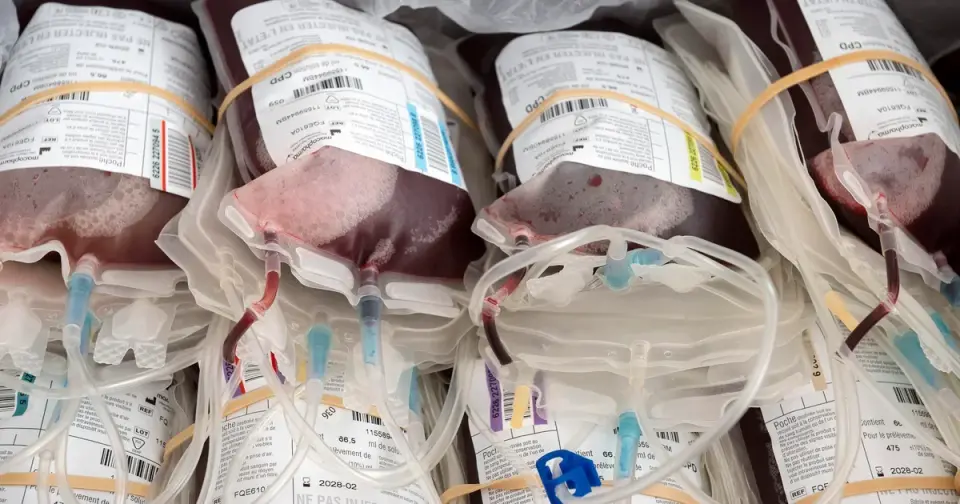
Hackers remotely altered temperature settings at three French Blood Establishment (EFS) cold storage sites overnight on November 1, 2026, attempting to raise temperatures to 110°C (230°F). Monitoring systems detected the anomaly, allowing staff to secure plasma and blood products before any damage occurred. The incident follows a wave of cyberattacks on supermarket freezers across Europe in late October and early November, which caused millions in food spoilage. While no formal attribution has been made, security experts are debating whether the attacks were carried out by Russian hacktivists, Iranian state actors, or coordinated groups, with some dismissing online claims of responsibility as false.
Key points
- The French Blood Establishment (EFS) confirmed that hackers accessed control systems at three cold storage sites, raising temperature and defrosting thresholds to extreme levels overnight on November 1, 2026.
- EFS stated that monitoring systems detected the issue, allowing staff to intervene and secure all blood products and plasma samples; no health consequences or product losses were reported, and operations remain uninterrupted.
- The attack targeted a third-party refrigeration equipment supplier, Coolworld, which stated the vulnerability involved a component outside its direct control and affected only a limited number of units.
- This incident follows a second wave of cyberattacks on supermarket freezers in Europe (including France, Belgium, Netherlands, and others) in late October and early November, which caused significant food spoilage and financial losses, with Dutch chain Ahold Delhaize estimating Q4 sales reductions of up to $281 million.
- Attribution remains unresolved; while Russian hacktivist groups NoName057 and Z-Pentest Alliance claimed responsibility for hacking the Danfoss system, security firms like Sekoia and others remain skeptical, citing lack of technical evidence and suggesting Iranian actors or state-sponsored 'hybrid warfare' as more plausible scenarios.
Background
This incident is part of a broader pattern of cyberattacks targeting internet-connected industrial control systems in Europe, following a first wave in mid-October that affected hundreds of supermarkets in France, Belgium, and the Netherlands. Earlier reports indicated that legacy software and lack of updates in commercial refrigeration systems left critical infrastructure exposed to hackers. The attacks have raised concerns about the vulnerability of 'smart' technology in critical sectors, including healthcare and retail, and have prompted urgent discussions among EU agencies and national authorities to formulate a collective response. Previous incidents in the US and Israel involving similar equipment have also been noted, but no formal attribution has been made for the European attacks.
How outlets are covering it
CBS News and The Guardian emphasize the successful mitigation of the attack at French blood banks, highlighting that no products were lost and operations continued, while noting the vulnerability of third-party suppliers like Coolworld. The BBC provides a deeper analysis of attribution, reporting on conflicting claims: Russian hacktivist groups NoName057 and Z-Pentest Alliance claimed responsibility for hacking the Danfoss system, but security firms like Sekoia and others remain skeptical, citing lack of technical evidence and suggesting Iranian actors or state-sponsored 'hybrid warfare' as more plausible. The BBC also notes that some experts believe the attacks could have been carried out by different groups or copycats, and that the coordinated nature of the attacks suggests planning and coordination, but no formal attribution has been made. All sources agree that the attacks highlight the vulnerability of internet-connected industrial control systems and the need for improved cybersecurity measures in critical infrastructure.
Why it matters
The cyberattack on French blood banks underscores the growing risk of cyber threats to critical infrastructure, including healthcare and retail, and the potential for significant disruption if attacks are not detected and mitigated in time. The incident highlights the vulnerability of third-party suppliers and legacy software in industrial control systems, and the need for improved cybersecurity measures and collective responses from EU agencies and national authorities. The attacks have also raised concerns about the potential for state-sponsored 'hybrid warfare' and the need for better attribution and investigation to prevent future incidents.
What to watch
France's national cybersecurity agency (ANSSI) and the Health Ministry are investigating the incident, and EFS has reinforced monitoring of all its equipment. EU agencies are holding urgent discussions with national authorities to formulate a collective response to the cyberattacks. Security firms continue to analyze evidence from 'honeypots' to determine the culprits behind the attacks, and no formal attribution has been made. Retailers and other critical infrastructure operators are expected to take proactive measures to secure their systems and prevent future attacks.
- Blood banks hit by cyberattack in France days after European freezer hacks CBS News
- French blood storage impacted by freezer hacks as theories swirl about culprits BBC
- French blood banks hit alongside cyberattack on European supermarkets Reuters
- Trump Plays Down Prospect of Iran Strikes After Midterm Rout Bloomberg.com
- French blood banks hacked in latest cyber-attack on Europe The Guardian
Want the full story? Read the original reporting
Read on CBS News