
Russia Expands Drone Launch Network to Threaten NATO Flank
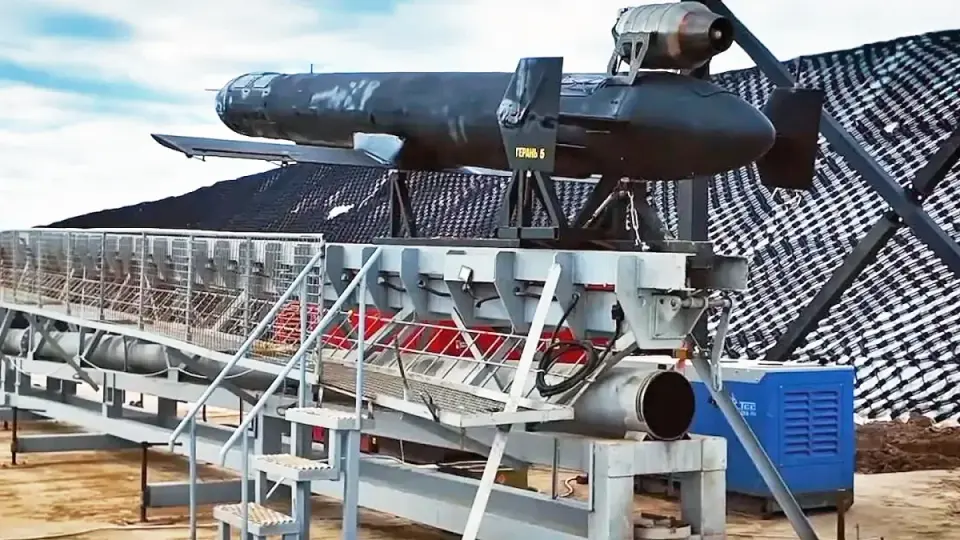
Russia has constructed at least 10 new drone launch bases near its borders with Ukraine and Belarus, featuring 59 launch rails designed for advanced Geran-4 and Geran-5 jet-powered drones. This expansion, confirmed by satellite imagery, allows Moscow to stage massive attacks while potentially bringing parts of Poland and the Baltic states within striking range. The shift to faster, heavier drones aims to overwhelm Ukrainian air defenses and reduce reliance on expensive missiles, though production remains constrained by jet engine availability.
Key points
- Satellite analysis reveals 10 new Russian sites with 59 launch rails, including 20 extended rails for larger Geran variants.
- The Geran-5 drone carries a 90kg warhead, travels at 650 km/h, and has a range of approximately 900 km.
- Some launch sites are located close enough to NATO borders to potentially threaten Poland and the Baltic states.
- Russia’s drone production at the Alabuga complex may exceed 50,000 units annually in 2026.
- Ukraine is developing cheaper interceptor drones to counter the cost-exchange disadvantage of using expensive missiles against cheap drones.
Background
This infrastructure expansion follows a significant increase in Russian drone attacks, with over 1,000 drones launched in a single 24-hour period by 2026. Recent archive coverage highlights Ukraine’s retaliatory long-range strikes on Russian industrial and military targets, including the Progress rocket center and oil refineries, indicating a broader escalation in deep-strike capabilities. The current development represents a shift from propeller-driven Shahed-136 drones to jet-powered variants that offer greater speed and payload capacity, changing the dynamics of the air war.
How outlets are covering it
The Telegraph and DroneSec emphasize the strategic threat to NATO, noting that some new launch sites could place Warsaw and the Baltic states within range. TWZ focuses on the tactical advantage of heavier warheads and the economic pressure this places on Ukrainian air defenses. Kyiv Post highlights the technical bottleneck of jet engine production, noting that Russia relies on Chinese components and that jet drones are an intermediate category between drones and cruise missiles. Ukrainska Pravda underscores the scale of storage infrastructure, with some bases capable of holding over 1,000 drones, suggesting preparation for a prolonged campaign.
Why it matters
The expansion of Russia’s drone launch network signals a shift toward mass, high-speed attacks that can overwhelm air defenses and potentially threaten NATO territory. This development increases the risk of miscalculation or escalation, as the geographic reach of these drones now includes critical infrastructure in allied nations. It also forces Ukraine and NATO to adapt their defense strategies, balancing the cost of interceptors against the volume of incoming threats.
What to watch
NATO is expected to enhance its drone defense capabilities, including the development of cheaper interceptor systems. Ukraine may continue to target Russian launch sites and production facilities to disrupt the supply chain. The availability of jet engines will be a key factor in determining how quickly Russia can scale up its Geran-4 and Geran-5 production. Diplomatic tensions may rise as NATO states assess the threat posed by drones capable of reaching their borders.
- Russia Is Expanding Its Long-Range Strike Drone Network TWZ
- Russia builds secret drone bases in striking distance of Nato The Telegraph
- Russia Deploys Faster Jet Drones, 3 Key Limits Could Prevent Them from Replacing Shaheds Kyiv Post
- Map Shows Russia’s New Secret Bases That Could Strike NATO Newsweek
- Russia deploys 10 new bases near borders to launch jet drones against Ukraine – The Telegraph Українська правда
Want the full story? Read the original reporting
Read on TWZ