
Royal Navy Signs Deal to Test Northrop Grumman Talon Blue Drone from Carrier in 2027
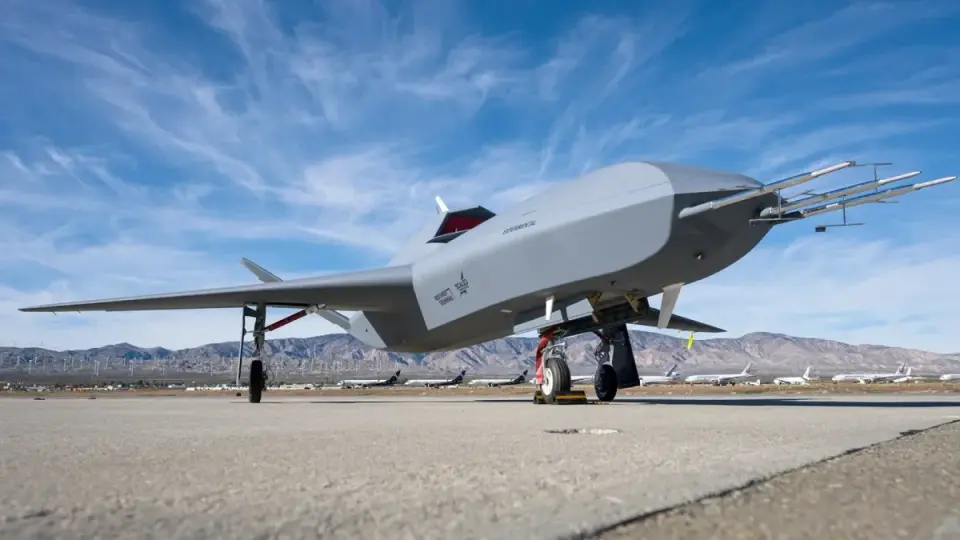
The Royal Navy and Northrop Grumman have signed a statement of intent to demonstrate the Talon Blue collaborative combat aircraft (CCA) from a British aircraft carrier in 2027. First Sea Lord General Sir Gwyn Jenkins announced the agreement aboard HMS Prince of Wales, aiming to validate uncrewed operations alongside crewed F-35B jets. This follows Talon Blue’s first autonomous flight in October 2026 and aligns with the UK’s 'Hybrid Navy' strategy to integrate autonomous systems without requiring catapults or arresting gear.
Key points
- Northrop Grumman and the Royal Navy signed a statement of intent on November 12, 2026, to prepare the Talon Blue drone for carrier trials.
- The demonstration is scheduled for 2027 in UK waters, focusing on launch and recovery from the STOVL-capable HMS Prince of Wales.
- The project, known as Project Vanquish, seeks to prove that Tier 2 autonomous platforms can operate safely alongside existing air wings.
- Talon Blue, designated YFQ-48A by the US military, completed its first fully autonomous flight in October 2026.
- The Royal Navy is already testing smaller drones like the Tekever AR5 and Malloy T-150 for logistics and surveillance roles on its carriers.
Background
In October 2026, Northrop Grumman’s YFQ-48A Talon Blue completed its maiden autonomous flight, marking a key step in the US Air Force’s Collaborative Combat Aircraft program. The UK’s Project Vanquish was first announced in September 2025, focusing on integrating autonomous platforms into the Royal Navy’s operations. The broader 'Hybrid Navy' concept aims to accelerate the adoption of uncrewed systems to maintain operational tempo without waiting for perfect solutions.
How outlets are covering it
The Times of India highlights the relevance of the UK trial for India’s own naval ambitions, noting that both the UK’s HMS Queen Elizabeth and India’s INS Vikrant use ski-jump ramps rather than catapults. This suggests that successful UK trials could validate CCA operations for India’s N-CCAV program. Business Insider emphasizes the immediate operational shift, reporting that the Royal Navy is already using smaller drones for logistics and surveillance to replace helicopter missions, signaling a broader trend toward autonomous integration. The Times of India also notes that while launch is feasible, recovery methods differ between UK and Indian carriers, requiring separate validation for India.
Why it matters
The 2027 demonstration will provide critical data on how uncrewed combat aircraft can operate alongside crewed fighters on STOVL carriers, influencing future naval aviation strategies globally. For Northrop Grumman, success in the UK could bolster its position in the US Air Force’s CCA Increment 2 competition and the US Navy’s carrier-based CCA program, especially after losing the F/A-XX fighter competition to Boeing. The trial also accelerates the UK’s transition to a 'Hybrid Navy,' potentially setting precedents for other nations with similar carrier designs.
What to watch
Northrop Grumman and the Royal Navy will work over the next 12 months to prepare the Talon Blue for trials, potentially requiring a new variant for carrier operations. The 2027 demonstration will assess safe integration with the F-35B air wing. Meanwhile, the Royal Navy will continue testing smaller drones like the AR5 and Malloy T-150 for logistics and surveillance, while India may use the UK’s results to inform its own N-CCAV development.
- Plans To Fly Talon Blue CCA Drone From British Carrier Confirmed By Northrop Grumman TWZ
- Royal Navy to Trial Northrop Grumman Test Aircraft on Carrier in 2027 USNI News
- UK Royal Navy picks Northrop Grumman’s Talon Blue for hybrid air wing demonstration FlightGlobal
- Britain's aircraft carrier drone experiment could hold the key to India's next naval leap The Times of India
- The UK’s newest aircraft carrier is letting small drones take over some missions once done by helicopters Business Insider
Want the full story? Read the original reporting
Read on TWZ