
Russia's Jet-Powered Drone Assaults Surge Fivefold, Straining Ukrainian Air Defenses
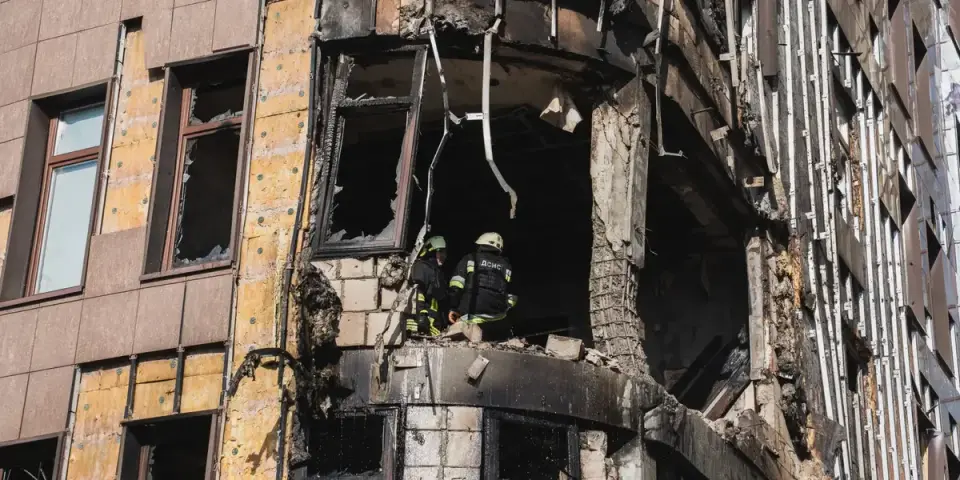
Russia has dramatically increased its use of jet-powered Geran drones against Ukraine, launching five times as many in July as in June. These faster, higher-flying weapons are overwhelming traditional air defenses, forcing Kyiv to accelerate the development of new interceptors while facing a new hybrid missile threat.
Key points
- Ukraine's air force reported a fivefold increase in jet-powered Geran-3 and Geran-4 drone attacks in July compared to June, signaling a major shift in Russian strategy.
- Jet-powered drones fly at speeds exceeding 200 mph and altitudes up to 30,000 feet, making them significantly harder to intercept than propeller-driven predecessors.
- In August, Russia launched over 2,500 jet-powered drones, with up to two-thirds of long-range attacks now utilizing this technology.
- Ukrainian air defenses shot down approximately 80% of jet-powered drones in a single day in September, but the sheer volume of attacks continues to strain resources.
- A new low-cost hybrid weapon, the S8000 Banderol, has emerged, combining cruise missile and drone features to evade detection and strike logistics targets.
Background
This escalation follows a period where Ukraine successfully intercepted roughly 90% of older propeller-driven Geran-2 drones using cheap quadcopters. However, the introduction of turbojet-powered variants has shifted the balance, as these drones fly faster and higher than previous models. Recent archive data indicates that Russia launched approximately 1,500 drones in a four-day wave in late August, with about 800 being jet-powered, causing significant damage to infrastructure and prompting urgent calls for new defensive technologies.
How outlets are covering it
Business Insider emphasizes the production surge and the tactical shift toward jet-powered drones, noting that Moscow is now launching these weapons 'virtually straight from the factory.' RBC-Ukraine highlights the immediate defensive success, reporting that Ukrainian air defenses shot down nearly 80% of jet-powered drones in a single day in September, though they note the continued difficulty in countering the sheer volume of attacks. Kyiv Post provides a contrasting perspective by focusing on the reciprocal nature of the drone war, citing Moscow Mayor Sergey Sobyanin's claim that Ukraine launched 8,670 drones against the Moscow region in August, suggesting a symmetrical escalation in drone warfare between the two nations.
Why it matters
The shift to jet-powered drones represents a critical escalation in the Russia-Ukraine conflict, as these weapons are far more difficult to intercept than previous models. This development threatens to overwhelm Ukrainian air defenses, potentially leading to increased damage to critical infrastructure and civilian areas. The emergence of new hybrid weapons like the Banderol further complicates the defensive landscape, requiring Ukraine and its allies to rapidly adapt their strategies and technologies to maintain security.
What to watch
Ukraine is expected to continue developing and deploying new interceptor technologies, with four companies already working on solutions to counter jet-powered drones. Russia is likely to maintain or increase its use of these advanced drones, potentially integrating them with new hybrid weapons like the Banderol. The situation may also see further escalation in reciprocal drone attacks, as both sides seek to disrupt each other's logistics and infrastructure.
- Russia surged high-speed jet-powered Shahed attacks by 5 times in a single month, Ukraine's air force said Business Insider
- The Ukraine Drones That Are Carrying a Bigger Punch, Deeper Into Russia WSJ
- Moscow Mayor Says 8,670 Drones Tried to Hit Capital in August Kyiv Post
- Nearly 2,000 drones fired at Ukraine in one week as Russia draws out attacks The Kyiv Independent
- Air defense shoots down nearly 80% of jet-powered drones in one day - Air Force RBC-Ukraine
Want the full story? Read the original reporting
Read on Business Insider