
Germany's Breuer wins NATO military chairmanship over Canada's Carignan
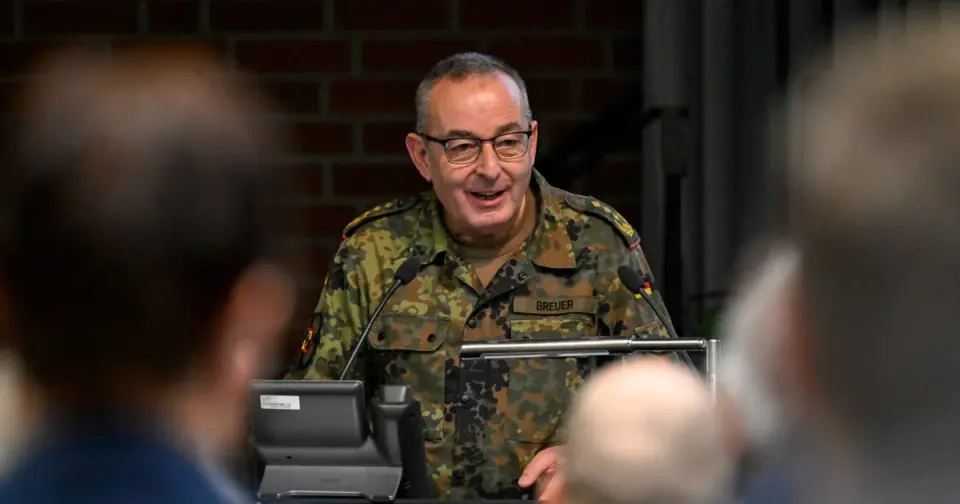
German General Carsten Breuer has been selected as the next chair of NATO's Military Committee, defeating Canadian General Jennie Carignan in a secret ballot held in Copenhagen. Breuer, who has led Germany's armed forces since 2023, secured the support of at least 17 of the alliance's 32 defense chiefs. He will assume the role in July 2027, succeeding Italian Admiral Giuseppe Cavo Dragone, for a three-year term. The victory underscores Berlin's growing influence within the alliance, particularly as Europe seeks to assume greater defense responsibilities amid U.S. pressure. Carignan, Canada's chief of defense since 2024, campaigned on transatlantic unity but faced obstacles due to strained Canada-U.S. relations and a lack of explicit American support. The outcome highlights the shifting balance of power in NATO, with Germany emerging as a key military leader in Europe.
Key points
- German General Carsten Breuer won the secret ballot for NATO Military Committee chair with at least 17 votes from 32 defense chiefs.
- Breuer will take office in July 2027, succeeding Italian Admiral Giuseppe Cavo Dragone, for a three-year term.
- Canadian General Jennie Carignan, who would have been the first woman to hold the post, lost the bid despite support from Prime Minister Mark Carney.
- The U.S. appeared to back Breuer, while Canada's candidacy was hindered by strained bilateral relations with Washington.
- The result reflects Germany's rising role in NATO, including new regional commands for the Baltics and increased defense spending.
Background
This development follows earlier tensions within NATO regarding U.S. military readiness and European defense autonomy. In August 2026, U.S. generals pushed back against expanding operations in Iran due to readiness concerns, highlighting internal debates over military commitments. Additionally, the U.S. military confirmed in late August that it would not deploy troops to polling stations for the November 2026 midterms, reinforcing the separation of military and political roles. These events underscore the broader context of U.S. military posture and its impact on alliance dynamics, particularly as Europe seeks to assert greater independence in defense matters.
How outlets are covering it
POLITICO emphasizes the strategic significance of Breuer's victory, noting that his campaign highlighted Germany's leading role in defense spending and operational responsibility, particularly in the Baltics. The outlet frames the result as a reflection of Berlin's growing influence within NATO, especially as European allies face U.S. pressure to assume greater defense burdens. In contrast, The Globe and Mail focuses on the challenges faced by Canada's candidacy, highlighting the lack of U.S. support and the impact of strained Canada-U.S. relations. The outlet notes that while Prime Minister Mark Carney and Defence Minister David McGuinty actively promoted Carignan, the absence of American backing proved insurmountable. CBC News provides a balanced view, acknowledging Carignan's credibility and the potential for a historic first woman to lead the committee, while also noting the geopolitical timing and the possibility of U.S. interference. The outlet quotes defence experts who suggest that while Carignan had a chance, the Trump administration's hostility toward Canada's aspirations could have blocked her candidacy. Overall, the outlets agree on the outcome but differ in their emphasis: POLITICO highlights Germany's rising power, The Globe and Mail focuses on Canada's setbacks, and CBC News balances both perspectives while noting the broader geopolitical implications.
Why it matters
The appointment of Carsten Breuer as NATO's Military Committee chair signals a shift in the alliance's military leadership, with Germany emerging as a key player in European defense. This move reflects the broader trend of European nations assuming greater responsibility for their own security, particularly as the U.S. reduces its military presence in Europe. The result also underscores the importance of transatlantic relations, as Canada's failed bid highlights the challenges faced by nations seeking to assert their influence within NATO amid strained bilateral ties with Washington. For NATO, the decision reinforces the need for consensus and cooperation among member states, while for Germany, it represents a significant step in its growing role as a military leader in Europe. The outcome may also influence future defense policies and alliances, as European nations seek to strengthen their collective defense capabilities in the face of external threats.
What to watch
Carsten Breuer is expected to assume the role of NATO Military Committee chair in July 2027, succeeding Italian Admiral Giuseppe Cavo Dragone. His three-year term will focus on providing military advice to NATO allies, overseeing working groups, and brokering consensus on defense operations. The appointment may lead to increased German influence within NATO, particularly in the Baltics, where Germany has established a regional army command. For Canada, the failed bid may prompt a reassessment of its defense strategy and its relationship with the U.S. and Europe. NATO may also face continued debates over the role of the U.S. in alliance decision-making, as European nations seek to assert greater autonomy in defense matters. The outcome of this vote may also influence future military appointments and alliances within NATO, as member states navigate the shifting balance of power in the alliance.
- Germany’s top general to lead NATO’s highest military authority politico.eu
- German general Breuer elected to head top NATO military body Reuters
- Canada not counting on win at NATO vote to pick alliance’s new military leader The Globe and Mail
- NATO Picks Germany’s Top Defense Official to Be Military Chief Bloomberg.com
- Canada's top general is up for a senior NATO post. Will Trump get in her way? CBC
Want the full story? Read the original reporting
Read on politico.eu