
Latvia's Automated Drone Wall and NATO's Search for Cheaper Interceptors
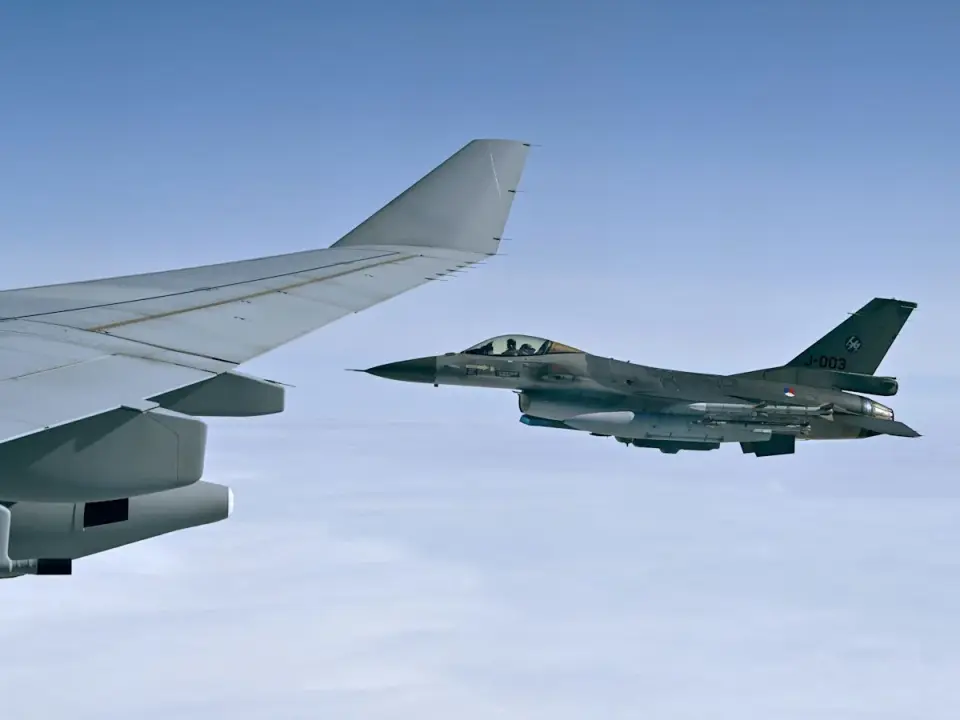
Latvia is completing an automated anti-drone wall along its eastern border by late September 2026 to intercept Russian drones before they reach NATO fighter jets. This move addresses the unsustainable cost of using expensive air-to-air missiles against cheap drones, a strategy NATO leaders deem inefficient. While Latvia relies on automated detection and neutralization, other allies are exploring dedicated squadrons of cheaper jet trainers equipped with guided rockets to handle the growing volume of incursions.
Key points
- Latvia's new anti-drone wall, inspired by Ukrainian tactics, is expected to be fully operational by the end of September 2026.
- The system aims to make fighter jets a secondary defense layer, reducing reliance on costly interceptors for low-value targets.
- NATO Secretary General Mark Rutte stated that the alliance cannot sustainably use expensive missiles to down cheap drones.
- Analysts propose a multinational NATO squadron of 16-24 jet trainers, such as the Aero L-39NG, to handle drone interception more cost-effectively.
- Romania has reported 23 Russian drone incursions since January 2026, exceeding the total for the previous four years combined.
Background
Recent archive coverage highlights Latvia's push for automated defenses and NATO's struggle to adapt to Ukraine's rapid drone innovation. Earlier reports noted that Western defense systems often lag behind the pace of modern drone warfare, prompting calls for faster procurement and training reforms. Additionally, tensions have risen as Russia warns of consequences for Western drone support, while Ukraine continues to develop new anti-drone weapons to counter Russian aerial threats.
How outlets are covering it
Business Insider emphasizes Latvia's specific implementation of an automated border wall, highlighting Defense Minister Raivis Melnis's focus on cost-effective, autonomous systems. In contrast, the Center for European Policy Analysis and RUSI focus on a broader structural solution, advocating for a dedicated multinational NATO squadron of jet trainers. While Business Insider notes the immediate impact of Latvia's wall, the other sources argue that a specialized force using cheaper rockets, rather than frontline fighters, is necessary to sustainably counter the high volume of Russian drone incursions across the alliance's eastern flank.
Why it matters
The shift from expensive fighter jets to cheaper, automated, or trainer-based systems is critical for NATO's long-term defense sustainability. As Russian drone production scales to thousands per month, relying on high-value interceptors is financially and logistically unviable. Developing affordable, scalable countermeasures ensures that NATO can maintain deterrence without depleting critical air defense resources or compromising frontline fighter availability for more serious threats.
What to watch
Latvia expects its anti-drone wall to be fully operational by the end of September 2026. Meanwhile, NATO leaders are evaluating the feasibility of establishing a dedicated multinational drone-interception squadron, potentially using aircraft like the Aero L-39NG, to provide a scalable and cost-effective defense against increasing Russian airspace violations.
- NATO has been using fighter jets to stop drones. One ally says a new Ukraine-inspired anti-drone wall will handle them first. Yahoo
- NATO uses fighter jets to stop drones. One ally says a Ukraine-inspired defense will handle them first. businessinsider.com
- NATO Needs a Drone-Interceptor Squadron Center for European Policy Analysis (CEPA)
- Latvia nears completion of anti-drone wall along entire Russian border The New Voice of Ukraine
- Options for a NATO Multinational Drone-Interception Squadron Royal United Services Institute (RUSI)
Want the full story? Read the original reporting
Read on Yahoo