Latvian officials report that armed, masked individuals from Belarus attempted to force 20 migrants across the border, threatened Latvian soldiers, and subsequently entered Latvia to steal surveillance cameras and damage electrical infrastructure before retreating.
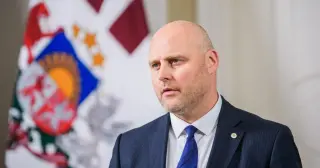
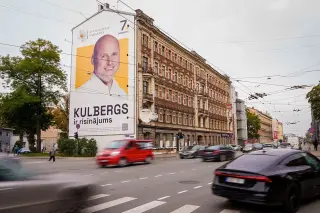
Latvia’s centre-right United List party won the October 3 parliamentary election with 35.4% of the vote, securing a record 42 seats in the 100-seat parliament. Prime Minister Andris Kulbergs, who took office in May, described the result as a mandate for economic growth and continued support for Ukraine. While populist parties gained ground, particularly among Russian-speaking voters, pro-European and pro-NATO factions remain dominant. The victory ensures stability for Latvia’s high defence spending and EU-aligned policies, despite challenges from inflation and coalition-building difficulties.
Latvian Prime Minister Andris Kulbergs’ United List party won the October 3 parliamentary election with 35.3% of the vote, securing 42 of 100 seats. This decisive victory, far exceeding pre-election polls, positions Kulbergs to form a pro-Ukraine government without needing support from far-right or pro-Russian factions. Turnout was 51.8%, with nearly 800,000 voters participating. The result ensures stability for Latvia’s defense and EU-aligned policies, despite challenges from inflation and migration.
Latvia's centrist United List won the October 3 parliamentary election with 35.3% of the vote, securing 42 seats. Prime Minister Andris Kulbergs faces a difficult coalition-building process as his key allies, New Unity and the Union of Greens and Farmers, risk failing to cross the 5% threshold. Populist parties, including Latvia First and the pro-Russian Sovereign Power, gained significant ground, complicating governance despite Kulbergs' refusal to cooperate with pro-Kremlin factions.
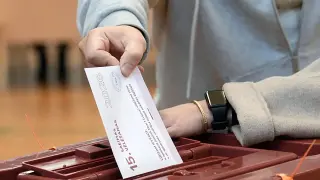
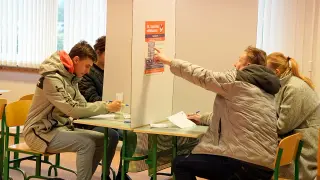
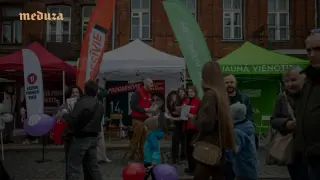
Latvians voted on October 3 for their 15th parliament, with Prime Minister Andris Kulbergs’ United List leading polls at approximately 20%. However, his coalition partners, New Unity and the Union of Greens and Farmers, are struggling to clear the 5% threshold. This creates a potential crisis for Kulbergs, who may need to negotiate with populist rival Ainārs Šlesers. Simultaneously, traditional parties representing Russian speakers have collapsed, leaving pro-Ukraine Russian-speaking citizens without a clear political home as they navigate language rights and security concerns.
Latvian Prime Minister Andris Kulbergs is set to win the October 3 parliamentary election, but his victory may be hollow due to the likely failure of his coalition partners to clear the 5% threshold. Kulbergs’ United List party is polling at approximately 20%, yet his centrist allies, New Unity and the Union of Greens and Farmers, are struggling to secure seats. This could force Kulbergs into an unlikely alliance with right-wing veteran Ainārs Šlesers, who advocates for expanded trade with Russia. The election is overshadowed by recent EU sanctions disputes, where Latvia successfully blocked the delisting of two Russian billionaires, and by the collapse of traditional political representation for Latvia’s Russian-speaking population.
Latvians vote on October 3 for a new parliament, with Prime Minister Andris Kulbergs' United List leading polls at 22.7%. The election is defined by security fears regarding Russia and a cost-of-living crisis. While Kulbergs promises continued support for Ukraine, coalition formation remains uncertain as key allies may fail to clear the 5% threshold, potentially forcing a compromise with populist rival Ainārs Šlesers.
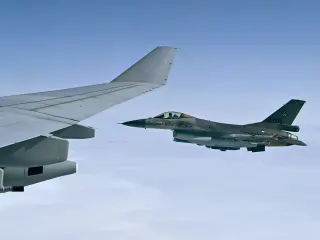
Latvia is completing an automated anti-drone wall along its eastern border by late September 2026 to intercept Russian drones before they reach NATO fighter jets. This move addresses the unsustainable cost of using expensive air-to-air missiles against cheap drones, a strategy NATO leaders deem inefficient. While Latvia relies on automated detection and neutralization, other allies are exploring dedicated squadrons of cheaper jet trainers equipped with guided rockets to handle the growing volume of incursions.
Latvia is completing an automated anti-drone wall along its eastern border with Russia by the end of September 2026, aiming to neutralize intrusions before they reach NATO fighter jets. The system, inspired by Ukraine’s use of cheap interceptor drones, seeks to replace expensive air-to-air missiles as the primary defense against low-cost Russian drones. While NATO jets remain a secondary line of defense, this shift addresses the unsustainable cost of shooting down cheap drones with high-value interceptors. The move reflects broader NATO concerns over rising drone incursions and the need for scalable, affordable countermeasures.
The European Union has removed sanctions on Russian-Uzbek billionaire Alisher Usmanov and Russian-Israeli businessman Mikhail Fridman, a move driven by France’s prisoner swap deal with Azerbaijan. Latvia initially vetoed the change but abstained to preserve the broader sanctions package, while Ukraine condemned the decision as a signal of weakness to Moscow.
Latvia’s president warns that Russia is likely to further escalate its aggression as Europe faces a tense security outlook, compounded by energy pressures and the Ukraine war. Latvia plans heightened NATO air patrols and extended operations (Vilka tis), with concerns about cyberattacks, disinformation, and potential small incursions during the Saeima elections. Officials note no current evidence of a large-scale invasion, but say proactive measures and alliance support remain essential while urging public vigilance, participation in elections, and reporting suspicious activity.
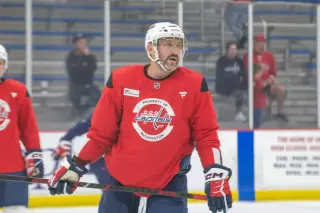
Latvia’s Foreign Ministry announced an indefinite entry ban on Washington Capitals captain Alex Ovechkin, adding him to the country’s persona non grata list after his appearance in a United Russia campaign video. The move, waved through by Foreign Minister Baiba Braže and tied to Latvia’s long-standing stance against Kremlin influence, follows other sanctions on Ovechkin by Ukraine and is noted as unusually rare for an active NHL player. Umar Kremlev, a Russian ally of Putin, was also named on the list in the same announcement.
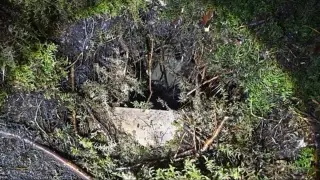
Latvia stopped 28 migrants who crossed from Belarus through a moss-covered underground tunnel, the second such tunnel found this month. Riga says the surge reflects a broader, state-led push by Minsk to pressure the EU, part of ongoing irregular migration and a ‘hybrid attack.’ Latvia is boosting border protection with fencing and technology and has received regional support from Estonia, Lithuania and Finland, with Poland likely to sign a similar agreement; a criminal case has been opened against Belarusian border officials as authorities cite organised, cross-border trafficking aimed at Europe.
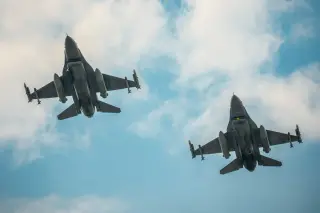
NATO jets, including Italian Eurofighters from Lithuania and Turkish F-16s from Estonia, were scrambled after a Ukrainian-backed drone breached Latvia's airspace amid attacks on Russian ports; Russia later said it shot down dozens of drones west of St. Petersburg, while the UN reported July civilian casualties in Ukraine rose to 437 killed and 2,610 injured, many in urban centers.
NATO Baltic Air Policing jets shot down a drone that crossed into Latvian airspace near Rugāji, after Italian Eurofighters and Turkish F-16s were scrambled; Riga said the drone appeared as a result of Russian electromagnetic warfare and warned similar incursions could recur amid heightened tension near the Russia-Ukraine war zone, with no casualties reported.