
Xi Anchors China’s Global Initiatives in SCO Framework at Bishkek Summit
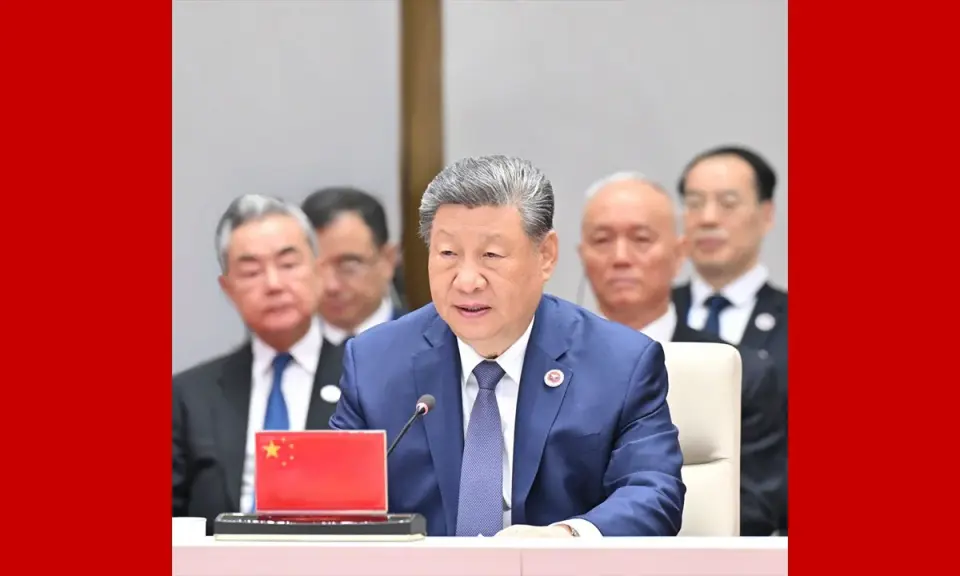
Chinese President Xi Jinping positioned the Shanghai Cooperation Organization (SCO) as the primary vehicle for advancing Beijing’s four major global initiatives during the 26th Council of Heads of State meeting in Bishkek, Kyrgyzstan. He pledged concrete economic and technological cooperation, including a new AI center and expanded renewable energy capacity, while emphasizing security and people-to-people exchanges.
Key points
- Xi designated the SCO as a priority area for the Belt and Road Initiative and the Global Development Initiative, aiming for high-quality joint construction.
- China proposed establishing an international AI application cooperation center and increasing photovoltaic and wind power capacity by 10 million kilowatts each across SCO members.
- Beijing committed to implementing 100 technological cooperation projects with SCO partners over the next three years and creating a port economic cooperation center in Tianjin.
- Xi linked the SCO to the Global Security Initiative, advocating for coordinated responses to terrorism, cyber threats, and external interference in regional affairs.
- The speech emphasized the Global Civilization and Global Governance Initiatives, supporting multilateralism and the SCO’s role in promoting a multipolar world order.
Background
This summit marked the 25th anniversary of the SCO’s founding. Previous coverage noted that Xi’s four-point plan aimed to embed China’s global initiatives within the SCO framework, resulting in the Bishkek Declaration and updated Charter. Earlier reports highlighted the bloc’s push for Global South unity and economic integration amid geopolitical tensions.
How outlets are covering it
Global Times focused on the strategic alignment of China’s global initiatives with the SCO, highlighting the organization as a platform for Beijing’s diplomatic vision. CGTN provided the full text of Xi’s speech, detailing specific commitments such as the AI center and renewable energy targets, and emphasizing the SCO’s 25-year legacy of non-alliance and mutual benefit. While Global Times framed the event as a diplomatic milestone, CGTN’s detailed account underscored the practical economic and security measures proposed to operationalize these goals.
Why it matters
By integrating its global initiatives with the SCO, China seeks to strengthen its influence in Eurasia and the Global South, offering an alternative to Western-led multilateralism. The proposed infrastructure and technology projects could reshape regional economic dynamics and security architectures.
What to watch
SCO member states are expected to negotiate the implementation details of the 100 technology projects and the AI cooperation center. China will likely monitor progress on the Trans-Caspian transport corridor and the Tianjin port center, while continuing to coordinate with partners on security issues like terrorism and cyber threats.
- Xi calls on SCO to implement major global initiatives Global Times
- China's Xi pitches AI hub as SCO casts itself as pillar of stability asia.nikkei.com
- What to expect as China’s Xi Jinping attends SCO summit in Bishkek South China Morning Post
- Full text: Xi's speech at 26th SCO Council of Heads of State meeting news.cgtn.com
- China’s Xi Steps Into Diplomatic Gap Vacated by Trump Bloomberg.com
Want the full story? Read the original reporting
Read on Global Times