
Nepal Floods: Warning Delays and Satellite Data Reveal Systemic Failures
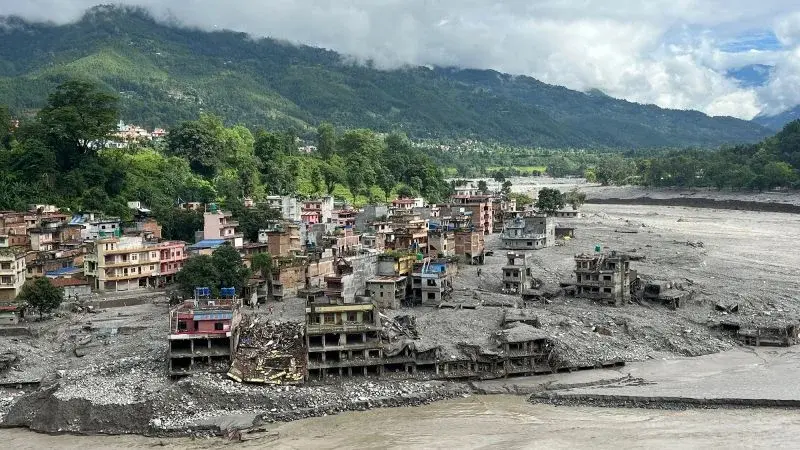
One week after the August 26 glacier collapse, the death toll in Nepal has reached 1,114, with nearly 4,500 people still missing across the border. While rescue operations have saved 12,000 individuals, critical infrastructure remains damaged, and experts are analyzing satellite data that showed the glacier was moving days before the disaster. The UN has launched a four-month appeal to address the crisis, which has displaced 84,270 people and left water sources contaminated.
Key points
- The death toll in Nepal has risen to 1,114, with 16 confirmed deaths on the Chinese side of the border.
- Approximately 4,500 people remain unaccounted for, including 75 Americans and 38 Australians.
- The UN Resident Coordinator in Nepal confirmed a four-month Humanitarian Flash Appeal to provide food, water, and shelter.
- Satellite radar data indicates the glacier was moving downhill at a rate of up to 51mm per year before the collapse.
- Nepal’s warning system failed to alert communities until 38 minutes after the initial seismic event, with some residents receiving alerts even later.
- The UNDP estimates that over 2.4 million tons of debris have been generated, severely impacting reconstruction efforts.
Background
The disaster followed a glacier collapse on August 26, 2026, which triggered massive flash floods along the Trishuli and Bhotekoshi rivers. Earlier reports indicated that barrier lakes formed in the impact crater have since stabilized, though a second lake was identified upstream. The event has knocked out approximately 10% of Nepal’s hydropower capacity, disconnecting 431 MW from the national grid. Prime Minister Balendra Shah has stated that climate change is a definitive factor, noting that the Himalayan region has warmed by up to 1.8 degrees Celsius.
How outlets are covering it
CNN emphasizes the human toll and the ongoing logistical challenges, highlighting the missing CEO of Infosys Public Services and the lack of communication with families. The Times of India focuses on the systemic failure of Nepal’s early warning systems, noting that the alert was sent 38 minutes late because the seismic signal did not match an earthquake pattern. NDTV highlights the potential of satellite radar technology to detect such movements in the future, citing data that showed the glacier was moving for months. While CNN and the UN focus on immediate relief, Indian and Nepali officials are debating the lack of cross-border data-sharing protocols with China, despite a 2019 commitment to cooperate on environmental issues.
Why it matters
This disaster exposes the fragility of Himalayan infrastructure and the inadequacy of current cross-border monitoring systems. The failure to detect visible warning signs days before the collapse suggests that future climate-driven disasters may be even more devastating without integrated satellite and ground-based monitoring. The crisis also highlights the disproportionate impact of climate change on nations with minimal global emissions, such as Nepal, which contributes less than 0.1% to global warming but faces severe consequences.
What to watch
Rescue teams are focusing on clearing 2.4 million tons of debris and restoring the Gyirong border road, which has been largely reopened. The UN and Save the Children are shifting toward long-term rebuilding, including restoring schools and providing psychosocial support for children. Experts are calling for the integration of satellite radar data into national early-warning systems to prevent similar tragedies in the future. The Nepali government is also preparing for the UN General Assembly, where the Prime Minister may address the international community regarding climate responsibility.
- September 1-2, 2026 — Warning signs were visible ahead of Nepal-China floods, report says CNN
- Glacier collapse at 8.37am, alert at 9.15: Why Nepal sent disaster warning 38 minutes late The Times of India
- China-Nepal floods: first research shows that no one could have outrun debris flow South China Morning Post
- Flood Warning Systems Failed In Nepal. Can Satellites Strengthen Them? NDTV
- Q&A: ‘There was a gap between alert and action’ in Nepal floods Dialogue Earth
Want the full story? Read the original reporting
Read on CNN