
Nepal-Tibet Flood Toll Surpasses 800 as Rescue Teams Race to Free Trapped Workers
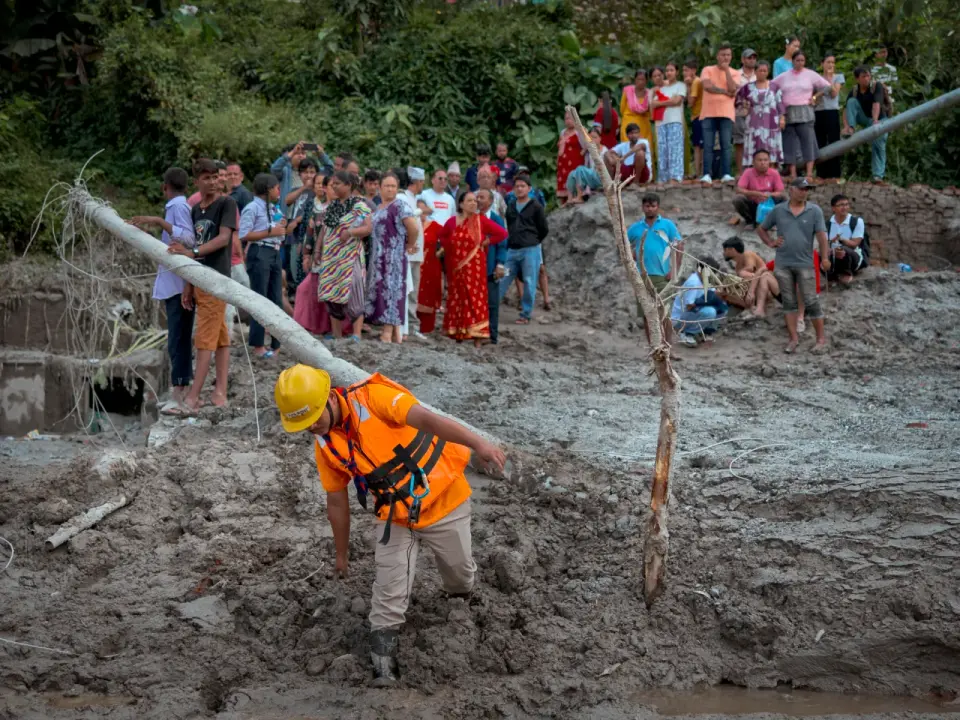
A glacial collapse on the Nepal-China border triggered catastrophic floods, killing over 800 and leaving more than 3,000 missing. Rescue efforts are hampered by debris, mud, and the threat of secondary flooding from a new barrier lake.
Key points
- The death toll has risen to at least 804, with over 3,000 people still missing across Nepal and Tibet.
- Rescue teams are struggling to reach workers trapped in hydropower tunnels, particularly at the Trishuli 3A site.
- A new barrier lake poses a risk of secondary flooding, forcing temporary pauses in search operations.
- Nepal's finance minister estimates the disaster's cost at over $4 billion, with international aid arriving from multiple countries.
Background
The disaster began on Wednesday when a glacial collapse triggered massive floods and landslides along the Trishuli and Bhotekoshi river systems. Previous reports indicated the death toll had already surpassed 600, with thousands missing and rescue efforts hampered by damaged infrastructure and the threat of secondary flooding from newly formed lakes.
How outlets are covering it
Al Jazeera and The Guardian report a combined death toll of over 800, with Al Jazeera citing 734 deaths in Nepal and The Guardian noting 804 total. The New York Times highlights the presence of Hindu pilgrims seeking Mount Kailash among the missing, while BBC emphasizes the lack of independent reporting in Tibet, relying on Chinese state media for casualty figures. All sources agree on the glacial collapse as the cause, but differ in the exact number of missing, with The Guardian citing 3,048 and Al Jazeera noting over 3,000.
Why it matters
The disaster underscores the vulnerability of the Himalayan region to climate change, with Nepal's foreign minister stating the country bears a disproportionate share of the impact despite contributing only 0.1% to global emissions. The scale of the loss and the challenges in rescue operations highlight the need for international cooperation and climate action.
What to watch
Rescue efforts will continue, with a focus on freeing trapped workers in hydropower tunnels. Authorities are monitoring the barrier lake for potential secondary flooding, and international aid is expected to support relief and reconstruction efforts. The identification and recovery of bodies will remain a priority, with forensic testing and freezer units being requested.
- Nepal-China flood disaster: What’s the latest toll, how many are missing? Al Jazeera
- Nepal floods latest: Girl, 5, reunited with parents after dramatic rescue from flash flood debris BBC
- Pilgrims to Flood-Stricken Nepal Sought the Divine at Sacred Mountain The New York Times
- Rescuers race to find thousands missing after Nepal-China glacier collapse Reuters
- Nepal-Tibet death toll rises amid new flood fears and race to free group trapped in tunnel The Guardian
Want the full story? Read the original reporting
Read on Al Jazeera