
India's Trade Deficit with China Surges to Record $112bn Despite Diplomatic Thaw
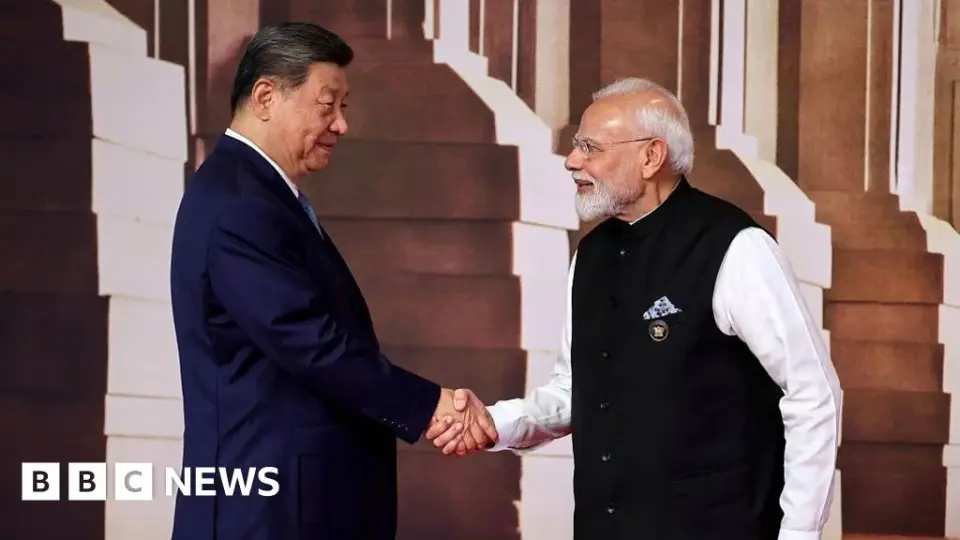
India’s trade deficit with China has ballooned to $112 billion this year, driven by a heavy reliance on Chinese industrial components rather than finished goods. While diplomatic ties have improved following the 2025 border de-escalation, economic dependence remains acute. Experts warn that without significant shifts in domestic manufacturing capabilities and reciprocal market access, India’s growing export sector may inadvertently deepen its vulnerability to Beijing’s supply chains.
Key points
- India’s trade deficit with China reached $112 billion in 2026, up from $44 billion in 2020, despite anti-dumping duties and app bans.
- China supplies over 30% of India’s industrial imports, including critical inputs for electronics, machinery, and chemicals, which account for 57.7% of total imports.
- India’s toy sector successfully reduced Chinese dependence by raising tariffs to 70%, but this success has not replicated in broader industrial sectors.
- India recently eased foreign direct investment rules, allowing Chinese firms to hold up to 10% stakes in Indian businesses, with expedited reviews for high-tech sectors.
- India’s R&D spending remains low at 0.64% of GDP, and local suppliers provide only 18-20% of components for smartphone manufacturing, highlighting structural gaps.
Background
This development follows a period of strained relations post-2020 Galwan Valley clashes, where India imposed restrictions on Chinese apps and goods. Recent diplomatic thaw, including resumed direct flights and visa accessibility, has not yet translated into balanced trade. Earlier coverage noted Japan’s increased investment in India as a hedge against China risks, and global trade tensions, such as US-Canada disputes, underscore the broader shift in global supply chain strategies.
How outlets are covering it
BBC emphasizes the 'dangerous addiction' to Chinese imports, highlighting the asymmetry in trade and the risk of Beijing gaining leverage. It notes that while India has reduced finished goods imports, it remains dependent on components. The Ukrainian outlet 'Mezha' focuses on the structural gap, noting China’s 28% share of global manufacturing value added versus India’s 3%, and points to India’s low R&D spending and reliance on foreign technical specialists. It also highlights that Indian exports to China grew 40% between April and August 2026, but this does not resolve the imbalance. 'Indianmasterminds' is not a valid news source for this synthesis as it contains only website code and no substantive article content, so it is excluded from the perspective analysis. The BBC and Mezha agree on the depth of dependency but differ in emphasis: BBC focuses on the political-diplomatic mismatch, while Mezha highlights the economic and technological structural deficits.
Why it matters
The deepening trade imbalance threatens India’s economic sovereignty and industrial resilience. If the deficit reaches the projected $134 billion, Beijing’s leverage over Indian industry will increase. India’s inability to substitute Chinese inputs with local production, combined with low R&D investment and reliance on foreign technical expertise, poses long-term risks to its manufacturing ambitions. Diplomatic normalization without reciprocal market access and technology transfer could leave India economically dependent despite improved political ties.
What to watch
India is expected to focus on targeted exports to China, particularly in pharmaceuticals, and to vet foreign investments for technology transfer and local value addition. The government may push for sector-specific industrial policies to improve affordable power, credit, and logistics. However, the success of these measures depends on Beijing’s willingness to grant reciprocal market access and on India’s ability to build domestic manufacturing capabilities. The next few months will test whether diplomatic thaw translates into economic rebalancing or continued dependency.
- Trade: How India became dangerously addicted to Chinese imports BBC
- India’s Export Growth Deepens Its Reliance on Chinese Components Межа. Новини України.
- COMMENTARY: India-China thaw faces major economic tests Reuters
- Jaishankar says India-China ties have improved Khmer Times
- Why China builds the industries of tomorrow while India delivers the groceries of today-and what really holds India back Indianmasterminds
Want the full story? Read the original reporting
Read on BBC