China’s push for economic self-sufficiency has drastically widened its trade surplus with Europe, creating a 6-to-1 container ratio in Beijing’s favor. This shift is intensifying pressure on European policymakers to address industrial overcapacity and protect domestic industries.
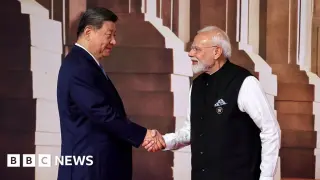
India’s trade deficit with China has ballooned to $112 billion this year, driven by a heavy reliance on Chinese industrial components rather than finished goods. While diplomatic ties have improved following the 2025 border de-escalation, economic dependence remains acute. Experts warn that without significant shifts in domestic manufacturing capabilities and reciprocal market access, India’s growing export sector may inadvertently deepen its vulnerability to Beijing’s supply chains.
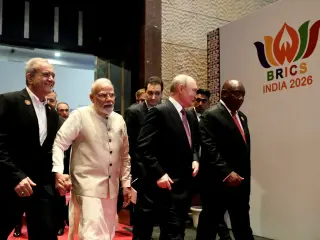
At the Delhi summit, BRICS nations unanimously adopted a joint declaration to keep global trade, supply chains and energy flowing smoothly, even as Middle East and Ukraine tensions threaten energy and shipping. Leaders discussed expanding non-Western cross-border payment channels and AI cooperation, with Modi hosting and Xi, Putin and Pezeshkian in attendance, signaling a push to empower the Global South amid tariff frictions and geopolitical shifts.
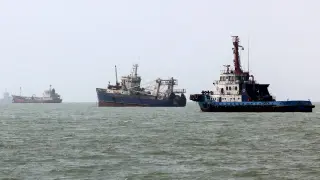
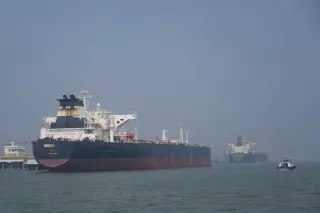
Eighteen countries’ maritime authorities warn that diverging rules and sanctions-evasion networks are creating parallel shipping, or a “shadow fleet,” fragmenting markets and driving up costs. With over 80% of global trade moved by sea and Hormuz-related bottlenecks intensifying, the Consultative Shipping Group urges stronger enforcement of universal standards and closer international cooperation to preserve a transparent, safe, and open, rules-based global shipping system.
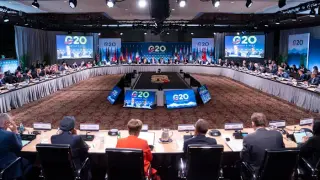
China prevented a full consensus at the US‑hosted G20 finance ministers’ summit by opposing language to eliminate non‑market policies that distort trade balances, and by resisting references to critical minerals and data on non‑market policies. With a chair statement issued by all other members, the split underscore tensions ahead of Xi Jinping’s Washington visit and the Miami G20 summit, a point European officials described as a missed opportunity for the global economy.
The U.S. and Canada imposed reciprocal tariffs—50% on many Canadian goods and 15–50% retaliatory duties on U.S. imports—triggering a brief rally in metals stocks and related ETFs (e.g., Nucor, Steel Dynamics, Cleveland-Cliffs, Century Aluminum; SLX and XLB rose initially) that faded as uncertainty persisted. Analysts say the auto supply chain is highly integrated, so winners will be firms with domestic capacity and secure inputs, while others rework sourcing. The real story is how cross-border material flows will be reconfigured over 12–24 months, with warehousing and supply chains likely shifting to avoid tariff volatility. Moody’s and others will watch heavy manufacturing performance as the tariff landscape settles; year-to-date, the related ETFs have outperformed the S&P 500, underscoring the market’s focus on tariff-driven reallocation in metals and autos.
Canada unveiled a sweeping plan to dramatically expand its defense industry—shifting a trillion-dollar-plus investment toward domestic companies, accelerating R&D, and building sovereign capabilities in aerospace, robotics, and unmanned systems—aimed at reducing reliance on U.S. contractors and asserting Arctic sovereignty through European and other partnerships. The strategy projects hundreds of thousands of jobs and partnerships with allies, but faces political hurdles and the risk that big U.S. defense players could outpace Canadian rivals.
Market strategist Marko Papic warns that a sustained Iran-strait crisis could trigger a surge in capital spending that overbuilds capacity, potentially leading to disinflation or deflation by the 2030s as governments expand energy, AI-related infrastructure, and resilient supply chains faster than demand.
President Trump said the U.S. will raise tariffs on imports of cars, trucks and auto parts from Canada to 50% on Jan. 1, 2027, doubling the current 25% duties after talks collapsed. The move follows 50% tariffs already imposed on about $20 billion of Canadian goods and comes as Canada’s auto market remains small relative to the U.S., adding uncertainty for automakers and cross-border supply chains amid a stalled agreement.
President Trump imposes sweeping tariffs on Chinese drones and components—up to 100% for sensitive systems and 25% on drones up to 25kg—while creating an onshoring program; drones from US allies face lower duties (15% generally, 10% for the UK). The move aims to reduce reliance on Chinese drone technology and reshape supply chains amid ongoing US-China tensions.
A severe European drought has pushed Rhine water levels to record lows, threatening river shipping, raising freight costs and forcing power plants to reduce output. The Danube and other waterways face similar strain, prompting measures like underwater blasting to improve flow. Economists warn Rhine disruptions could shave German Q3 growth by roughly 0.1–0.2 percentage points and ripple through energy security and inflation as firms reroute cargo by rail or road.
Despite US-Israeli strikes, the axis of resistance has reconstituted itself as a diffuse, self-reproducing web rather than a centralized command. The IRGC now arms and trains Hamas, Hezbollah, Houthis, and Iraqi militias, while proxies increasingly manufacture drones and missiles from global supply chains—often using Chinese parts and shadow shipping networks that dodge sanctions. The result is a resilient network capable of striking Gulf infrastructure and Western targets despite setbacks in Gaza, Syria, and Lebanon. Washington cannot rely on coercive force alone and should pursue a hybrid strategy: disrupt axis commercial and financial networks, seek regional political settlements with established groups, engage in diplomacy with Iran, and push multilateral efforts to track dual-use components. Total victory is unlikely; containment through pressure and diplomacy offers the best path to limit the threat.
DHS blocked 43 Chinese companies from importing to the United States over alleged forced-labor practices in Xinjiang, marking the largest single-day enforcement action under the Uyghur Forced Labor Prevention Act and targeting firms across aluminum, apparel, copper, cotton, and tomato sectors.
Chokepoints are becoming a dominant lens for bottlenecks in oil supply and AI deployment, as Red Sea routing and Houthi threats threaten Bab el-Mandeb traffic and lift energy prices, while AI growth is constrained by data-center capacity and power shortages — signaling a two-front chokepoint risk to global trade and the economy.
Attacks around the Strait of Hormuz reduced traffic this week, but analysts say the global economy has learned to adapt—rerouting export routes and allowing demand to fall more quickly—keeping oil markets relatively muted and equities resilient. Brent crude flirted with $100 but did not break through, while WTI remained choppy and near its 200-day average. Three weeks of ceasefire and wary ship movements have dampened spillover fears, though a renewed escalation could push prices higher; traders remain focused on energy-supply logistics and broader market drivers like AI optimism.