
Macron to Convene G7 on Oil Reserves as Middle East Conflict Drives Diesel Prices to Record Highs
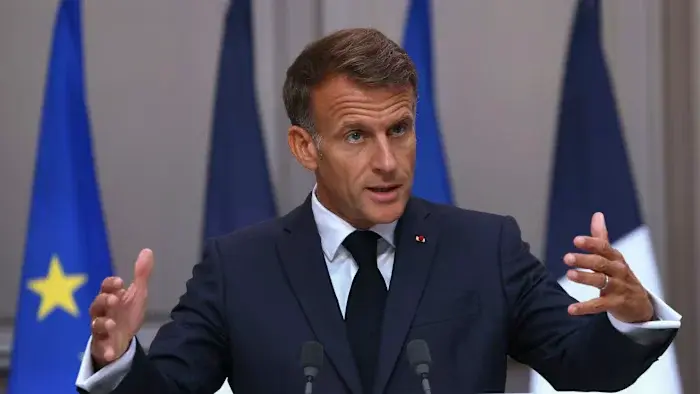
French President Emmanuel Macron announced plans to convene a G7 summit to coordinate the release of strategic oil and fuel reserves, responding to soaring energy prices and supply disruptions caused by Middle East conflict. The move follows a sharp spike in Brent crude and record-high diesel costs, exacerbated by an attack on a Saudi pipeline and reduced Russian diesel exports. Macron also signaled a push for a coordinated European response on natural gas storage, as the EU enters winter with record-low reserves. While the IEA previously coordinated a massive 400 million-barrel release in March, the pace of new releases has slowed, raising questions about the availability of further emergency stocks.
Key points
- Macron stated he will convene a G7 summit to coordinate stock levels, exports, and production capacities, with a focus on releasing strategic reserves.
- Brent crude prices surged to nearly $110 per barrel this week before settling around $104, driven by supply concerns from Middle East conflict and an attack on a Saudi pipeline.
- Europe’s diesel benchmark exceeded $200 per barrel this week, with retail-equivalent costs surpassing $300, prompting France to extend support for high-mileage drivers despite tight finances.
- Macron plans to contact the European Commission to coordinate a bloc-wide response on natural gas supplies, as the EU enters winter with record-low gas storage levels.
- The IEA coordinated a 400 million-barrel release in March, the largest in its history, but the pace of new releases has slowed to a trickle, with most of the initial release coming from US crude.
Background
This development follows earlier BRICS summits in September 2026, where nations like Iran and the UAE called for restraint in West Asia amid ongoing tensions. France has also been navigating domestic political pressures, including protests from fishermen over fuel prices, and Macron has faced opposition from candidates like Marine Le Pen, who is leading polls for the 2027 presidential election. The current energy crisis is part of a broader pattern of geopolitical instability affecting global supply chains and energy markets.
How outlets are covering it
The Financial Times emphasizes Macron’s call for a G7 summit to coordinate oil reserve releases and a European response on natural gas, highlighting the urgency of the energy crisis. BBC focuses on the broader context of Russian hybrid warfare against Europe, linking the energy crisis to security concerns and the need to protect critical infrastructure. Le Monde underscores the unprecedented nature of Macron’s move to brief political leaders on the evolving threat of Russian hybrid warfare, noting a shift in the nature of Russian aggression. OilPrice.com provides a detailed analysis of the market impact, noting that Europe’s diesel benchmark has surged to over $200 per barrel and that the IEA’s previous release of 400 million barrels has been largely exhausted, with the pace of new releases slowing. The sources collectively highlight the interconnectedness of energy supply, geopolitical conflict, and domestic political pressures in Europe.
Why it matters
The G7 summit on oil reserves is critical for stabilizing global energy markets and preventing further price spikes that could exacerbate economic and social tensions in Europe. The coordinated release of strategic reserves could provide short-term relief, but analysts warn that it may leave governments with less protection against future supply shocks. The situation also underscores the vulnerability of European energy infrastructure to geopolitical conflicts and the need for a unified response to ensure energy security during the winter months.
What to watch
The G7 summit is expected to take place in the coming weeks, where leaders will discuss the coordination of oil reserve releases and production capacities. Macron is also expected to engage with the European Commission to develop a bloc-wide strategy for natural gas supplies, including increasing gas storage levels. The IEA may be asked to coordinate further releases, but the pace of new releases has slowed, and the availability of additional stocks is uncertain. The outcome of these discussions will be crucial for determining the effectiveness of the response to the current energy crisis.
- France calls G7 summit on releasing more oil reserves Financial Times
- Russian hybrid attacks against Europe intensifying, says Macron BBC
- Why Macron is warning against risk of Russian hybrid warfare in France Le Monde.fr
- Macron Calls for G7 Meeting to Mull Release of Oil Reserves bloomberg.com
- Macron Calls for Another Emergency Oil Release as Europe Loses Supply Crude Oil Prices Today | OilPrice.com
Want the full story? Read the original reporting
Read on Financial Times