
Hungary deploys barges and riverbed sills to save Paks nuclear plant from drought
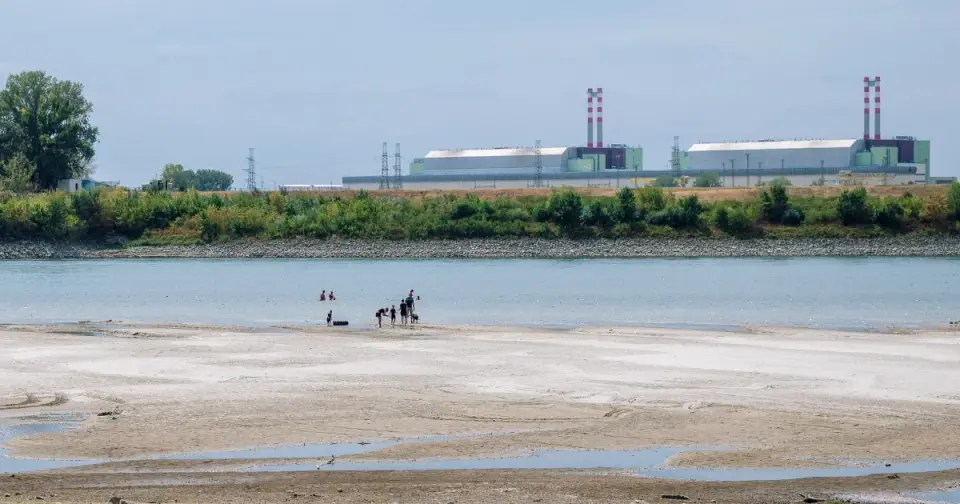
Hungary is implementing emergency measures to raise Danube River levels and prevent a shutdown of the Paks nuclear plant, which supplies a third of the country's electricity. Prime Minister Péter Magyar announced the construction of a concrete bed sill and the potential sinking of two barges to boost water levels by up to three feet. These actions follow record-low river levels caused by extreme heat and drought, which have reduced Paks output to 10% of capacity. The government also launched a review of a stalled Russian-backed nuclear expansion project.
Key points
- Hungary is building a bed sill on the Danube and may sink two barges to raise water levels near the Paks nuclear plant.
- The Paks plant, which provides roughly 33% of Hungary's electricity, is currently operating at only 10% of its 2,000-megawatt capacity due to drought.
- Prime Minister Péter Magyar stated that the current low output costs the economy 50 billion forints monthly, while the emergency river interventions cost only 6 billion forints.
- Magyar cast doubt on the Paks II expansion deal with Russia's Rosatom, noting that the project is years behind schedule and has consumed 1,000 billion forints with little visible progress.
- Romania recently took similar emergency actions, sinking barges to keep its Cernavoda nuclear plant operating, though it later shut down its second reactor due to low water levels.
Background
This crisis follows a series of disruptions in early August 2026, when Paks was briefly shut down and then partially restored as Danube levels fluctuated. Earlier in the month, the plant's output dropped to 240 megawatts, prompting regional energy coordination and water-use restrictions. Romania also faced similar cooling challenges at its Cernavoda plant, leading to emergency barge deployments in early August.
How outlets are covering it
NBC News focuses on the immediate physical interventions, highlighting Magyar's warning that the Danube has 'given us days, not months' and the specific costs of the emergency measures. Politico emphasizes the political dimension, detailing Magyar's criticism of the Russian-backed Paks II expansion, which he described as a failure to adhere to contract terms despite billions in spending. Yahoo's coverage is largely obscured by technical code in the provided source, but its headline aligns with the general narrative of Hungary damming the Danube to keep the plant online. The outlets differ in emphasis: NBC highlights the urgency of the water crisis, while Politico frames it within the context of Hungary's shifting foreign policy and energy independence from Russia.
Why it matters
The stability of the Paks plant is critical for Hungary's energy security, as it supplies a significant portion of the national grid. A full shutdown could trigger severe power shortages and economic losses. Furthermore, the crisis highlights the vulnerability of open-loop cooling systems to climate change and may influence future nuclear infrastructure standards in Europe. The review of the Russian-backed expansion also signals a potential shift in Hungary's energy policy away from Moscow.
What to watch
Hungary will decide on Friday whether to sink the two barges to further raise water levels. The government will continue its full review of the Paks II project, including its financing and cooling arrangements. Water levels are expected to drop again in the coming days, making the success of the bed sill and barge interventions critical to preventing a full shutdown.
- Hungary to sink barges and build a sill on Danube River to keep nuclear plant running NBC News
- Record-low Danube exposes climate risk to Hungary's and Romania's nuclear power Reuters
- Magyar casts doubt on Hungary-Russia nuclear power deal politico.eu
- Hungary Casts Doubt on Nuclear Plant Expansion After Danube Low Levels Bloomberg.com
- Hungary dams Danube to keep Paks nuclear plant online Yahoo
Want the full story? Read the original reporting
Read on NBC News