
Climate-Driven Glacial Retreat Exposes 250 WWI Munitions in Italian Dolomites
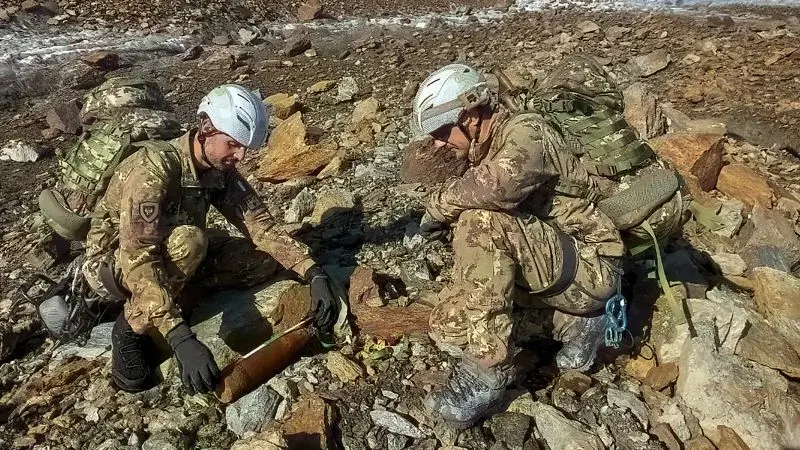
Rapid glacial melting in the Italian Dolomites has exposed approximately 250 unexploded World War I munitions. The Italian Army’s Julia Alpine Brigade removed these dangerous artifacts, including artillery shells and mortar bombs, from high-altitude areas in Trentino-Alto Adige. The operation, which concluded in October, was necessitated by extreme heat and low snowfall that accelerated ice retreat, revealing hazards for hikers and mountaineers.
Key points
- The Italian Army’s Julia Alpine Brigade removed and defused 250 unexploded munitions from the Dolomites, including 18 Italian 75mm artillery shells and 37 French-made Thevetot mortar shells.
- The first discovery occurred in June when a car accident near Caldonazzo revealed a 90mm mortar shell; subsequent finds were concentrated in the Primiero Valley and other high-altitude zones.
- Extreme summer heat and low winter snowfall in 2025-2026 accelerated the retreat of glaciers like Caré Alto and Lares, exposing ordnance buried for over a century.
- The cleanup campaign, which required specialized mountaineering skills, ended on October 16, 2026, as weather conditions became too hazardous for further operations.
- A safety campaign is underway to warn hikers not to touch suspicious objects and to report findings to authorities, as the munitions remain highly dangerous.
Background
This event is part of a broader trend where global heating is revealing artifacts from the 'White War' (1915-1918) in the Alps. Since the 1990s, melting ice has exposed preserved items, including letters, diaries, and even corpses. In 2015, a wooden barracks on Mount Scorluzzo reappeared, and in 2017, an identified soldier was buried. A White War museum is scheduled to open in Bormio in June 2027 to house such relics. This follows other recent unexploded ordnance incidents, such as the removal of masts from the SS Richard Montgomery shipwreck in the Thames Estuary in late 2026.
How outlets are covering it
CNN emphasized the specific incident of a car accident revealing the first shell and the logistical challenges of the cleanup. The Guardian highlighted the broader climate impact, noting that 56% of glacial area in the Dolomites has declined since the 1980s, and quoted Professor Stefano Morosini on the increasing danger of these artifacts. Gizmodo focused on the statistical decline of glaciers, noting that only 12 of the original 33 remain, and confirmed that 2026 was the hottest summer on record for several Italian regions. The Independent stressed the ongoing nature of the threat, noting that operations are continuing as ice reveals further remains, and highlighted the army's statement that 'history resurfaces' with new dangers.
Why it matters
The exposure of unexploded ordnance poses a direct safety risk to the public and highlights the tangible, immediate consequences of climate change in alpine regions. It underscores the need for specialized military intervention to secure public spaces and the long-term preservation of historical artifacts, which are now being lost or repurposed for museums as ice disappears.
What to watch
The Italian Army will continue monitoring the region for further discoveries as ice continues to melt. A White War museum is set to open in Bormio in June 2027, which will likely display some of the recovered artifacts. Public safety campaigns will remain active to educate hikers and locals on how to report suspicious objects.
- Hundreds of World War I munitions exposed by melting ice removed from Dolomites CNN
- Melting glaciers in Dolomites reveal cache of first world war munitions The Guardian
- Melting Glaciers Expose More Than 250 Unexploded WWI Bombs in the Dolomites Gizmodo
- World War I bombs and grenades uncovered by Italy's melting glaciers The Independent
- 250 First World War munitions recovered from Italian glaciers UA.NEWS
Want the full story? Read the original reporting
Read on CNN