
13-Metre Whale Carcass Forces Closure of Perth's City Beach as Sharks Circle Shoreline
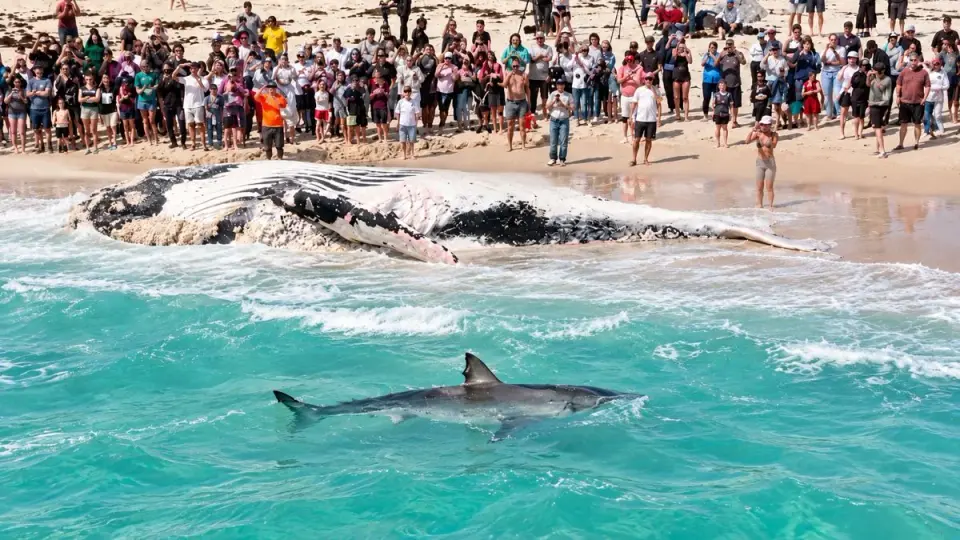
A decomposing 13-metre whale carcass has forced the closure of City Beach in Perth, Western Australia, after attracting multiple sharks to the shoreline. Authorities are preparing to remove the 31-tonne carcass using heavy machinery, while fisheries officers attempt to tag sharks lured by the decomposing remains. The incident has drawn large crowds of onlookers, prompting officials to urge the public to stay away and stop flying drones near the site.
Key points
- A 13-metre long, 31-tonne whale carcass washed up at City Beach in Perth, attracting several sharks within metres of the shore.
- City Beach and Floreat Beach remain closed until the carcass is fully removed, with an expanded exclusion zone planned for the removal operation.
- Contractors are scheduled to begin removing the carcass using heavy machinery, a process described as complex and potentially risky.
- Fisheries officials are using the situation as an 'opportunistic tagging opportunity' to tag sharks circling the area, including a 3.7-metre shark tagged off Floreat Beach.
- Mayor Gary Mack urged the public to avoid the area and stop flying drones, noting that a person was seen sitting on the carcass, which he called highly inappropriate.
Background
This incident occurs amid heightened shark safety concerns in Western Australia following a fatal great white attack at Sorrento Beach in September 2026, which led to a rare catch-and-kill order for the attacking shark. The region has experienced multiple fatal shark attacks in 2026, increasing public and governmental focus on shark management and beach safety protocols.
How outlets are covering it
The Inertia emphasizes the public spectacle and the presence of multiple shark species, including two great whites over 13 feet long, a bronze whaler, and a tiger shark, attracted by the carcass. ABC News focuses on the logistical and financial challenges of removal, noting that the Town of Cambridge may seek state government contribution to cover costs, similar to a 2014 incident at Scarborough Beach. ABC also highlights the fisheries department's use of the event for shark tagging, while The Inertia notes the potential for the carcass to explode due to gas buildup. Both sources agree on the need for immediate removal but differ in emphasis: The Inertia on the wildlife spectacle, and ABC on the administrative and scientific response.
Why it matters
The incident highlights the ongoing challenges of managing wildlife hazards in popular coastal areas, particularly the balance between public safety, environmental concerns, and the logistical difficulties of removing large decomposing carcasses. It also underscores the need for public cooperation in avoiding areas where wildlife activity poses risks, as well as the potential for such events to provide opportunities for scientific research, such as shark tagging.
What to watch
Contractors are expected to begin removing the whale carcass using heavy machinery, with the process likely to take several days. Fisheries officials will continue tagging sharks in the area, and an expanded exclusion zone will be implemented to ensure safety during the removal. The beaches are unlikely to reopen until the carcass is fully removed and the water is cleared of oils and residues from the decomposing remains.
- 16-Foot Great White Triggers Feeding Frenzy Just Yards From Perth Beach Crowd (Video) Yahoo
- Watch: 16-Foot Great White Shark Swims Just Offshore as Crowd Watches in Australia SURFER Magazine
- Rotting Whale Carcass Shuts Down Perth Beach and Attracts Sharks The Inertia
- Dead whale festers on beach as authorities work out who will pay ABC News & Headlines – Australian Broadcasting Corporation
- Big shark caught on drum line as expert warns whale scent could draw predators to City Beach for weeks smh.com.au
Want the full story? Read the original reporting
Read on Yahoo