
BC Hydro locates 'lost' floating forest island after it drifts 30 km to shore
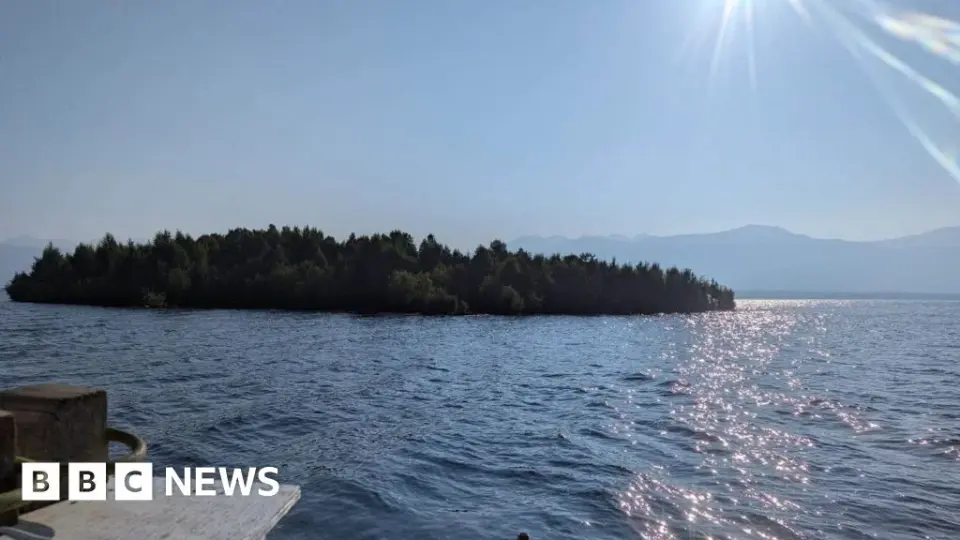
A forested floating island that appeared and then vanished from satellite images in British Columbia’s Williston Reservoir has been located near the shoreline. BC Hydro confirms the roughly 9,800-square-meter mass drifted about 30 kilometers from its initial spot, likely driven by wind after record high water levels freed it from the shore. While the exact origin remains unconfirmed, officials believe it formed from accumulated driftwood and vegetation. The utility warns the structure is unstable and advises against boarding it, noting it may break apart or drift again.
Key points
- BC Hydro confirmed the floating island was spotted near the north entrance of the Ospika Arm, approximately 30 km from where it was first seen in mid-August.
- The island, measuring about 70 by 140 meters, was initially detected by satellite on July 21 but disappeared from imagery by August 5.
- Record high water levels in the reservoir, the first in 14 years, likely caused the mass to break away from the shoreline.
- Strong winds, rather than currents, are believed to have driven the island across the reservoir, as the water flows slowly eastward toward the dam.
- BC Hydro warns the island is unstable and could break apart, advising boaters not to attempt to land on it.
Background
This incident follows a period of heightened attention to environmental anomalies in British Columbia, including earlier reports of unusual floating debris in the region. The reservoir, created in 1968, is the seventh-largest in the world by volume, making continuous monitoring of every bay and inlet impractical. The event mirrors similar phenomena in other large water bodies, such as the 'Forty Acre Bog' in Wisconsin, where peat bogs detach and float. The current high water levels in Williston Reservoir, driven by heavy snowpack and summer rain, created conditions ripe for such events, as the reservoir reached full capacity for the first time since 2012.
How outlets are covering it
BC Hydro and CBC News emphasize the logistical challenge of tracking the island, noting that its disappearance from satellite imagery was likely due to it drifting into a sheltered cove or blending with the shoreline, rather than sinking. Bob Gammer, a BC Hydro spokesperson, initially suspected the viral videos were AI-generated but confirmed the island's existence via satellite data. In contrast, ZME Science highlights the scientific plausibility of such formations, citing precedents in Africa and Wisconsin where peat and vegetation mats support mature trees. ZME Science also notes that while the island is large, it is thin and not structurally like an iceberg, making it vulnerable to breaking apart. Simon Fraser University earth sciences professor John Clague, cited by CBC, suggests the reservoir's strong winds and erosion-prone banks contributed to the event, calling it a potential world record for floating wood mats with healthy trees. All sources agree that the island's exact origin remains unconfirmed, though the theory of driftwood accumulation is the leading hypothesis.
Why it matters
The discovery underscores the unpredictable environmental impacts of extreme water levels and climate variability on large reservoirs. It highlights the challenges of monitoring vast water bodies and the potential for natural phenomena to create unexpected hazards for navigation and infrastructure. The incident also serves as a reminder of the complex interactions between water levels, wind, and vegetation in shaping landscapes, with implications for future management of similar reservoirs.
What to watch
BC Hydro will continue to monitor the island's location and stability, as it may drift again if strong winds break it free from the shore. The utility is investigating the island's origin and formation, expecting to find a 'scar' along the shoreline where it detached. If the island breaks apart, it may create a debris field that could pose navigation hazards, potentially requiring further action. BC Hydro is also reviewing its ongoing program for identifying and removing woody debris to mitigate future risks.
- How a small island in Canada appeared, vanished, and was found again BBC
- Lost island in northern B.C. lake — that appeared then disappeared — located, says B.C. Hydro CBC
- Phantom Island Mysteriously Appears, Vanishes, Then Reappears on B.C. Reservoir The New York Times
- A Forested Island the Size of Two Football Fields Appeared Out of Nowhere in Canada. Then It Mysteriously Vanished ZME Science
- Massive mystery island surfaces in B.C. reservoir, then disappears Newsweek
Want the full story? Read the original reporting
Read on BBC