Tag

Amazon Rainforest

All articles tagged with #amazon rainforest

Amazon's boiling river: heat from deep underground, no volcano in sight
science8 days ago

Amazon's boiling river: heat from deep underground, no volcano in sight

In a six-kilometre stretch of the Peruvian Amazon, water runs as hot as about 86°C (peaking above 90°C), hot enough to cook small animals; researchers say the heat comes from groundwater circulating deep through rock faults rather than from volcanic activity, making Shanay-Timpishka a natural laboratory for how warming could affect Amazon ecosystems, including biodiversity loss and canopy changes.

Amazon Discovery Reveals Two New Anaconda Species and Pollution's Toll
science15 days ago

Amazon Discovery Reveals Two New Anaconda Species and Pollution's Toll

During a National Geographic shoot in the Amazon with Will Smith, scientists encountered a 7.5-meter green anaconda and revealed that what was once considered a single species is actually two: the Ecuadorian and Brazilian green anacondas. Ecuadorian snakes are longer on average; pronounced male–female size differences influence their prey choices; heavy-metal testing found males carry up to ten times more lead and cadmium due to oil pollution, illustrating how contaminants move up the food chain and threatening biodiversity, especially the Brazilian species with its smaller range.

A tiny Amazon patch could house 40,000 insect species, many undiscovered
science20 days ago

A tiny Amazon patch could house 40,000 insect species, many undiscovered

A Brazilian megaproject is surveying insects across a 10,000‑hectare central Amazon site from ground to canopy, deploying multi‑level traps and a blitz of methods. After 14 months they’ve collected about 5.5 million specimens, with around 600,000 slated for DNA sequencing, and preliminary data suggest as many as 40,000 species may inhabit this patch—roughly 0.7% of the world’s estimated six million insect species—work being carried out by ~400 taxonomists who will describe and name new species, often drawing on Indigenous languages, rivers and regional history.

Lidar Reveals 400 Ancient Amazon Geoglyphs, Rewriting Regional History
science23 days ago

Lidar Reveals 400 Ancient Amazon Geoglyphs, Rewriting Regional History

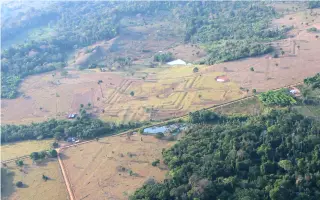
A lidar survey across ~1,700 square miles of western Brazil’s Amazon uncovered nearly 400 earthworks dating from 600 BCE to AD 850, built by the Aquiry—a large, multicultural group estimated to number up to three million—indicating substantial ceremonial centers and settlements; as many as 20,000 geoglyphs may still lie hidden, with abandonment around AD 850–950 potentially linked to regional collapses seen in other civilizations.

Laser mapping reveals hundreds of Amazon geoglyphs built by the Aquiry civilization
science25 days ago

Laser mapping reveals hundreds of Amazon geoglyphs built by the Aquiry civilization

Airborne lidar surveying about 4,500 square kilometers in Brazil’s Acre state uncovered 396 new geoglyphs, shedding light on the Aquiry civilization that built monumental earthworks, longhouses, and ceremonial centers and farmed crops like maize and squash. The findings suggest a large, interconnected society that may have peaked at 1.25–3 million people between AD 100 and 300, with thousands of geoglyphs yet to be found and a probable collapse around AD 850–950.

Airborne lasers reveal a vast lost Amazonian civilization of millions
science25 days ago

Airborne lasers reveal a vast lost Amazonian civilization of millions

Airborne lidar scans across 1,737 square miles of western Brazil uncovered 400+ earthworks, roads, and geoglyphs linked to the Aquiry culture dating to about 2,500 years ago, implying a connected Amazonian civilization of 1.25–3 million people and a notable ecological footprint from maize and squash farming and forest management; published in Nature, the findings challenge the view of the Amazon as pristine and could reshape climate models, though population estimates are debated and more research is needed.

Amazonian Chagras: Indigenous agroforestry that feeds people and saves the forest
environment2 months ago

Amazonian Chagras: Indigenous agroforestry that feeds people and saves the forest

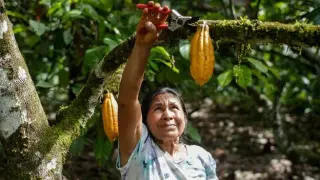
Indigenous chagra farming in Colombia’s Amazon and Ecuador’s Napo province showcases a 4,500-year-old, pesticide-free agroforestry system: small plots are cleared in sync with the forest cycle, planted with diverse crops (cassava, plantains, cacao, vanilla, medicinal herbs), and returned to forest after about five years. This approach supports local food security, fosters high biodiversity, and stores carbon at levels comparable to secondary forests, with some chakras generating income from cacao. Yet mining, climate change, and youth migration threaten these practices, prompting land-rights initiatives like Indigenous Territorial Entities and chakra-certified cooperatives to protect the system. While not a solution for feeding large populations, chagras offer a valuable model for culturally rooted, sustainable local food production.

The Sacred Anaconda: How a Giant Serpent Holds the Amazon Together
world2 months ago

The Sacred Anaconda: How a Giant Serpent Holds the Amazon Together

The green anaconda, the world’s largest snake, is more than a predator in the Amazon: it is a central cosmological figure in Indigenous myths, embodying the river and the cosmos, creator of social order, and guardian of ecological balance. From the ancestral anaconda-canoe in Vaupés to Yakumama in Peru, these stories link origins, ritual, and governance to the health of the rainforest, while scientific facts about its size and habitat underscore its enduring significance amid environmental threats.

Sahara’s Dust Fuels the Amazon’s Phosphorus Budget Across Oceans
science3 months ago

Sahara’s Dust Fuels the Amazon’s Phosphorus Budget Across Oceans

Each year about 27.7 million tons of Saharan dust reach the Amazon, delivering roughly 22,000 tons of elemental phosphorus—nearly balancing the rainforest’s phosphorus losses from runoff and helping sustain its productivity. While Bodélé Depression was once thought the main source, newer research points to El Djouf and other western North African regions as major contributors; the exact mix remains debated. This intercontinental dust transport establishes a real, if still uncertain, nutrient link between the desert and the rainforest, with implications as climate patterns shift.

Condoms help scientists decode Amazon cicada mud towers
science3 months ago

Condoms help scientists decode Amazon cicada mud towers

Researchers in the Brazilian Amazon used condoms to seal cicada mud towers and found the structures help protect developing nymphs from predators (ants) and regulate air flow; larger towers rebound faster after disruption, suggesting the towers are an extended phenotype that aids survival during metamorphosis. The field study, conducted through Serrapilheira Institute and published in Biotropica, reframes these towers as an adaptive life-cycle tool rather than mere dirt.

Amazon Spider Wears Fungus-Inspired Camouflage, A Real-Life 'Last of Us' Moment
science5 months ago

Amazon Spider Wears Fungus-Inspired Camouflage, A Real-Life 'Last of Us' Moment

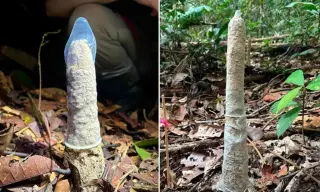
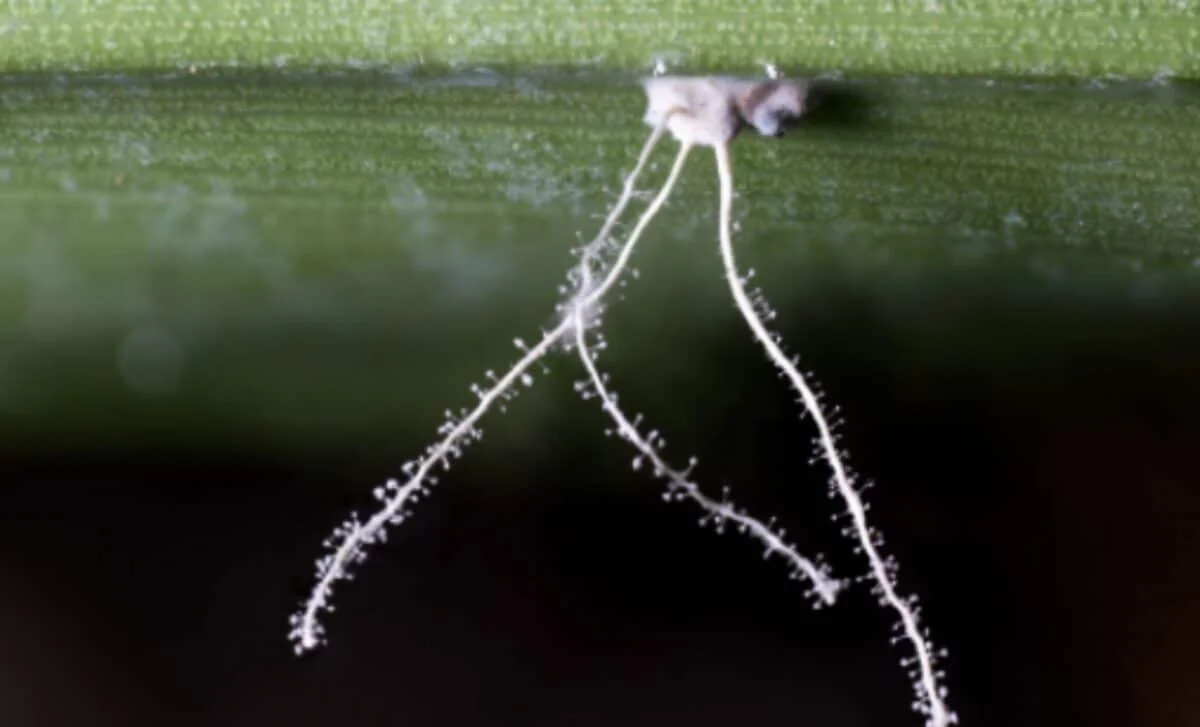
Scientists describe Taczanowskia waska, a newly identified spider from Ecuador's Amazon that mimics the fruiting bodies of parasitic fungi to look dead and deter predators (and possibly lure prey). The discovery, published in Zootaxa, reveals a broader pattern of fungal mimicry across continents and highlights citizen science platforms like iNaturalist in uncovering rare spiders.

Ten of the Amazon's Most Lethal Creatures Revealed
environment5 months ago

Ten of the Amazon's Most Lethal Creatures Revealed

The article spotlights ten Amazonian species deemed highly dangerous, highlighting the giant centipede's venom and ceiling-hunting behavior, the poison dart frog's potent toxins, the bullet ant's crippling sting, the green anaconda's massive size and drowning prey tactic, the bull shark's ability to inhabit both fresh and saltwater, and the risks posed by tapeworms, giant candiru, Brazilian wandering spider, ocelot, and electric eel, illustrating the rainforest's astonishing biodiversity alongside real peril.

Newborn boy gives hope for the Akuntsu, a nearly extinct Amazon tribe
world-news5 months ago

Newborn boy gives hope for the Akuntsu, a nearly extinct Amazon tribe

In Brazil’s Amazon, the Akuntsu—once about 20 people and now reduced to three isolated women—welcome a baby boy born to a Kanoe partner, a development that offers hope for the tribe’s survival. Officials secured protection for their Rio Omere land, fostered cross-group ties, and a translator aided communication, signaling a possible return of male roles and continuity for the Akuntsu’s future.

Earth Nears Irreversible Climate Tipping Points, Scientists Warn
environment6 months ago

Earth Nears Irreversible Climate Tipping Points, Scientists Warn

Scientists warn Earth is approaching multiple tipping points in climate systems—including the Greenland and West Antarctic ice sheets, boreal permafrost, and the Amazon—raising the risk of a ‘hothouse Earth’ with about 9°F of warming; current climate commitments are insufficient, and entrenched power structures complicate a just, effective transition.