
Record Drought Exposes WWII Ships and Mammoth Bones in Europe
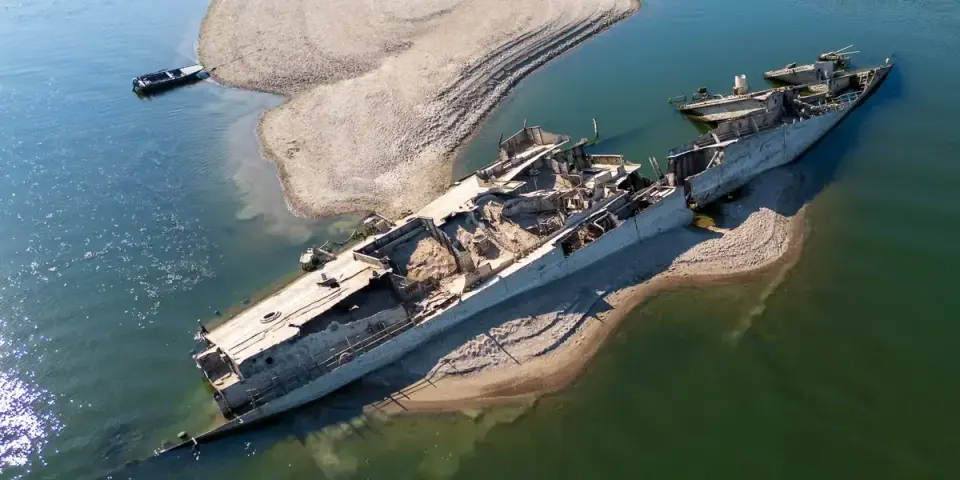
Severe heat and lack of rain have driven Europe’s Danube and Rhine rivers to record-low levels, exposing submerged historical relics including World War II shipwrecks and woolly mammoth remains. While these discoveries offer archaeological insights, the low water levels are disrupting critical freight transport and threatening the long-term preservation of fragile artifacts.
Key points
- Record-low water levels in the Danube and Rhine have exposed relics ranging from 19th-century vessels to WWII-era warships.
- A local resident in Ryahovo, Bulgaria, discovered woolly mammoth remains, including a jaw, femur, and ribs, along the Danube.
- Curator Krasimir Kirov warns that exposure to air and sunlight threatens the preservation of these bones, which require water to remain stable.
- The drought is disrupting inland waterway freight, with Germany potentially facing a 0.3 percentage-point drop in GDP growth due to reduced shipping capacity.
- Forecasts from the European Commission’s Joint Research Centre indicate warmer and drier conditions will persist into September.
Background
This development follows earlier reports in August 2026 that highlighted similar drought conditions across Europe. Previous coverage noted that shrinking waterways were not only revealing historical artifacts but also disrupting energy supplies, with Hungary considering a shutdown of the Paks nuclear plant due to insufficient cooling water. Satellite analysis from mid-August confirmed that major rivers, including the Loire and Po, were also at record-low levels, affecting irrigation and vegetation across Central and Western Europe.
Why it matters
The exposure of these relics highlights the immediate physical impact of climate change on Europe’s geography and history. However, the broader significance lies in the economic and logistical strain on the continent’s supply chains. As the Danube and Rhine serve as vital arteries for freight, their drying threatens trade efficiency and economic stability, while the rapid degradation of newly exposed artifacts underscores the urgent need for adaptive preservation strategies in a changing climate.
What to watch
Archaeologists are racing to document and preserve newly exposed sites before water levels potentially rise again. Authorities in Serbia and other affected regions face challenges in removing hazardous shipwrecks, some of which still contain explosives. Long-term forecasts suggest that without significant changes in fossil fuel use, such extreme water-level fluctuations may become more frequent, requiring updated infrastructure and preservation protocols.
Want the full story? Read the original reporting
Read on Business Insider