
Human-led migration guides bring 15 new bald ibises to northern Spain
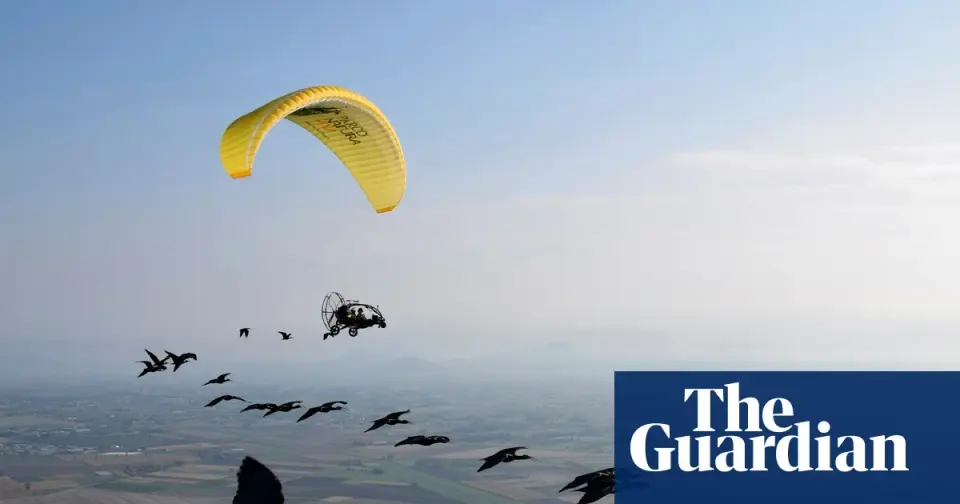
Fifteen northern bald ibises have arrived in Alt Empordà, Catalonia, guided by humans in ultralight aircraft. This addition supports a broader European effort to re-establish the species, which was extinct on the continent for 300 years, with goals to reach 300 wild individuals within a decade.
Key points
- Fifteen new birds joined an existing flock in Alt Empordà, northern Spain, arriving from Austria via human-guided migration.
- The northern bald ibis (Geronticus eremita) was extinct in Europe for 300 years; the last major wild population in Morocco declined from 9,000 to 250 by the late 20th century.
- The Alt Empordà project, led by biologist Bernat Garrigós, began in 2024 and established a first-generation flock of nearly 60 birds by 2025.
- The project aims to release birds into the wild over the next 10 years, targeting a minimum of 50 breeding pairs and 300 individuals.
- The Alt Empordà site serves as a stopover between the Austrian and Jerez, Andalucía projects, facilitating genetic diversity through connected colonies.
Background
Recent archive coverage highlights various bird migration tracking methods, such as geolocator backpacks for warblers and radar estimates for autumn flights in North America. However, the current story focuses on a specific reintroduction project in Europe for a species that had been absent from the continent for three centuries. Unlike the passive tracking of natural migrations, this project involves active human intervention to guide birds along safe routes.
Why it matters
The success of this project demonstrates that active conservation can reverse local extinctions. By connecting colonies across Europe, the initiative aims to create a robust gene pool and resilient ecosystems. Additionally, the project has influenced infrastructure changes, such as utility companies retrofitting pylons to reduce bird collisions, showing how charismatic species can drive broader environmental awareness and practical safety measures.
What to watch
The Alt Empordà team expects its first breeding pair within one to two years, as ibises require three to four years to mature. The long-term goal is to establish a self-sustaining population of 300 individuals in the wild by 2036. The project will continue to collaborate with Austrian and Spanish counterparts to ensure genetic diversity and minimize mortality rates during migration.
Want the full story? Read the original reporting
Read on The Guardian