
Indonesia’s El Niño-Driven Haze Crisis Reaches Peak Toxicity as Rain Offers Limited Relief
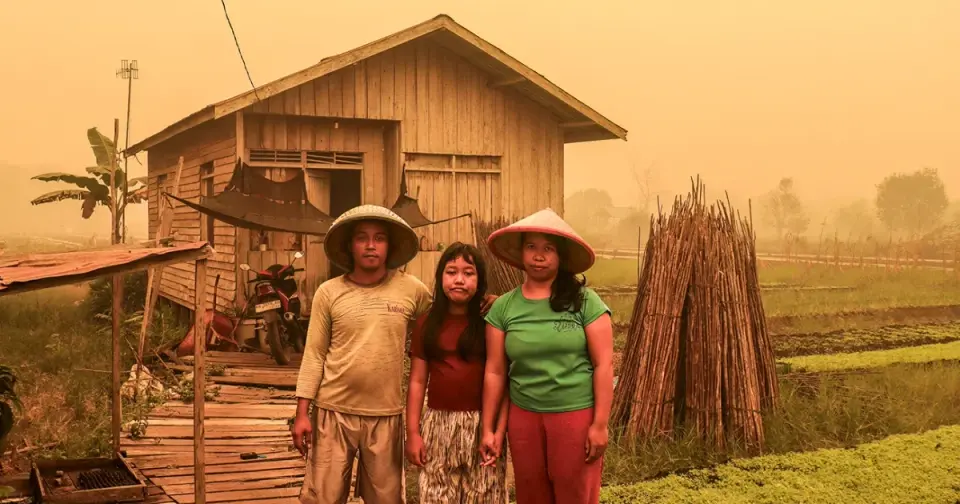
Indonesia is experiencing its worst fire season in over a decade, driven by a 'super' El Niño and slash-and-burn agriculture. Toxic smog has choked Southeast Asia, causing over 283,000 respiratory cases in Indonesia and severe pollution in Singapore. While recent rains offer temporary relief, heavy downpours are not expected until December, leaving peat fires smoldering. Diplomatic tensions have risen, with Singapore threatening legal action against companies linked to the fires, while Indonesian protesters demand a national disaster declaration.
Key points
- PM2.5 levels in parts of Indonesia have exceeded 1,000 micrograms per cubic meter, more than 65 times the WHO safe limit.
- The fires have released an estimated 175 million tonnes of carbon, equivalent to three-quarters of Indonesia’s annual fossil-fuel CO2 emissions.
- Singapore’s air pollution reached its highest level since 2015, prompting officials to consider a joint task force with Indonesia to combat illegal burning.
- More than 283,000 respiratory illness cases have been reported in seven Indonesian provinces as of October 13, more than double the count in early September.
- Rainfall is expected to increase in December, but peat fires may reignite if the dry season returns, as seen in 1997-1998.
Background
This crisis follows a pattern of severe haze events in Southeast Asia, with previous major incidents occurring in 2015 and 2019. The current event is exacerbated by a 'super' El Niño, which has intensified drought conditions. Indonesia has previously struggled with peatland fires, which are difficult to extinguish and release ancient carbon stored in the soil. The region has seen progress in fire management and peatland re-wetting, but the 2026 El Niño has reversed these gains.
How outlets are covering it
NBC News emphasizes the human impact, highlighting the suffering of residents in Kalimantan and the diplomatic friction between Indonesia and Singapore. The Conversation focuses on the environmental and scientific aspects, noting the extreme PM2.5 levels and the release of centuries of stored carbon from peat fires. The Spokesman-Review highlights the potential for relief from upcoming rains, but also warns of the risk of reignition if the dry season returns. All sources agree on the severity of the crisis and the need for better fire management and peatland restoration.
Why it matters
The crisis has significant health, environmental, and economic implications. The toxic smog has caused widespread respiratory illnesses and disrupted daily life in Southeast Asia. The release of 175 million tonnes of carbon contributes to climate change, while the fires have impacted agricultural productivity, particularly in the palm oil industry. Diplomatic tensions between Indonesia and its neighbors could escalate if the situation is not resolved, and the long-term environmental damage from peat fires could have lasting consequences.
What to watch
Rainfall is expected to increase in December, which may help extinguish the fires, but there is a risk of reignition if the dry season returns. Indonesia is establishing a new national peatland and mangrove management agency to restore drained peatlands and reduce future fire risks. Singapore and Indonesia are considering a joint task force to combat illegal burning, and Singapore may pursue legal action against companies linked to the fires. The situation will likely remain tense until the fires are fully extinguished and the region recovers from the haze.
- ‘Looks like Mars’: Toxic smog from Indonesia wildfires sparks health crisis, protests NBC News
- Indonesia sends oxygen bus to aid residents choking on forest fire haze Reuters
- 3,560 lives lost to ‘avoidable’ Indonesia wildfire smoke crisis in September South China Morning Post
- Indonesia’s El Niño-driven peat fires are choking the region – and releasing centuries of stored carbon The Conversation
- Indonesia Rain Set to Ease Toxic Haze in Singapore, Malaysia The Spokesman-Review
Want the full story? Read the original reporting
Read on NBC News