
Monteverde’s cloud forest faces extinction as rising temperatures lift the mist
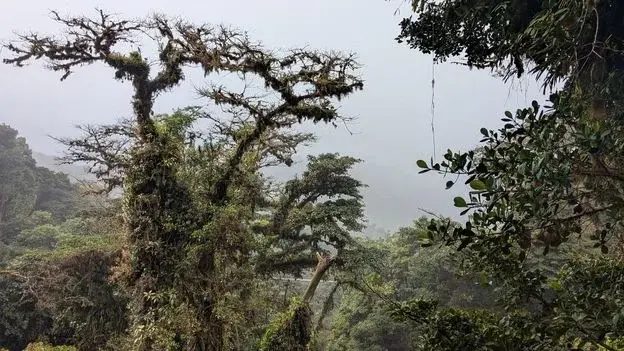
Warming temperatures are causing the cloud base in Costa Rica’s Monteverde region to rise, drying out the forest and threatening endemic species. Data shows a sharp increase in dry days, while lowland species invade the habitat, disrupting delicate ecological balances.
Key points
- The 'lifting cloud base hypothesis' suggests warming temperatures are pushing mist higher, leaving lower elevations dry.
- Researcher Alan Pounds notes dry days in Monteverde increased from 25 in the 1970s to an average of 119 between 2015 and 2023.
- Epiphytes, which rely entirely on fog for water, are the first species to suffer, acting as early warning indicators.
- Lowland species, such as keel-billed toucans and poisonous snakes, are moving into the cloud forest, displacing native residents.
- The golden toad’s extinction in the late 1980s serves as a historical precedent for climate-driven biodiversity loss in the region.
Background
Monteverde has long been a hub for conservation, with local communities shifting from cattle farming to eco-tourism to protect the forest. Previous archive coverage of Costa Rica focused on criminal cases in Guanacaste, unrelated to this environmental crisis. The current situation highlights a broader global trend where cloud forests are losing cover and shifting uphill due to climate change.
Why it matters
Cloud forests support 15% of global bird, mammal, and amphibian species, many of which are endemic. The collapse of these ecosystems could trigger cascading extinctions and alter global biodiversity patterns, serving as a critical indicator of broader climate impacts.
What to watch
Researchers are conducting long-term studies on epiphyte loss and insect populations to predict future ecosystem changes. Conservation efforts are focusing on connecting habitats through corridors and planting native trees to help species adapt, though the ultimate fate of the cloud forest remains uncertain.
Want the full story? Read the original reporting
Read on BBC