
Loggerhead Turtle Crush Returns to Atlantic After Six-Month Recovery
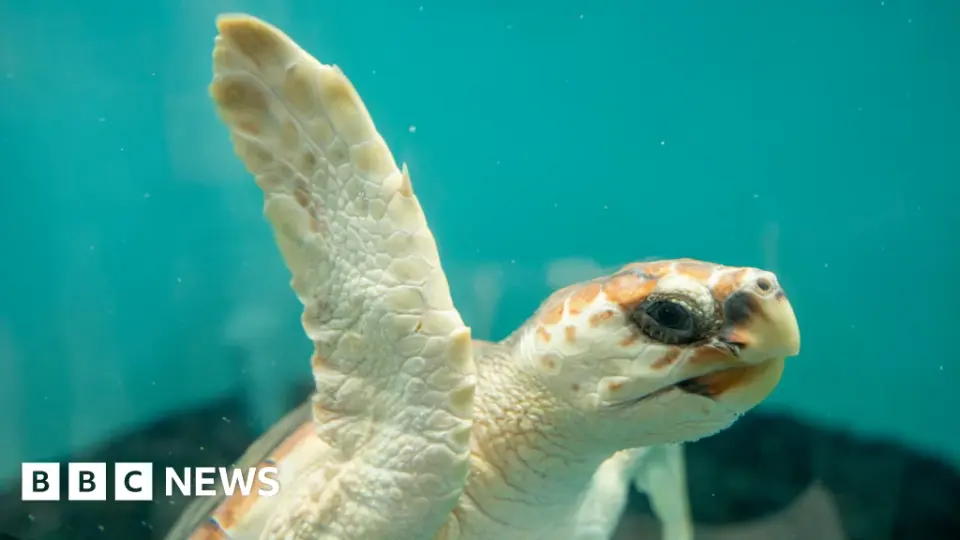
A loggerhead turtle named Crush, rescued from a Jersey beach in January after being swept north by Storm Goretti, was released into the North Atlantic off the Azores on Tuesday. After six months of rehabilitation at Sea Life Weymouth in Dorset, she was flown 1,500 miles to the Azores for release alongside two other rescued turtles, Eden and Tiree. The event was marked by emotional farewells from carers who had bonded with the animals during their recovery. Crush, who was initially found malnourished and suffering from hypothermia, now weighs 5kg and has been fitted with a satellite transmitter to track her movements for several months. The release was described as a success by staff, who noted the turtles swam away immediately upon entering the water.
Key points
- Crush was found lifeless on a Jersey beach on January 19 following Storm Goretti and was initially treated at New Era Veterinary Hospital before being transferred to Sea Life Weymouth.
- The turtle spent six months recovering in Dorset, where she was cared for by aquarist Victoria Goodier, and was later flown to the Aquario do Porto Pim in Faial, Azores, for quarantine and release.
- Crush was released alongside Eden, rescued from Troon in October 2025, and Tiree, rescued from the island of Tiree in November 2025, all of whom were found in similar states of distress.
- A satellite transmitter was attached to Crush to monitor her journey for the next few months, though staff acknowledged they would not see her again once the tag stops transmitting.
- Loggerhead turtles are classified as vulnerable on the IUCN Red List, with an estimated 2,000 breeding females worldwide and a survival rate of one in 1,000 hatchlings reaching adulthood.
Background
This release follows a series of earlier reports detailing Crush's rescue and recovery journey. Previous coverage highlighted the initial discovery of the turtle on Jersey, her transfer to Southampton for specialist care, and the logistical challenges of transporting her to the UK. The turtle's recovery was monitored through scans that showed her 'fighting spirit,' and her eventual release was anticipated as a significant moment for conservation efforts in the UK and Europe.
Why it matters
The successful release of Crush and two other loggerhead turtles underscores the effectiveness of cross-border wildlife rescue and rehabilitation efforts. It highlights the impact of extreme weather events like Storm Goretti on marine life and the importance of specialized care for vulnerable species. The use of satellite tracking provides valuable data for understanding turtle migration patterns and survival rates, contributing to broader conservation strategies for loggerhead turtles, which are classified as vulnerable globally.
What to watch
Researchers will monitor Crush via her satellite transmitter for the next few months to track her movements and survival. Once the tag stops transmitting or falls off, the turtle will be considered independent. Conservation groups will continue to use data from these releases to inform future rescue and rehabilitation protocols for sea turtles in the UK and Europe.
Want the full story? Read the original reporting
Read on BBC