
Planetary Health Check: Seven of Nine Earth Systems Breach Safe Limits
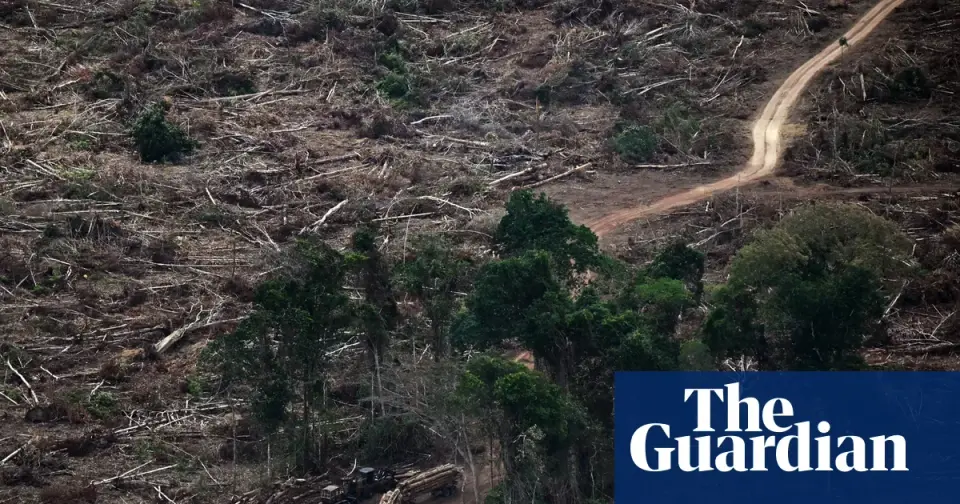
A 2026 assessment by 60 scientists confirms that seven of nine planetary boundaries are breached at record levels, including climate change and biosphere integrity. While stratospheric ozone and aerosol loading show improvement, the overall risk of irreversible damage is rising. The report warns that natural buffers like forests are failing, potentially triggering tipping points such as the Amazon turning into savannah. Released during Climate Week in New York, the findings highlight a disconnect between scientific urgency and corporate 'green-hushing'.
Key points
- Seven of nine planetary boundaries are breached at their highest recorded levels, including climate change, biosphere integrity, land system change, freshwater change, biogeochemical flows, novel entities, and ocean acidification.
- Only stratospheric ozone depletion and atmospheric aerosol loading remain within safe operating spaces, though aerosol pollution persists in several regions.
- The report warns that natural carbon sinks, such as forests and oceans, are weakening, increasing the risk of tipping points like the Amazon rainforest converting to savannah.
- Recent extreme events, including record heat in Europe and the US, floods in Pakistan and the Tibet-Nepal border, and record ocean temperatures, are cited as evidence of the planet's imbalance.
- The assessment was released during Climate Week in New York, where organizers noted a trend of 'green-hushing' among companies despite visible climate disasters.
Background
This annual assessment, established in 2009, tracks the 'safe operating space' for humanity. Previous UN reports in early 2026 warned that the 1.5°C warming limit would likely be breached due to fossil fuel emissions. The current findings align with a broader narrative of accelerating environmental degradation, where the number of breached boundaries has increased from three in 2009 to seven in 2025/2026.
How outlets are covering it
The Guardian and Courthouse News both emphasize the severity of the breach, with the latter highlighting that climate change and biosphere integrity are 'core boundaries' that fundamentally alter the Earth system. The Guardian focuses on the human cost and the shrinking margin for error, quoting lead author Boris Sakschewski. In contrast, resilience.org offers a more critical, systemic perspective, arguing that technological solutions like solar and wind are insufficient to address the root causes of the crisis, which it attributes to an oligarchic economic system and corporate power. While the scientific reports focus on physical indicators, resilience.org frames the issue as a political and civilizational failure, suggesting that mass resistance is necessary to achieve systemic change. All sources agree on the urgency but differ on the primary drivers and solutions, with the scientific reports focusing on immediate action to return to safe limits, and the critical analysis focusing on structural economic reform.
Why it matters
The breach of multiple planetary boundaries simultaneously indicates that the Earth system is under combined pressure, increasing the likelihood of cascading failures and irreversible changes. The weakening of natural buffers, such as forests and oceans, reduces the planet's capacity to absorb carbon and regulate climate, potentially leading to more frequent and severe extreme weather events. This has direct implications for food security, water availability, and human health, as highlighted by the report's mention of the Amazon tipping point. The disconnect between scientific warnings and corporate behavior, as noted by Climate Week organizers, suggests that current political and economic systems may not be responsive enough to the scale of the crisis, necessitating more aggressive and systemic approaches to environmental governance.
What to watch
The report calls for 'accelerating action' to return to the safe operating space across all planetary boundaries. This includes reducing fossil fuel emissions, protecting forests, and addressing pollution. The findings are expected to inform discussions at the UN General Assembly and Climate Week, where policymakers and business leaders are gathering. However, the report also warns that the margin for error is shrinking, and the risk of large-scale, persistent change is increasing. Future assessments will likely focus on the effectiveness of current policies and the progress made in reducing transgressions of the planetary boundaries.
- ‘Planetary boundaries’ necessary for flourishing of life have been massively breached, scientists warn theguardian.com
- Planetary Health Check 2026 finds mounting pressures across Earth's life support systems Phys.org
- Annual planetary wellness check shows Earth turning for the worse Courthouse News
- Driving the System Change Needed to End Loss and Damage From Climate Change The Loss and Damage Collaboration
- Confronting climate failure: How we dig ourselves out of the climate-catastrophe hole - Part 2 resilience.org
Want the full story? Read the original reporting
Read on theguardian.com