
Danube Drought Unveils WWII Relics and Mammoth Bones
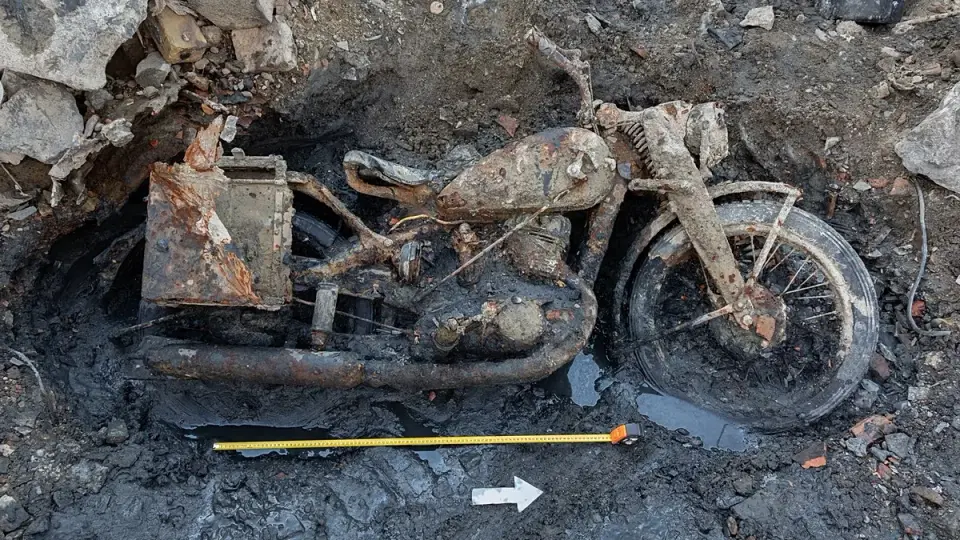
Record-low water levels on the Danube, driven by extreme heat and drought, have exposed World War II artifacts and ancient mammoth bones across Europe. In Budapest, a Wehrmacht motorbike and two soldiers' remains were recovered from the riverbed. In Serbia, dozens of scuttled German warships have emerged near Prahovo, while Bulgaria has uncovered mammoth fossils. These discoveries highlight the severe impact of climate change on European waterways, disrupting shipping and energy production.
Key points
- In Budapest, low Danube levels exposed a WWII motorbike and the remains of two Wehrmacht soldiers, preserved by gas oil in the riverbed mud.
- The German War Graves Commission exhumed the soldiers, whose identity discs remained legible, indicating their deaths were never reported to Berlin.
- Near Prahovo, Serbia, at least 20 WWII German warships, deliberately sunk in 1944 to slow Soviet advances, are now visible above the waterline.
- In Bulgaria, the receding Danube revealed well-preserved mammoth bones, including a jaw and tusks, near the city of Ruse.
- The drought has forced Hungary to shut down the Paks Nuclear Power Plant and disrupted shipping across the Danube, which flows through 10 countries.
Background
The Danube has faced record-low water levels before, notably in 2022 and 2024, when similar WWII wrecks emerged. However, the 2026 drought is more severe, with Budapest measuring water levels at 9 inches, shattering the 2013 record. This event is part of a broader European heatwave that has also dried up Lake Brenets and impacted energy and tourism sectors.
How outlets are covering it
Euronews focuses on the specific recovery of human remains and military artifacts in Budapest, emphasizing the preservation conditions provided by petroleum in the riverbed. CNN and CBS News provide a broader continental view, linking the Danube's exposure of relics to a wider climate crisis that is affecting rivers across Europe. CBS highlights the historical context of the scuttled ships in Serbia, while CNN emphasizes the scientific consensus that fossil fuel use is intensifying these extreme weather events. All sources agree on the severity of the drought but differ in emphasis: Euronews on the human/military history, while CNN and CBS on the environmental and infrastructural impacts.
Why it matters
The exposure of WWII relics and mammoth bones underscores the tangible impacts of climate change on historical and archaeological sites. The disruption of shipping and energy production, such as the shutdown of the Paks Nuclear Power Plant, highlights the economic and security risks posed by extreme drought in Europe. These events serve as a stark reminder of the long-term consequences of global warming on infrastructure and heritage.
What to watch
Authorities in Hungary and Serbia are monitoring the situation, with the German War Graves Commission expecting more recoveries if low water levels persist. Efforts to remove dangerous explosives from the scuttled ships in Serbia are ongoing, but access remains difficult. Scientists warn that without rapid reductions in fossil fuel use, such extreme droughts and their consequences will become more frequent and severe.
- Danube: Wehrmacht soldiers and WWII motorbike recovered after 80 years Euronews.com
- Low Danube water levels in Bulgaria expose Roman-era bridge Reuters
- Ancient mammoth remains and a Nazi shipwreck: Europe’s shrinking rivers reveal past relics CNN
- The Danube River's water is dropping so low that World War II ships are emerging PBS
- As the Danube River dries up, World War II shipwrecks and mammoth bones come into view CBS News
Want the full story? Read the original reporting
Read on Euronews.com