
Xi Meets Pezeshkian Briefly at SCO Summit, Ignoring Tehran’s Nuclear Stance
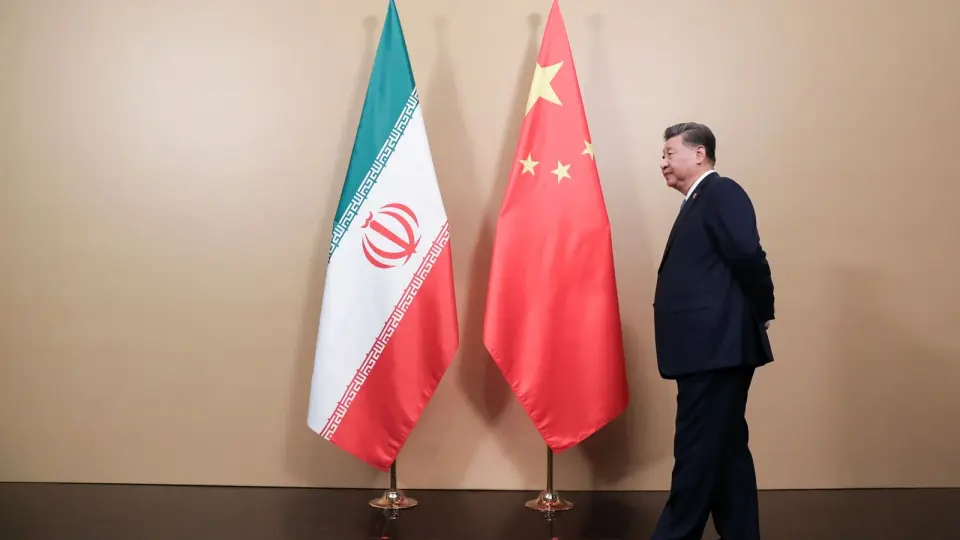
Chinese President Xi Jinping held a brief, low-profile meeting with Iranian President Masoud Pezeshkian on the sidelines of the Shanghai Cooperation Organization (SCO) summit in Kyrgyzstan. Beijing deliberately omitted coverage of the encounter from state media, signaling a cautious diplomatic stance ahead of Xi’s upcoming summit with US President Donald Trump. While the SCO bloc condemned military strikes on Iran and affirmed civilian nuclear rights, it avoided concrete support commitments. Analysts suggest Beijing is managing optics to preserve its relationship with Tehran without antagonizing Washington, particularly amid US pressure on China’s trade surplus and oil imports.
Key points
- Xi Jinping and Masoud Pezeshkian met for several minutes at the SCO summit in Kyrgyzstan, but Chinese state media, including People’s Daily, omitted the meeting from coverage, unlike the extensive reporting on Xi’s talks with other leaders.
- The SCO joint statement condemned military strikes on Iran and supported member states’ right to civilian nuclear development under the Nuclear Non-Proliferation Treaty, but stopped short of committing to concrete military or economic support.
- China has sharply reduced imports of Iranian oil through the Strait of Hormuz since the conflict began, relying on its massive reserves, despite being Tehran’s largest buyer of sanctioned oil.
- US Treasury Secretary Scott Bessent recently pressed G20 finance ministers to address China’s manufacturing overcapacity and trade surplus, which reached a record $1.2 trillion last year, intensifying US-China tensions.
- Analysts indicate Beijing is 'carefully managing optics' to maintain contact with Iran without appearing to side against the US, especially ahead of Xi’s planned meeting with Trump later this month.
Background
This diplomatic maneuvering occurs against a backdrop of escalating US-Iran tensions, including a six-month-long conflict and US sanctions under 'Operation Economic Outcast.' Earlier in 2026, Xi Jinping accelerated global outreach through visits to Egypt and India ahead of a US trip, signaling Beijing’s strategic positioning amid trade tensions and geopolitical shifts. Iran’s economy has been severely impacted by sanctions, with exports and imports falling 25-35% and inflation spiking to roughly 66%, prompting Tehran to adopt a 'war-time economy' stance.
How outlets are covering it
CNBC emphasizes Beijing’s deliberate 'calibrated approach' to keep Iran at arm’s length publicly while maintaining private contact, highlighting the absence of state media coverage as a signal of dissatisfaction with Tehran’s actions and a strategic move to preserve leverage ahead of the Trump summit. In contrast, 8AM Media, citing Iranian state media (Tasnim), frames the meeting as a routine discussion of regional issues and bilateral ties, underscoring the continued strategic partnership between China and Iran, including their 25-year agreement and China’s role as a major buyer of Iranian oil despite US sanctions. The divergence highlights the tension between Beijing’s public silence and Tehran’s narrative of sustained cooperation.
Why it matters
The muted public treatment of the Xi-Pezeshkian meeting reflects Beijing’s delicate balancing act between maintaining its strategic relationship with Iran and avoiding further friction with the US. As the US intensifies pressure on China’s trade surplus and oil imports, China’s cautious diplomacy could influence the outcome of the upcoming Trump-Xi summit, where the Iran conflict and secondary sanctions are likely to dominate the agenda. This move also signals Beijing’s broader strategy to manage its global influence without provoking a firmer US response, particularly in the context of a record $1.2 trillion trade surplus and ongoing geopolitical tensions.
What to watch
The next critical development will be the outcome of the upcoming Trump-Xi summit, where the Iran conflict and US efforts to expand secondary sanctions on Chinese banks or companies are expected to be central topics. Beijing’s decision to elevate or maintain its public posture toward Iran post-summit will indicate whether the current cautious approach is a temporary tactic or a shift in its long-term strategy. Additionally, the SCO bloc’s lack of concrete support for Iran may influence Tehran’s future diplomatic and military decisions, while the US pressure on China’s trade surplus could lead to further economic tensions or retaliatory measures from Beijing.
Want the full story? Read the original reporting
Read on CNBC