
China and ASEAN Reach 80% Agreement on South China Sea Code, But Key Issues Remain
China and ASEAN nations have provisionally agreed on approximately 80% of the text for a long-sought South China Sea code of conduct, but failed to finalize the accord by the end of 2026 as planned. Negotiations will continue into 2026 under Singapore’s leadership, with remaining disputes focusing on geographic scope, definitions, and legal binding status. The progress comes amid ongoing maritime tensions and a regional summit in Manila.
Key points
- China and ASEAN have provisionally agreed on about 80% of the paragraphs for the South China Sea code of conduct, according to three regional diplomats.
- The parties failed to conclude the negotiations by the end of 2026, as originally agreed in 2023, due to unresolved sticking points.
- Remaining disagreements include the geographic scope of the agreement, the definition of sensitive terms, and whether the accord should be legally binding.
- Negotiations will continue into 2026, when Singapore assumes the ASEAN rotating leadership role.
- The Philippines, which led the bloc in 2025, increased the frequency of meetings to at least once a month to facilitate progress.
- China and Malaysia jointly led at least 10 major rounds of negotiations this year.
Background
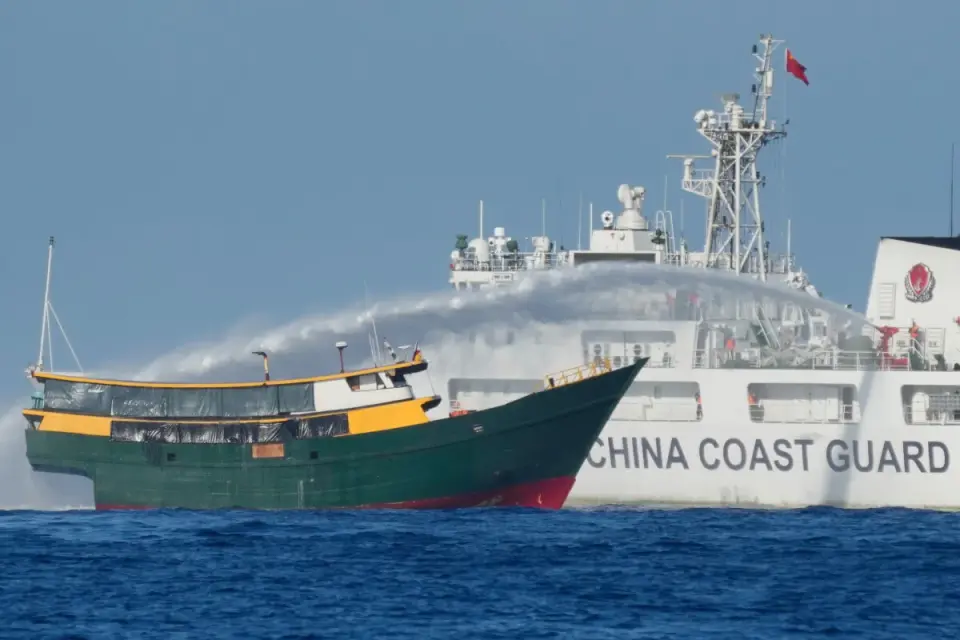
The South China Sea has been a source of tension for decades, with China, four ASEAN member states (Brunei, Malaysia, the Philippines, and Vietnam), and Taiwan involved in territorial disputes. The waters are a critical global trade route and are believed to contain significant oil and gas deposits. Recent months have seen escalating confrontations, including a US Navy ship entering disputed waters near Sabina Shoal and Taiwan repelling multiple Chinese vessels near the Pratas Islands and Dongsha Atoll. The US has reaffirmed its defense commitments to the Philippines, while China has characterized the dispute as an Asian matter.
Why it matters
The potential code of conduct aims to prevent minor confrontations in the South China Sea from escalating into a major conflict that could disrupt global trade and regional stability. While the agreement may not fully deter aggression, analysts suggest it could serve as one tool among many, including diplomacy and military strengthening, to restrain great powers. The failure to finalize the pact by 2026 highlights the complexity of resolving deep-seated territorial and strategic disputes in the region.
What to watch
Negotiations will continue into 2026 under Singapore’s ASEAN leadership. The ASEAN summit in Manila this weekend will likely address the status of the code of conduct and ongoing maritime incidents. The US and China are expected to engage with ASEAN leaders, with Washington reaffirming its defense commitments to the Philippines and China warning against foreign interference in what it considers an Asian dispute.
Want the full story? Read the original reporting
Read on AP News