
Diplomatic Stalemate: Witkoff’s Oslo Talks Fail to Secure Putin’s Commitment
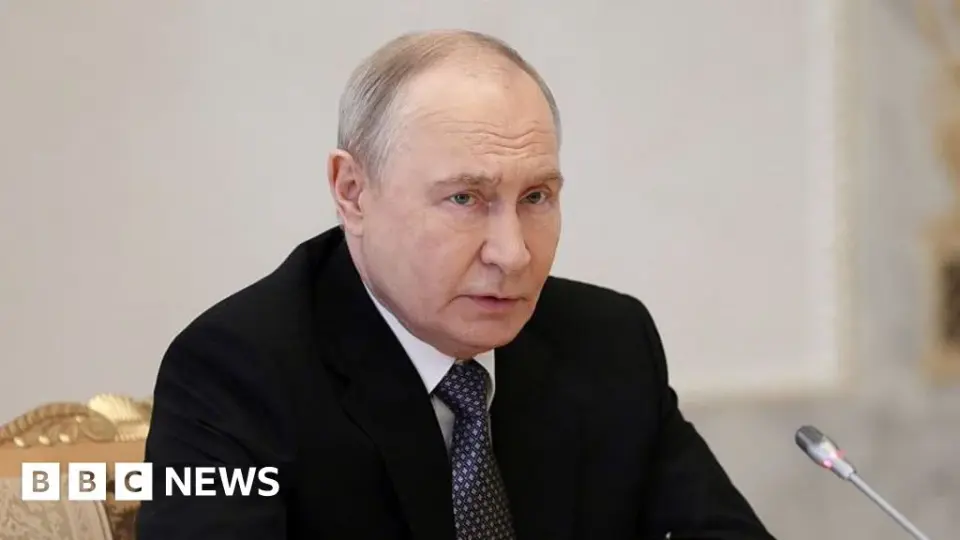
US envoy Steve Witkoff’s recent diplomatic efforts in Norway and Russia have failed to secure a breakthrough in ending the Ukraine war. While Oslo talks were described as 'constructive,' Kremlin officials dismissed the outcomes as unhelpful, and no trilateral summit between Trump, Putin, and Zelensky is imminent. Russia appears to be leveraging its battlefield advantages and Trump’s shifting policies to delay negotiations, while Ukrainian domestic politics face a rift over the definition of 'peace' versus 'capitulation.'
Key points
- Witkoff’s two-day trip to Oslo and St. Petersburg yielded no immediate path to a trilateral summit, with the Kremlin offering only technical-level talks in Abu Dhabi next month.
- Kremlin aide Yuri Ushakov stated that European and Ukrainian proposals offered 'little that was useful,' signaling Moscow’s lack of urgency to compromise.
- Trump’s recent pause on sanctions and criticism of Zelensky have eased pressure on Putin, who is leveraging winter conditions and Ukraine’s strained air defenses.
- Ukrainian public opinion remains largely opposed to concessions, with 64% blaming Russia for stalled talks, despite internal political debates over peace proposals.
- A potential 'New Yalta' meeting between Putin, Trump, and Xi Jinping at the APEC summit in China next month may reshape global power dynamics without resolving the Ukraine conflict.
Background
Since late September, Trump has intensified pressure for a pre-winter settlement, citing high casualty figures, while Zelensky has sought security guarantees and air defense support. Previous diplomatic efforts, including EU sanctions extensions and US proposals for trilateral talks, have been met with Russian delays and battlefield escalations, including strikes on Kyiv infrastructure.
How outlets are covering it
BBC’s Steve Rosenberg emphasizes that Putin faces no immediate pressure to negotiate, citing Russia’s battlefield advantages and Trump’s willingness to ease sanctions. The Washington Post’s David Ignatius questions the sincerity of the US-led peace effort, noting that the outcome depends entirely on Putin’s interest. The Kyiv Independent highlights a domestic political fracture in Ukraine, where some politicians propose concessions that critics view as capitulation, while polls show the public remains resistant to compromise. Asia Times offers a detailed, idealistic framework for a comprehensive settlement, including Ukrainian neutrality and a UN Security Council guarantee, but notes that Europe has been largely absent from the current diplomatic design.
Why it matters
The failure of these high-level talks suggests that a rapid end to the war is unlikely, potentially prolonging the conflict into winter. The diplomatic deadlock risks a shift in global power dynamics, as a potential meeting between Putin, Trump, and Xi could marginalize Ukraine and Europe from key security decisions, while Russian leverage grows due to Western policy inconsistencies.
What to watch
Watch for technical-level talks in Abu Dhabi next month and the APEC summit in China, where a Putin-Trump-Xi meeting may occur. Monitor Ukrainian domestic politics for further splits over peace proposals and assess whether Trump’s sanctions policy continues to ease pressure on Moscow.
- Rosenberg: US diplomatic push offers little hope for imminent Ukraine peace BBC
- Opinion | The world will soon know who is stalling the Ukraine peace talks The Washington Post
- The political calculus of peace in Ukraine The Kyiv Independent
- A viable path to peace in Ukraine Asia Times
- Kiev and the United States are ready to compromise, but Moscow has all the trumps — an overview of the situation and a forecast EADaily
Want the full story? Read the original reporting
Read on BBC