
Indonesia Pushes for Deeper Military Ties with China Amid Regional Shifts
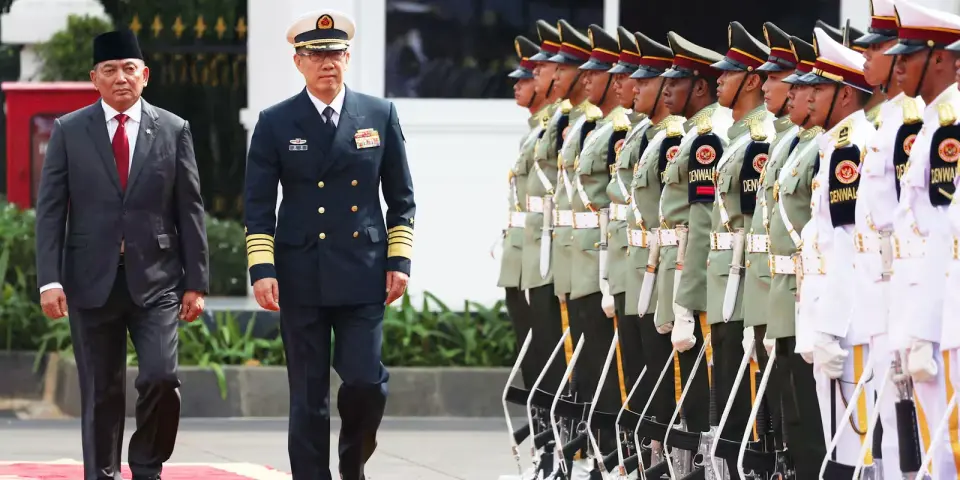
Indonesian Defense Minister Sjafrie Sjamsoeddin called for expanded joint military drills with China during a meeting in Jakarta, signaling a strategic pivot toward Beijing as Washington scales back its own regional defense commitments.
Key points
- Indonesian Defense Minister Sjafrie Sjamsoeddin met with Chinese counterpart Adm. Dong Jun in Jakarta on Friday to discuss defense cooperation.
- Sjamsoeddin explicitly requested broader and more intensive joint military exercises with China, according to Nikkei Asia.
- The Associated Press reported that the bilateral discussions also covered energy security, indicating a multifaceted approach to strategic partnership.
- This push for deeper military ties occurs against a backdrop of reduced U.S.-South Korea joint drills, which Washington scaled back in August 2026 to facilitate potential talks with North Korea.
- The move aligns with a broader regional trend of diversifying defense partnerships, as seen in the recent three-way defense pact between Turkey, Saudi Arabia, and Pakistan.
Background
In August 2026, President Trump directed the U.S. Defense Department to substantially reduce the Ulchi Freedom Shield joint exercises with South Korea, citing the drills as a hostile signal to North Korea and Seoul's refusal to join the Iran conflict. Although Seoul maintained that coordination with Washington remained strong, the cutbacks raised concerns about alliance readiness. Concurrently, Turkey, Saudi Arabia, and Pakistan formalized the Mecca Joint Defence Agreement, emphasizing joint drills and advanced defense technology collaboration. These developments highlight a shifting landscape where traditional alliances are being re-evaluated, and nations are actively seeking alternative or additional defense partnerships to ensure regional security and strategic autonomy.
How outlets are covering it
Nikkei Asia focuses on the military dimension, highlighting Sjamsoeddin's specific call for expanded joint exercises with China. The Associated Press broadens the scope, noting that the Indonesia-China discussions also included energy security, suggesting a comprehensive strategic partnership beyond just defense. While both outlets report on the bilateral meeting, Nikkei emphasizes the military intensification, whereas AP frames it within a wider context of defense and energy cooperation. The contrast with the U.S.-South Korea situation, where Washington unilaterally reduced drills, underscores Indonesia's proactive approach to strengthening its own defense ties with Beijing.
Why it matters
Indonesia's push for deeper military cooperation with China signals a significant shift in Southeast Asia's defense landscape, potentially reducing reliance on traditional Western partners. This move could influence regional security dynamics, as nations seek to diversify their defense partnerships in response to changing global alliances and strategic uncertainties. It also highlights the growing strategic importance of Indonesia in the Indo-Pacific, as it navigates between major powers to secure its interests.
What to watch
Expect further developments in Indonesia-China defense cooperation, including potential announcements on specific joint exercises or defense technology transfers. The outcome of U.S.-South Korea negotiations and any changes in U.S. regional defense posture will also influence how other nations, including Indonesia, adjust their strategic partnerships. Additionally, the energy security discussions between Indonesia and China may lead to new agreements or investments in the region.
- Indonesia seeks expanded joint military exercises with China Nikkei Asia
- China and Indonesia Agree Deeper Defense Ties in High-Level Talks Bloomberg.com
- China, Indonesia agree to boost military ties, work closer on minerals, energy and tech Reuters
- Indonesia and China discuss increasing defense cooperation and energy security AP News
- Will other Southeast Asian countries copy Indonesia’s joint China drill? South China Morning Post
Want the full story? Read the original reporting
Read on Nikkei Asia