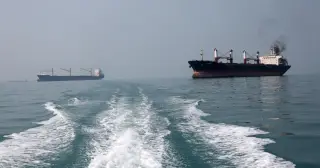
Gulf Oil Flows Rebound to Pre-War Levels Amid Rising Tanker Attacks
Middle East crude exports reached pre-war levels in September, driven by Saudi diversification, but a surge in tanker attacks and logistical bottlenecks threatens supply stability.

All articles tagged with #shipping
Middle East crude exports reached pre-war levels in September, driven by Saudi diversification, but a surge in tanker attacks and logistical bottlenecks threatens supply stability.

Ali Albokhari, a Finnish-Syrian chief mate, has been imprisoned in Turkey for three years after 137kg of cocaine was found on the cargo ship Phoenician M. Despite no forensic evidence linking him to the drugs, he was convicted under 'command responsibility' and sentenced to 33 years. His wife, Elena, is lobbying for his release while his captain, Marko Bekavac, was released via a prisoner swap. The case highlights the vulnerability of seafarers to organized crime and inadequate legal protections.
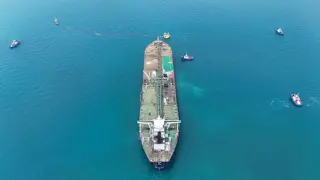
The value of older supertankers has surpassed that of new builds for the first time in recorded history, driven by record-high freight rates in the Gulf. Buyers are prioritizing immediate delivery over vessel age, with several pre-2016 ships selling for over $150 million. Middle Eastern state oil companies and traders are acquiring fleets to secure control over exports amid volatile shipping costs.
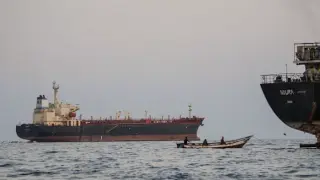
Iranian-backed Houthis in Yemen have assured the European Union they will not target European ships in the Red Sea, even as they consolidate control over the Bab al-Mandeb Strait. This diplomatic outreach coincides with a significant recovery in container shipping through the Suez Canal, with vessel numbers reaching their highest levels in nearly three years. While the Houthis have also signaled to the United States that they do not wish to engage in conflict, their recent offensive against Saudi Arabia and seizure of key coastal ports have heightened regional tensions. International shipping companies are cautiously resuming operations, noting that no container ships have been attacked in over a year despite increased traffic.
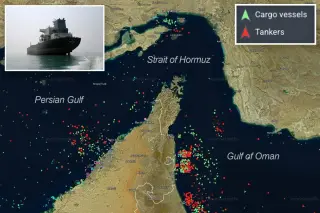
A Reuters report shows traffic through the Strait of Hormuz has dwindled to a trickle amid Gulf tensions, with roughly a dozen vessels passing over the weekend. Saudi crude exports are rebounding, with exports through Hormuz rising to over 4 million barrels per day in September and 13 tankers exiting the strait in the week of September 13; Saudi Arabia accounted for about half of the shipments and Iraq for a sizable share. Analysts say overall Gulf oil flows remain robust, averaging about 17.1 million barrels per day in the past 10 days despite disruptions and ongoing conflict.

Apple has implemented a battery‑firmware workaround on the iPhone 18 Pro Max to keep single‑cell capacity below the 20Wh shipping limit; the firmware lock automatically unlocks on first boot, restoring charging capacity to about 21.75Wh (US eSIM models) or 21.06Wh (EU with physical SIM). If you need to ship the device for repair or resale, the feature “Prepare to Ship” caps charging at 80% for 14 days. Apple notes the battery might need to discharge for the process to complete and the phone may run warmer during discharge. If successful, this approach could push other manufacturers to explore similar solutions to balance longer battery life with shipping constraints.
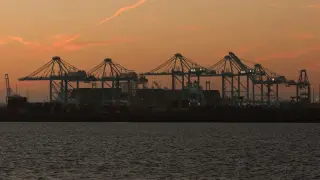
U.S. small businesses say today’s disruptions—fuel and shipping cost spikes, port and weather bottlenecks, and geopolitical shocks from the Iran war—are worse than during Covid, with ISM surveys flagging volatility and uncertainty. Firms are delaying planning, squeezing margins, and passing higher costs to consumers as energy and freight prices stay elevated, signaling that inflation may remain stubbornly high even if the conflict eases.
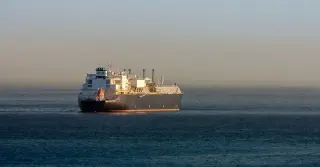
An LNG tanker carrying U.S. natural gas toward Europe reportedly turned back off Italy after the crew lost access to some control systems in a suspected cyberattack; the Vivit Africa LNG, chartered by Vitol, loaded at Cameron LNG and was headed to Rovigo before diverting toward Algeciras, Spain, as investigators including the Italian Coast Guard and Korean Register probe the cause. There is no attribution yet, and authorities say they are monitoring cyber threat activity across multiple ships."

The iPhone 18 Pro Max reportedly carries a battery over 20Wh, triggering shipping regulations. Apple uses a battery‑firmware solution to keep capacity below 20Wh until the device is activated. A new Prepare to Ship feature in Settings (General > Transfer or Reset iPhone > Prepare to Ship) discharges the battery to meet the threshold for shipping, repairs, trades, or gifting, displaying 'Ready to Ship' when complete. Activation later removes the limit and restores full charging capacity.

Because the iPhone 18 Pro Max has a single-cell battery over 20Wh, Apple requires a firmware-based “Prepare to Ship” step to discharge the battery below 20Wh and cap charging when shipping the device for repair, trade-in, or other services. New, unactivated units are already under the limit and don’t need this, while the process can make the device warmer. Once completed, a “Ready to Ship” status appears, and there’s an undo option (potentially with a 14‑day waiting period depending on the reason). This measure is specific to this model to meet shipping rules.
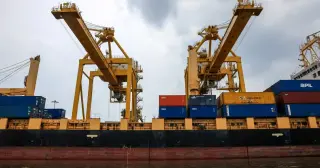
Shipowners ordered more than twice as many tankers this year than in all of 2025, in a $20 billion spree—the largest in at least a quarter century—as Middle East conflicts redraw trade routes, including the closure of Saudi Arabia’s East-West Pipeline. With crude from the Americas now moving on longer transoceanic voyages, tanker hire rates have surged to record highs, exceeding $1 million per day.
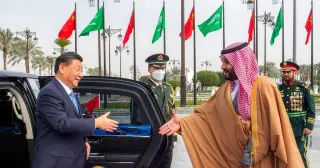
Saudi Arabia sought U.S. military action against the Houthis but the Trump administration declined; instead China privately pressed Iran to exercise influence over the Houthis to curb attacks near the Bab el-Mandeb, signaling Beijing’s growing role in Middle East diplomacy as the Red Sea chokepoint and global shipping come under threat. China urged restraint and dialogue, while Tehran tied stability to US/Israeli actions, highlighting the broader regional stakes for energy and trade.
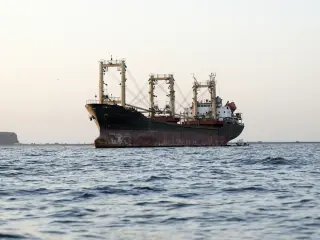
Italy will deploy warships to protect merchant vessels through Bab al-Mandeb, saying Rome won’t wait for EU consensus and warning that the strait’s closure would severely hit the global economy given its crucial role in trade and energy routes; the Houthis’ expanded control of Yemen’s western Red Sea coast has raised risks despite ongoing US/EU protection efforts.
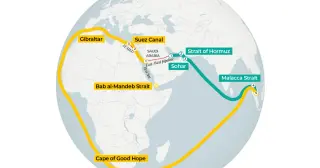
Drone strikes knocked out Saudi Arabia’s East-West pipeline, removing about 4-5 million barrels per day and forcing exports to reroute through Hormuz, the Suez/Sumed corridor, or stored stocks; with the Bab al-Mandeb chokepoint blocked by Houthis, shipments face higher costs and longer journeys, potentially lifting prices and pressuring Saudi revenues until a full or partial repair is completed in coming weeks.
ISW-CTP says Houthis are pursuing diplomacy to limit US involvement while consolidating Red Sea gains and striking Saudi oil/military targets; a reported three‑phase disarmament plan for Iranian‑backed Iraqi militias could keep weapons under vague rules, tied to Turkish withdrawal from Iraq. Iran is pushing to secure Hormuz control and diversify trade away from the dollar, amid domestic unrest and sanctions‑evasion efforts, while reports—unconfirmed in places—touch on a Houthi‑downed Saudi F‑15 and ongoing diplomatic maneuvering with regional partners.