
Iranian Hardliners Push for Preemptive Strikes as US-Iran Conflict Intensifies
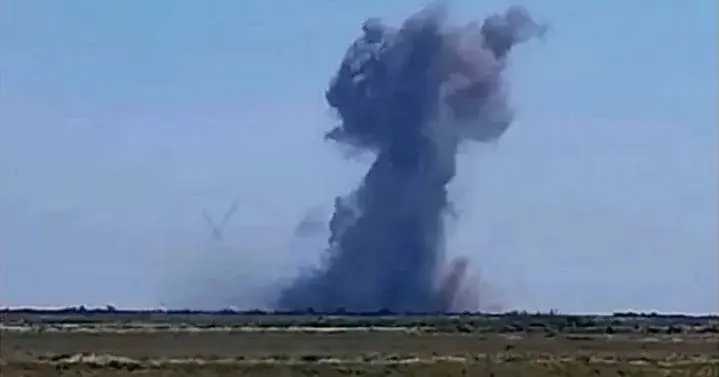
A cycle of US strikes on Iranian targets and Iranian retaliatory attacks has triggered a debate within Iran over shifting from a reactive to a preemptive military doctrine. While President Pezeshkian maintains that diplomacy via the Islamabad memorandum remains viable, hardline figures argue that US actions have exposed the limits of negotiation and necessitate a strategy that anticipates and disrupts US operations before they occur. This internal debate coincides with a significant deterioration in Iran's trade and oil exports, which have fallen sharply due to the ongoing conflict and US economic pressure.
Key points
- US strikes on Larak Island and other targets prompted Iranian missile and drone attacks on US bases in Jordan, Bahrain, and the UAE.
- Hardline Iranian figures, including lawmaker Mahmoud Nabavian and SNSC secretary Mohsen Rezaei, are calling for a shift to preemptive strikes to counter US military and economic pressure.
- President Pezeshkian continues to advocate for returning to the Islamabad memorandum, while Parliament Speaker Ghalibaf warns of military action if US commitments are not met.
- Iran's non-oil exports and imports have fallen by roughly 25-30% in the first five months of the current year, with oil exports to China dropping by 40% compared to last year.
- US officials, including Treasury Secretary Bessent, argue that Iran's military escalation is a sign of economic vulnerability rather than strategic strength.
Background
The current escalation follows a June 2026 agreement, known as the Islamabad memorandum, which was intended to halt the conflict and provide a framework for negotiations, particularly regarding the US maritime blockade and commercial navigation through the Strait of Hormuz. Recent US strikes on Iranian targets, including Larak Island and facilities near the Strait of Hormuz, have been described by Washington as responses to 'imminent threats' and attempts to lay sea mines. Iran has rejected these accounts, asserting that its actions are defensive and that the US is violating the terms of the memorandum. The conflict has also seen a significant impact on Iran's economy, with customs data showing a sharp decline in both oil and non-oil trade, exacerbated by US sanctions and disruptions to shipping routes.
How outlets are covering it
Iran International highlights a growing internal debate in Iran over shifting from a retaliatory to a preemptive military strategy, noting that hardline figures argue waiting for US strikes gives Washington control over the pace of escalation. Mehr News Agency, through parliamentary commission head Ebrahim Azizi, frames the US actions as signs of 'desperation and strategic dead end,' asserting that the US has no choice but to leave the region. Tasnim, an IRGC-affiliated outlet, portrays the speed of Iran's response as evidence that the gap between political decision-making and military action is narrowing, supporting a move toward action at the first signs of an attack. In contrast, US officials, including Treasury Secretary Bessent, view Iran's military escalation as a sign of economic vulnerability, arguing that Washington's economic pressure is more effective than kinetic retaliation. Yahoo's secondary source, while largely technical, reflects the broader narrative of a hardline call for preemptive strikes, aligning with the views expressed by Iranian hardliners.
Why it matters
The debate over preemptive strikes signals a potential shift in Iran's military doctrine, which could lead to a more aggressive and less predictable conflict with the US. This shift, if adopted, could accelerate regional escalation and undermine ongoing diplomatic efforts, such as those mediated by Pakistan and Qatar. The economic impact of the conflict, evidenced by the sharp decline in Iran's trade and oil exports, highlights the broader consequences of the US-Iran confrontation, not only for Iran but also for global energy markets and regional stability. The internal division within Iran over how to respond to US pressure could influence the country's future foreign policy and its ability to manage the ongoing crisis.
What to watch
The next steps will likely involve further US strikes on Iranian targets, particularly near the Strait of Hormuz, and Iranian retaliatory attacks on US bases in the region. The outcome of the internal debate in Iran over preemptive strikes will be crucial in determining whether Tehran shifts to a more aggressive military posture. Diplomatic efforts by mediators such as Pakistan and Qatar will continue, but their success will depend on whether the US and Iran can return to the terms of the Islamabad memorandum. The economic pressure on Iran, including potential further sanctions and disruptions to oil exports, will also play a significant role in shaping the trajectory of the conflict.
- US-Iran escalation prompts debate in Iran over preemptive strikes Iran International
- No choice left for Washington but to leave region Mehr News Agency
- Iran hardliner calls for pre-emptive strikes against the US Yahoo
- Your Foundations Will Be Shattered, Rezaei Warns US تسنیم
- Iran says attacks on US will continue 'until they regret their crime' Middle East Eye
Want the full story? Read the original reporting
Read on Iran International