
US Sanctions Block Iran's Nuclear Chief from IAEA General Conference
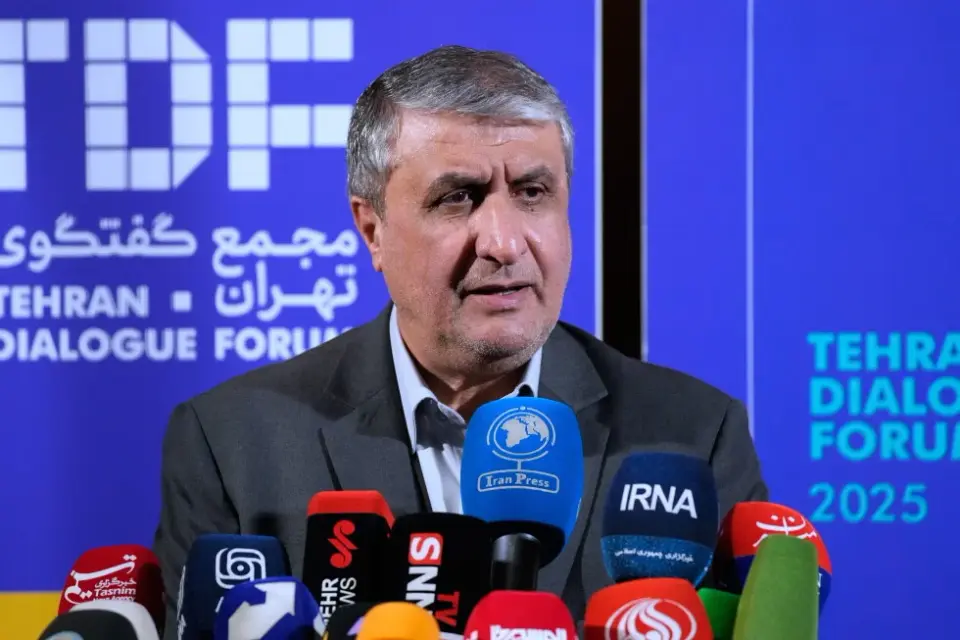
Iran's nuclear agency chief, Mohammad Eslami, was blocked from attending the IAEA General Conference in Vienna due to US opposition and denied visa waivers. While Tehran blames Washington for pressuring Austria to deny entry, US officials cite Eslami's sanctioned status. This diplomatic friction occurs amid broader regional tensions, including Houthi attacks on Saudi infrastructure and US-Iran trade disputes.
Key points
- Mohammad Eslami, head of Iran's Atomic Energy Organization, was prevented from attending the IAEA General Conference in Vienna, which runs from Monday to Friday.
- US Energy Secretary Chris Wright stated that Eslami is a sanctioned individual and that Washington opposed his attendance to prevent evasion of sanctions.
- Iran summoned Austria's charge d'affaires, accusing the European country of issuing an 'unjustified' refusal to grant visas under US pressure.
- The IAEA conference will focus on approving the agency's budget and discussing nuclear safeguards in the Middle East.
- This incident follows recent escalations, including Houthi strikes on Saudi oil infrastructure and US-Iran tensions over the Strait of Hormuz.
Background
This diplomatic standoff occurs against a backdrop of heightened US-Iran tensions. In August 2026, the US bombed the Fordow uranium enrichment site, a move celebrated by former Mossad chief Yossi Cohen but disputed by Iran. Earlier in September, Iran warned of retaliation if the UN nuclear watchdog adopted a resolution against Tehran. Additionally, the US and Iran exchanged attacks near the Strait of Hormuz in late August, disrupting oil shipments and lifting global energy prices.
How outlets are covering it
AP News reports that senior officials from IAEA member states are convening in Vienna to approve the agency's budget and discuss policy, noting Eslami's absence. France 24 provides the specific details of the visa denial, citing US Energy Secretary Chris Wright's justification based on sanctions and Iranian state television's claim that Eslami was blocked mid-flight. France 24 also contextualizes this event within a broader regional crisis, highlighting simultaneous Houthi attacks on Saudi Arabia, US-Iran trade negotiations, and Trump's conditional openness to a deal with Iran.
Why it matters
The exclusion of Iran's nuclear chief from the IAEA General Conference signals a hardening of US enforcement of sanctions against Tehran's nuclear leadership. This move complicates diplomatic channels for nuclear oversight and may escalate tensions at a time when regional conflicts, particularly involving Iran-backed Houthis, are disrupting critical energy infrastructure in the Gulf.
What to watch
The IAEA General Conference will proceed without Iran's top nuclear official, potentially limiting direct dialogue on safeguards. Iran may further escalate diplomatic protests against Austria and the US. Meanwhile, the US decision on whether to engage in a deal with Iran, as mentioned by President Trump, could influence the trajectory of these nuclear and regional tensions.
- Iran’s nuclear chief not expected to attend IAEA General Conference, official says AP News
- Iranian Official Blocked From UN Nuclear Meeting at US’s Urging Bloomberg.com
- Iran blames US for blocking nuke chief’s travel to Vienna conference, summons Austrian envoy timesofisrael.com
- Iranian nuclear chief blocked from IAEA conference in Vienna following US pressure - report The Jerusalem Post
- Mideast live: Yemen’s Houthis say they targeted military facilities in Saudi Arabia France 24
Want the full story? Read the original reporting
Read on AP News