
Khamenei Orders 'Unrestricted' Military Response Amid Hormuz Tanker Crisis
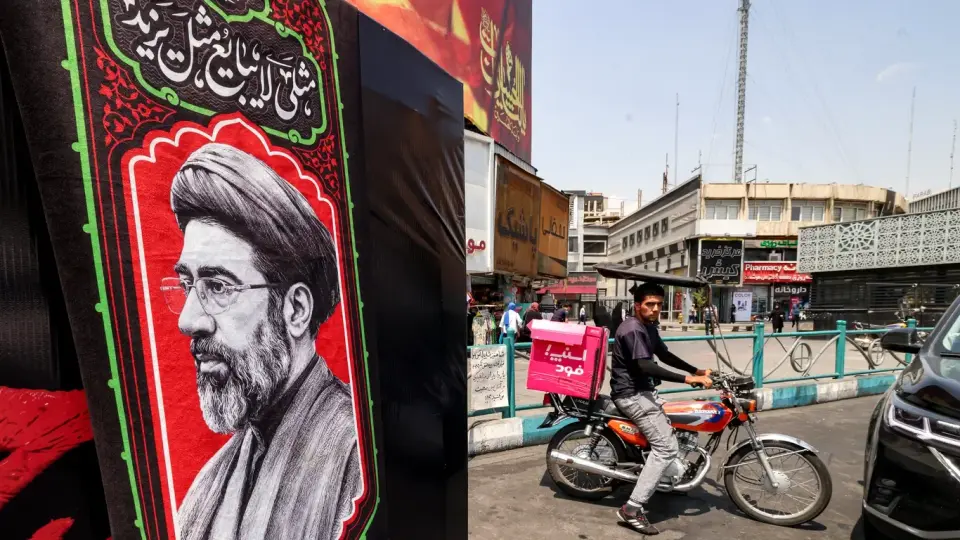
Iran’s Supreme Leader Mojtaba Khamenei has directed the military to prepare for an immediate and geographically unrestricted response to any future attacks by the US or Israel. This directive coincides with a major incident in the Strait of Hormuz, where a supertanker carrying over 2 million barrels of oil caught fire after hitting a naval mine. While Washington claims the strait is clear of mines, Tehran insists vessels require permission to transit. Diplomatic efforts led by Qatar aim to de-escalate tensions, but US President Donald Trump is weighing options for further strikes ahead of the midterm elections.
Key points
- Mojtaba Khamenei ordered the Iranian Revolutionary Guard Corps (IRGC) to update target databases to include all tangible and intangible assets of the US and Israel.
- A supertanker hit a naval mine in the Strait of Hormuz, causing a fire; it was the fourth such explosion in a day according to Iranian state media.
- US Central Command claims the strait’s primary transit routes are clear of Iranian sea mines, contradicting Tehran’s warnings.
- Egyptian Foreign Minister Badr Abdelatty warned that a second round of conflict would be more destructive and lead nowhere.
- Qatari mediators are attempting to convince Iran to allow UN inspectors at nuclear sites damaged by earlier strikes.
Background
This escalation follows the secret election of Mojtaba Khamenei as Supreme Leader in September 2026, after he survived a US strike on a Tehran hospital. Previous tensions included Trump weighing 'annihilation' of Iran and Gulf leaders convening to gauge support for further action. The current standoff occurs as the US maintains a naval blockade and extends sanctions against Tehran.
How outlets are covering it
Fox News emphasizes the political frustration within the US regarding the war's duration, citing Rep. Pat Harrigan’s call for a decisive end to the conflict before the midterms. The Jerusalem Post highlights the diplomatic angle, noting Qatari efforts to bring both sides back to the negotiating table. Axios focuses on the military directive and the immediate security incident in the Strait of Hormuz, contrasting US claims of a mine-free strait with Iranian assertions of unauthorized transit risks.
Why it matters
The declaration of an 'unrestricted' response raises the risk of a broader regional war, potentially involving multiple fronts. The incident in the Strait of Hormuz threatens global oil supply chains, while the timing of potential US strikes before the midterm elections could significantly impact domestic political outcomes and international stability.
What to watch
Watch for any immediate military movements by the US or Israel in response to Khamenei’s directive. Monitor the outcome of Qatari mediation efforts and whether Iran agrees to UN inspections. Observe US military positioning in the Middle East as Trump weighs options for further action ahead of the November midterm elections.
- Iran's supreme leader orders "maximum" response to any U.S. attack Axios
- Iran war live: Khamenei orders immediate response to any threat, anywhere Al Jazeera
- Iran's IRGC says it is 'closely monitoring America's movements in the region' Fox News
- Iran’s Khamenei Orders Military to Expand US Retaliation Plans Bloomberg
- Khamenei: IRGC will have 'immediate, unrestricted response' to any US, Israeli threats The Jerusalem Post
Want the full story? Read the original reporting
Read on Axios