
Kim Jong-un Visits China via New Bridge to Mark Korean War Anniversary
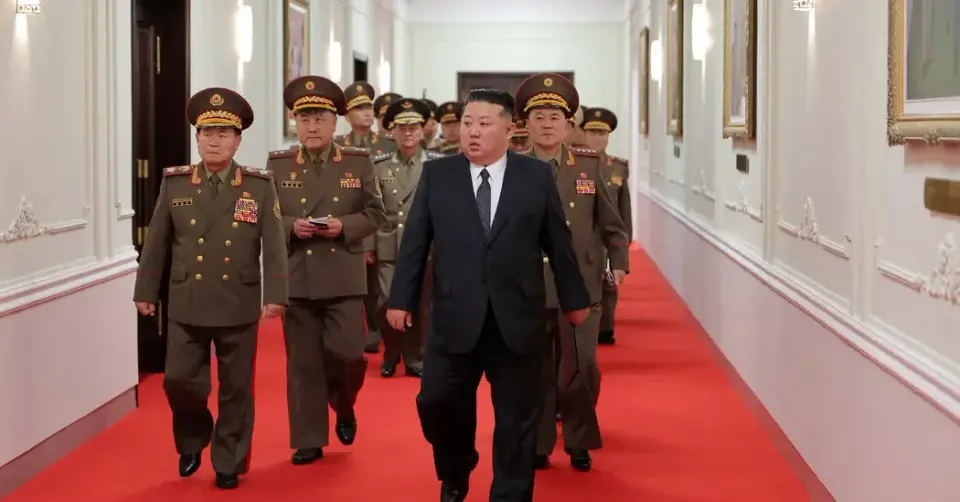
North Korean leader Kim Jong-un made his first trip to China in over a year, crossing the newly opened New Yalu River Bridge to meet with senior official Wang Huning. The visit, timed to mark the 76th anniversary of Chinese intervention in the Korean War, signals deepening ties between Beijing and Pyongyang despite international sanctions. While Kim did not meet with President Xi Jinping, the trip underscores China’s effort to maintain influence over North Korea amid its growing military alliance with Russia.
Key points
- Kim Jong-un crossed the newly opened New Yalu River Bridge on October 24, 2026, marking his first visit to China in over a year.
- He met with Wang Huning, a senior Chinese Communist Party official, to commemorate 76 years since Mao Zedong sent troops to support North Korea in the Korean War.
- Kim presented a wreath at a Chinese memorial in Dandong, expressing gratitude for Beijing’s decades of support and citing broad prospects for cooperation.
- The visit did not include a meeting with President Xi Jinping, who was preparing for a four-day Central Committee meeting in Beijing; Wang Huning conveyed greetings from Xi.
- The New Yalu River Bridge, opened on October 15, aims to ease congestion on the older Friendship Bridge and boost trade, though analysts note its geopolitical significance may outweigh economic impact.
- South Korean intelligence dismissed recent social media rumors of Kim’s death, noting his public appearance in China as proof of his well-being.
Background
This visit follows Kim Jong-un’s June 2026 trip to Pyongyang by Xi Jinping and his attendance at a September 2025 military parade in Beijing. North Korea has recently deepened ties with Russia, supplying artillery and troops for the Ukraine war in exchange for military technology and aid. Meanwhile, North Korea severed all rail and road links with South Korea in 2024, declaring Seoul its 'principal enemy.' The new bridge contrasts with the closed border with the South, highlighting Pyongyang’s strategic balancing act between Beijing and Moscow.
How outlets are covering it
The New York Times emphasizes the symbolic nature of the visit, highlighting Kim’s gratitude for Chinese support and the 'blood-sealed friendship' between the two nations, while noting the absence of a meeting with Xi Jinping. The Guardian focuses on the geopolitical implications of the new bridge, arguing it may intensify a struggle for influence between China and Russia, with China tolerating but closely watching North Korea’s deepening ties with Moscow. Both outlets agree that the bridge and visit signal a shift in North Korea’s diplomatic balance, but The Guardian stresses that Kim may be leveraging Russian support to extract greater concessions from Beijing, rather than submitting to either power.
Why it matters
The visit and the new bridge underscore North Korea’s strategic maneuvering between China and Russia, two powers with competing interests in the region. For China, the bridge is a geopolitical tool to maintain influence over a neighbor that is increasingly aligned with Moscow. For North Korea, it offers an opportunity to diversify its partnerships and potentially ease economic constraints from international sanctions. The trip also dispels rumors of Kim’s death, reinforcing his grip on power, and may signal a potential opening for North Korea-U.S. diplomacy, as Kim seeks to balance relations with Washington through Beijing.
What to watch
Analysts speculate that Kim may attend the Asia-Pacific Economic Cooperation leaders’ meeting in Shenzhen next month, where President Trump is also expected to attend. The outcome of this meeting could indicate whether North Korea is seeking to engage with the U.S. or further align with China and Russia. Additionally, the flow of trade across the New Yalu River Bridge may serve as a bellwether for the state of Sino-North Korean relations, with any interruptions potentially signaling a shift in Beijing’s influence over Pyongyang.
- Kim Jong-un Makes First Visit to China in Over a Year The New York Times
- North Korean leader Kim Jong Un visits China to inaugurate a new cross-border bridge The Seattle Times
- North Korea's Kim crosses new bridge into China as trade ties warm Reuters
- North Korea has opened up bridges to Russia and China – in which direction will it go? The Guardian
- Kim Jong Un Arrives in China’s Dandong City, Yonhap Reports Bloomberg
Want the full story? Read the original reporting
Read on The New York Times