
Kremlin-aligned outlet deletes column threatening Lithuania with nuclear strike after parliament vote
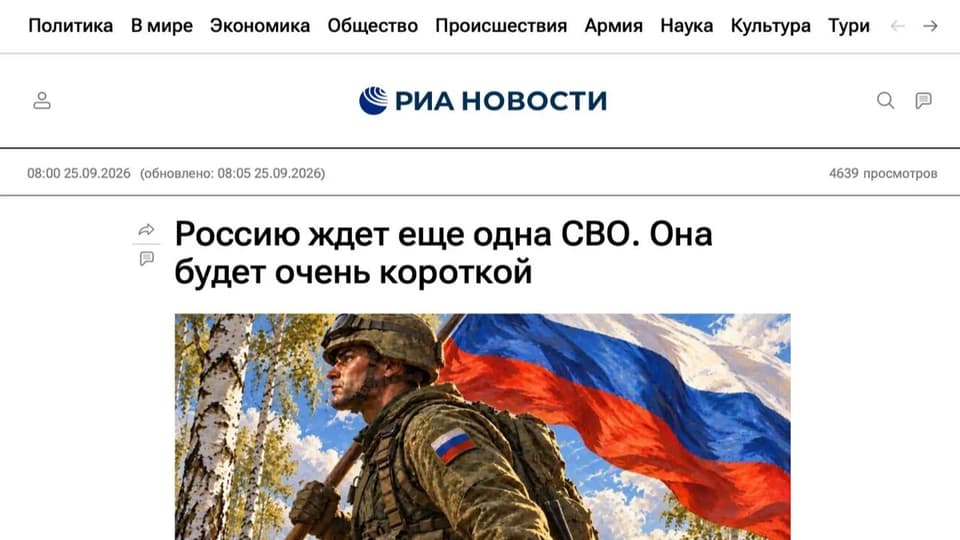
Russian state news agency RIA Novosti published and then deleted a column threatening Lithuania with a 'short' special military operation and nuclear strike. The piece, written by Alexander Nosovich, appeared after Lithuania's parliament voted to lift its constitutional ban on hosting nuclear weapons. RIA Novosti later stated the article did not reflect its editorial policy or Russian state policy.
Key points
- RIA Novosti published a column on September 25 titled 'Russia faces another special military operation. It will be very short,' which threatened Lithuania with invasion and nuclear strikes.
- The column was written by Alexander Nosovich, a freelance contributor and editor-in-chief of the pro-Russian outlet RuBaltic.Ru, who was linked in 2020 to a Kremlin-influenced network by the Dossier Center.
- The publication followed a September 22 vote by the Lithuanian Seimas, where 99 lawmakers supported lifting the constitutional ban on the deployment of nuclear weapons, with 13 voting against and 5 abstaining.
- Nosovich described Lithuania as a 'suicidal country' and suggested Russia could use missiles with nuclear payloads without deploying ground forces, claiming the response would be 'lightning-fast.'
- RIA Novosti deleted the article several hours later, stating it did not reflect the views of its editorial team, its editorial policy, or the state policy of the Russian Federation.
- The incident occurred amid broader warnings from Danish and Czech intelligence services regarding a potential limited Russian military attack or hybrid aggression against NATO countries in the coming months.
Background
This incident follows a period of heightened tensions in the Baltic region, including a Starlink ground station fire in Poland and a Russian helicopter violating Polish airspace. It also comes after Vladimir Putin stated on September 19 that Russia has no aggressive intentions toward Europe, despite acknowledging NATO expansion as a threat. The Lithuanian parliamentary vote to allow nuclear weapons marks a significant shift in the country's defense posture, moving away from its previous constitutional prohibition on hosting such arms.
How outlets are covering it
Ukrainska Pravda and Caliber.Az emphasize the propagandistic nature of the column and its rapid deletion by RIA Novosti, highlighting the disconnect between the article's threats and official Russian policy. UA.NEWS provides additional context on the author's ties to Kremlin-linked networks and the broader intelligence warnings from NATO allies regarding potential Russian aggression. All sources agree that the column was a reaction to Lithuania's decision to lift its nuclear weapons ban, but they differ in emphasis: some focus on the specific threats made in the text, while others contextualize it within the wider pattern of Russian hybrid warfare and intelligence assessments of NATO security risks.
Why it matters
The publication and subsequent deletion of the column underscore the volatility of rhetoric in Russian state-aligned media and the sensitivity of nuclear weapons deployment in NATO countries. It highlights the potential for miscalculation or escalation in the Baltic region, particularly given the strategic importance of the Suwalki Corridor and the recent shift in Lithuanian defense policy. The incident also reflects the broader tension between official Russian denials of aggressive intent and the aggressive posturing of Kremlin-aligned outlets.
What to watch
Monitor for any further official Russian statements or actions regarding Lithuania and the Baltic states. Watch for any changes in NATO's defense posture or intelligence assessments regarding Russian hybrid or military threats in the region. Track the implementation of Lithuania's new nuclear weapons policy and any potential Russian responses, whether diplomatic, military, or informational.
- Russian state news agency publishes column claiming Russia faces new "special military operation" in Lithuani Українська правда
- Are the Russians coming? The Hill
- In Russia, there is talk of a possible short-term war with Lithuania UA.NEWS
- Russian state media threatens Lithuania with "short" special military operation Caliber.Az
- Russian propagandists announce a new "short SMO" — against whom this time Українські Національні Новини (УНН)
Want the full story? Read the original reporting
Read on Українська правда