
Mecca Pact Signals Shift in Middle East Security as US Influence Wanes
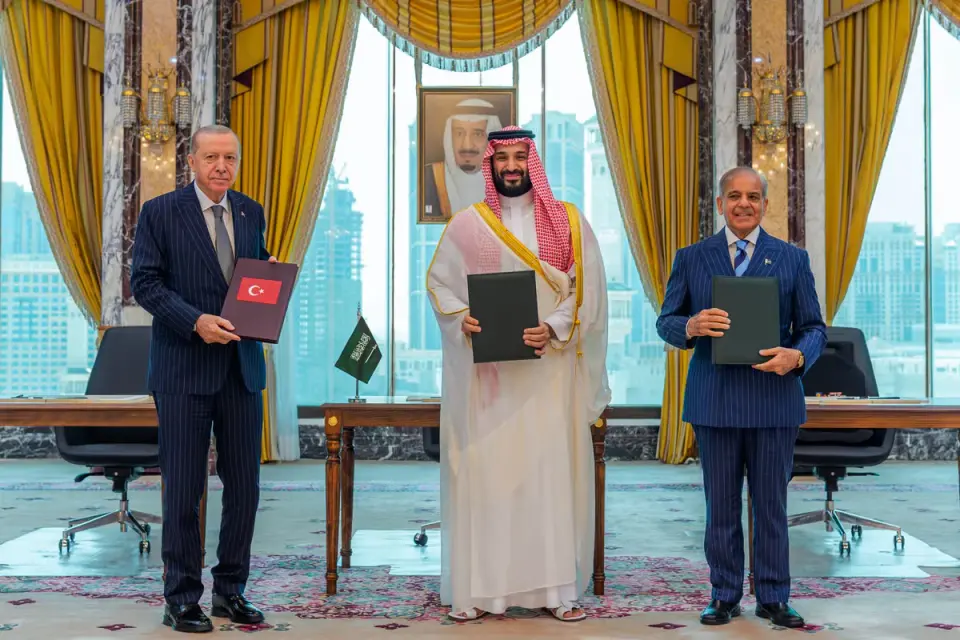
Saudi Arabia, Turkey, and Pakistan signed a mutual defense pact in Mecca, marking a significant shift in regional security. The agreement, which mirrors NATO’s collective defense clause, was prompted by the US-Israeli war with Iran and growing doubts about American reliability. While the US welcomed the pact, analysts debate whether it can truly replace US security guarantees or merely adds a new layer of deterrence.
Key points
- Saudi Arabia, Turkey, and Pakistan signed a mutual defense pact in Mecca, pledging to treat an attack on one as an attack on all.
- The pact was prompted by the US-Israeli war with Iran and growing doubts about American reliability among Gulf states.
- US President Donald Trump welcomed the pact, stating it shows the Middle East is coming together to defend itself.
- Analysts debate whether the pact can truly replace US security guarantees or merely adds a new layer of deterrence.
- The agreement is seen as a response to the loss of US credibility during the US-Iran conflict and a shift in regional power dynamics.
Background
The Mecca pact follows a period of intense conflict in the Middle East, including the US-Israeli war with Iran and the ongoing Gaza war. The US has been pushing allies to increase their defense spending, and the region has seen a shift in power dynamics, with Gulf states reassessing their reliance on the US as their principal security guarantor.
How outlets are covering it
The Independent frames the Mecca pact as a sign that Trump is losing his grip in the Middle East, while Al Jazeera highlights the US president's apparent happiness over the pact, noting that it aligns with his long-standing push for allies to shoulder more of their own defense burden. The Financial Times views the pact as a symbolic strengthening of deterrence against Iran and a potential counterweight to Israel, but notes that the US will remain the Arab world's principal defense partner. The Telegraph was not accessible for review.
Why it matters
The Mecca pact signals a significant shift in regional security dynamics, with Gulf states and other Middle Eastern powers seeking to diversify their security linkages and reduce their reliance on the US. The pact could have lasting repercussions for Washington, as regional leaders adapt to a new reality and the US's role in the region is reassessed.
What to watch
The next steps will depend on the security needs of the three signatory states and the nature of any threats they face. The pact could lead to further cooperation and defense deals, but it is unlikely to replace the US's role as the principal security guarantor for the region. The US will likely continue to push allies to increase their defense spending and shoulder more of their own defense burden.
- Why new ‘Muslim Nato’ shows Trump’s authority in the Middle East has collapsed The Independent
- The ‘Three Musketeers’ reshaping the Middle East The Telegraph
- Trump hails Mecca pact: Can it replace the region’s US security umbrella? Al Jazeera
- The realignment of the Middle East Financial Times
- ‘This is big,’ Trump praises Mecca agreement between Saudi Arabia, Turkey, and Pakistan | LIVE BLOG i24NEWS
Want the full story? Read the original reporting
Read on The Independent