
Merz Warns of Severe Russian Hybrid Attacks as Domestic Support for Ukraine Fractures
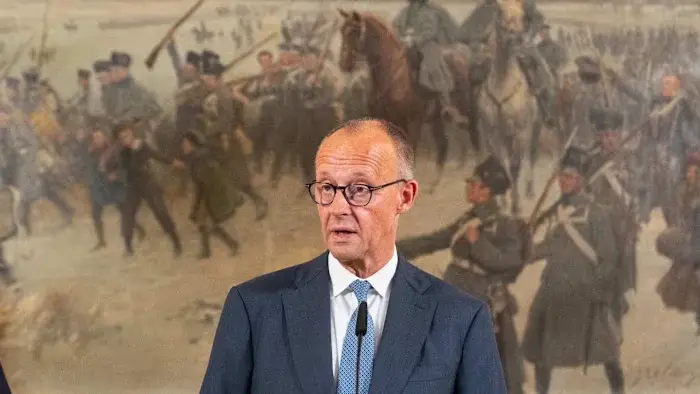
German Chancellor Friedrich Merz has warned that Europe is preparing for severe Russian hybrid attacks, framing Moscow’s escalation as a sign of desperation. While Merz vowed a rapid response to any aggression, his stance contrasts with domestic political instability, as the far-right AfD gains ground and public support for Ukraine wanes.
Key points
- Merz stated that Europe is preparing for severe hybrid attacks, including sabotage and cyber operations, and pledged a quick, clear response if they occur.
- Vladimir Putin warned that a direct attack on Russia, particularly the Kaliningrad exclave, would trigger the use of all available weapons, including nuclear options.
- The German government has blamed Moscow for an August drone attack at Leipzig airport, a key logistics hub for military aid to Ukraine.
- Belgian Defence Minister Theo Francken warned of a dark winter ahead due to Russia’s continuing hybrid campaign, while Danish intelligence suggested a limited military attack on a NATO country is possible.
- Merz’s speech coincided with a surge in support for the far-right AfD, which opposes military aid to Ukraine, raising concerns about Berlin’s long-term commitment to Kyiv.
Background
This escalation follows a series of hybrid incidents in 2026, including the Leipzig airport drone scare in August and earlier warnings from Ukrainian intelligence chief Kyrylo Budanov about Moscow’s expanding hybrid warfare strategy. European capitals have been debating how to respond to these attacks without provoking a direct conflict, while also reinforcing critical infrastructure protection.
How outlets are covering it
The Financial Times emphasizes the military and security dimensions, highlighting Merz’s warnings about severe hybrid attacks and Putin’s nuclear threats. Politico, however, focuses on the domestic political context, noting that Merz’s tough stance is an attempt to project strength amid his declining popularity and the rise of the Kremlin-friendly AfD. While the FT frames the situation as a direct threat from Moscow, Politico suggests Merz is trying to convince a wavering German electorate that supporting Ukraine is in their national interest. Both sources agree that the situation is tense, but they differ in their emphasis on the external threat versus the internal political challenges.
Why it matters
The escalating rhetoric and hybrid attacks from Russia pose a significant risk to European security and stability. Merz’s warnings and the potential for a direct conflict with Russia could have far-reaching consequences for NATO and the broader geopolitical landscape. Additionally, the domestic political instability in Germany, with the rise of the AfD, could undermine Europe’s support for Ukraine, potentially weakening the alliance’s resolve against Moscow.
What to watch
Europe is likely to continue preparing for potential Russian hybrid attacks, with increased focus on critical infrastructure protection and coordinated responses. The political situation in Germany will be closely watched, as the fate of Merz’s government and the rise of the AfD could impact Germany’s support for Ukraine and its role in NATO. Russia’s nuclear threats and the potential for a direct conflict will remain a major concern for European leaders.
- Europe braces for ‘severe hybrid attacks’ from Russia, says Friedrich Merz Financial Times
- Merz warns of more Russian hybrid attacks as he reaffirms support for Ukraine Reuters
- Merz Says Russia Is Supporting Germany’s Far-Right AfD Party Bloomberg.com
- Ukraine Gets 11th Iris-T SLM, Third Battery This Year as Thousands of Missiles Ordered Defense Express
- As Germany’s far right rises, weakened Merz looks to project strength and resolve against Putin politico.eu
Want the full story? Read the original reporting
Read on Financial Times